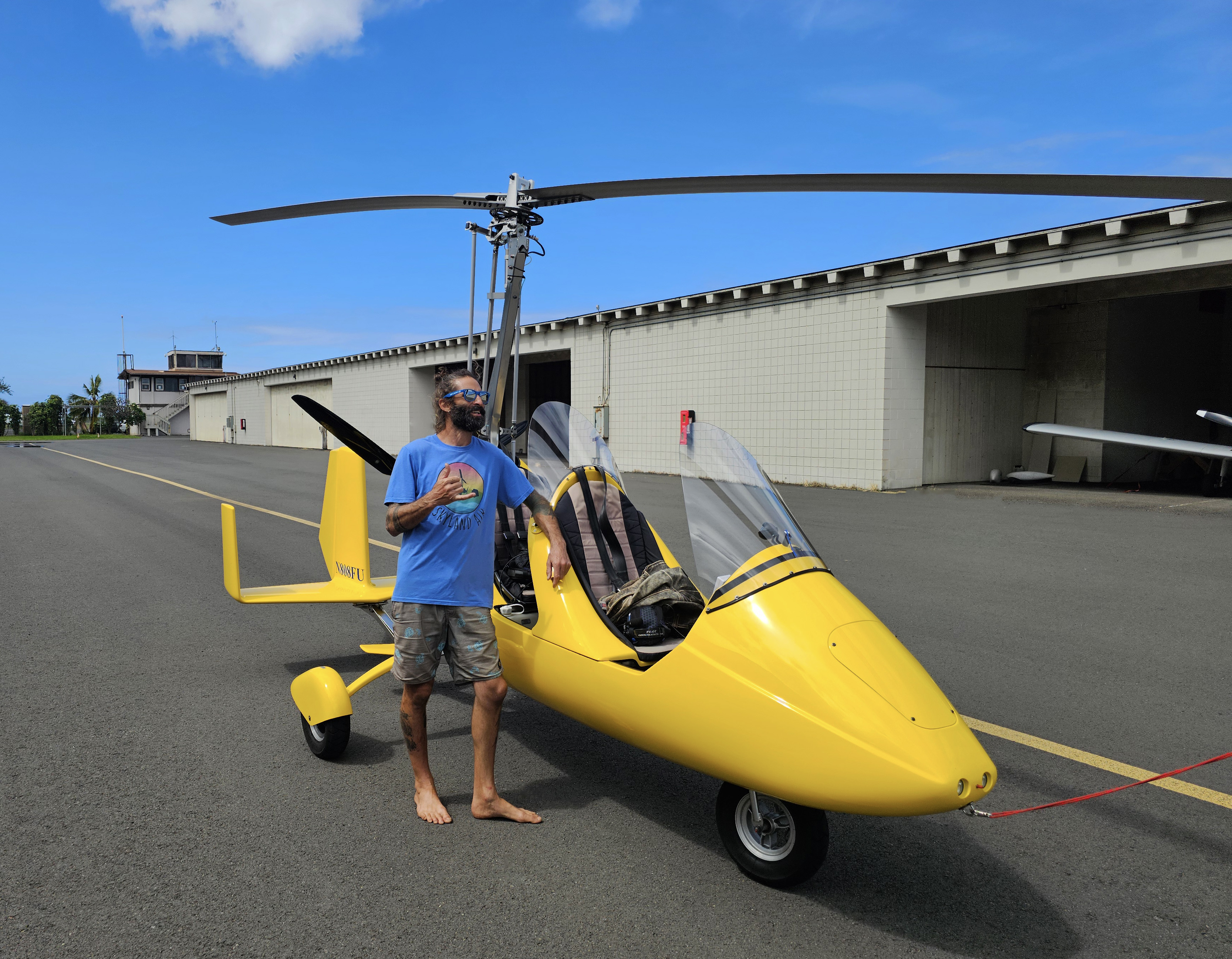
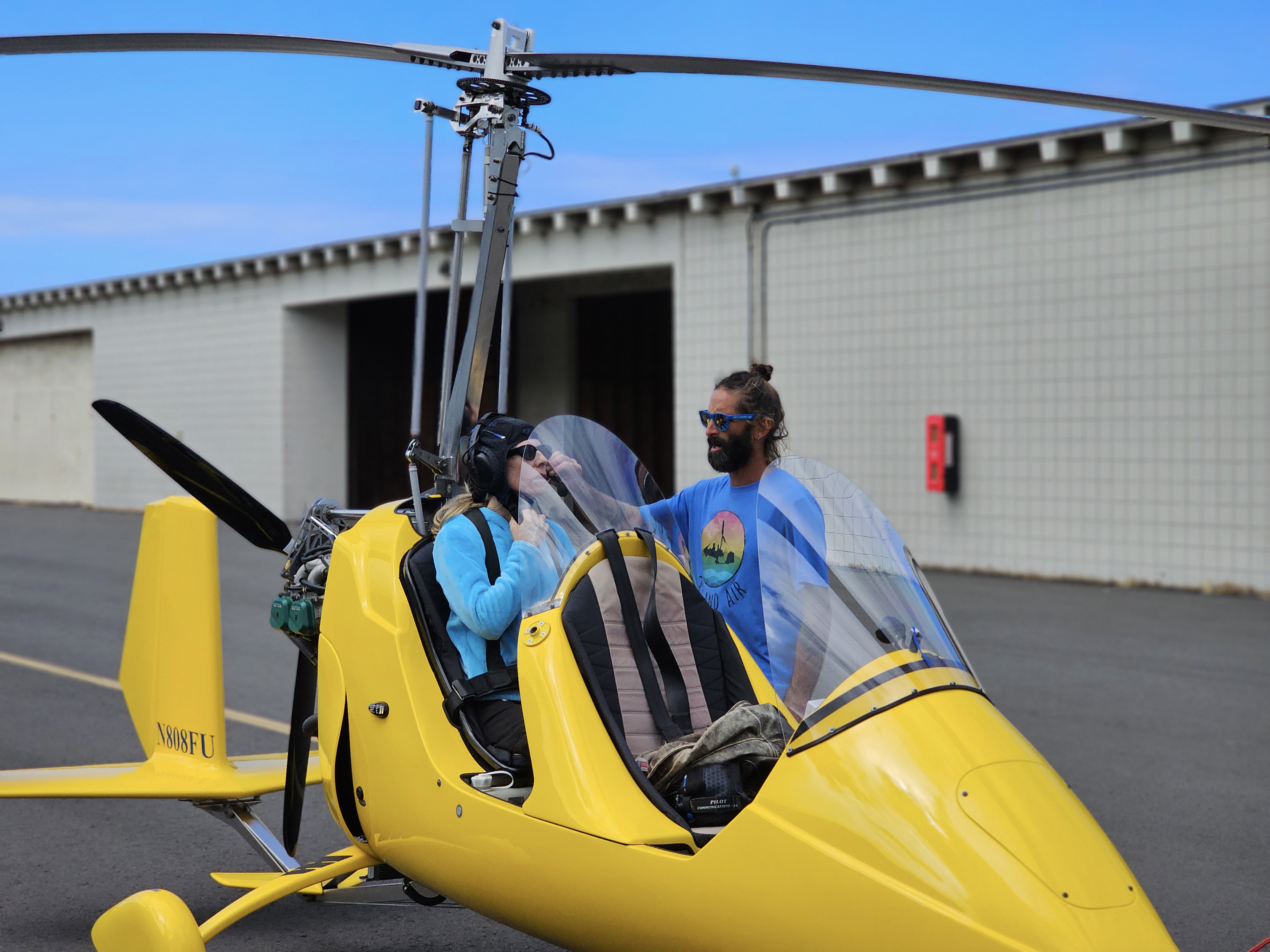
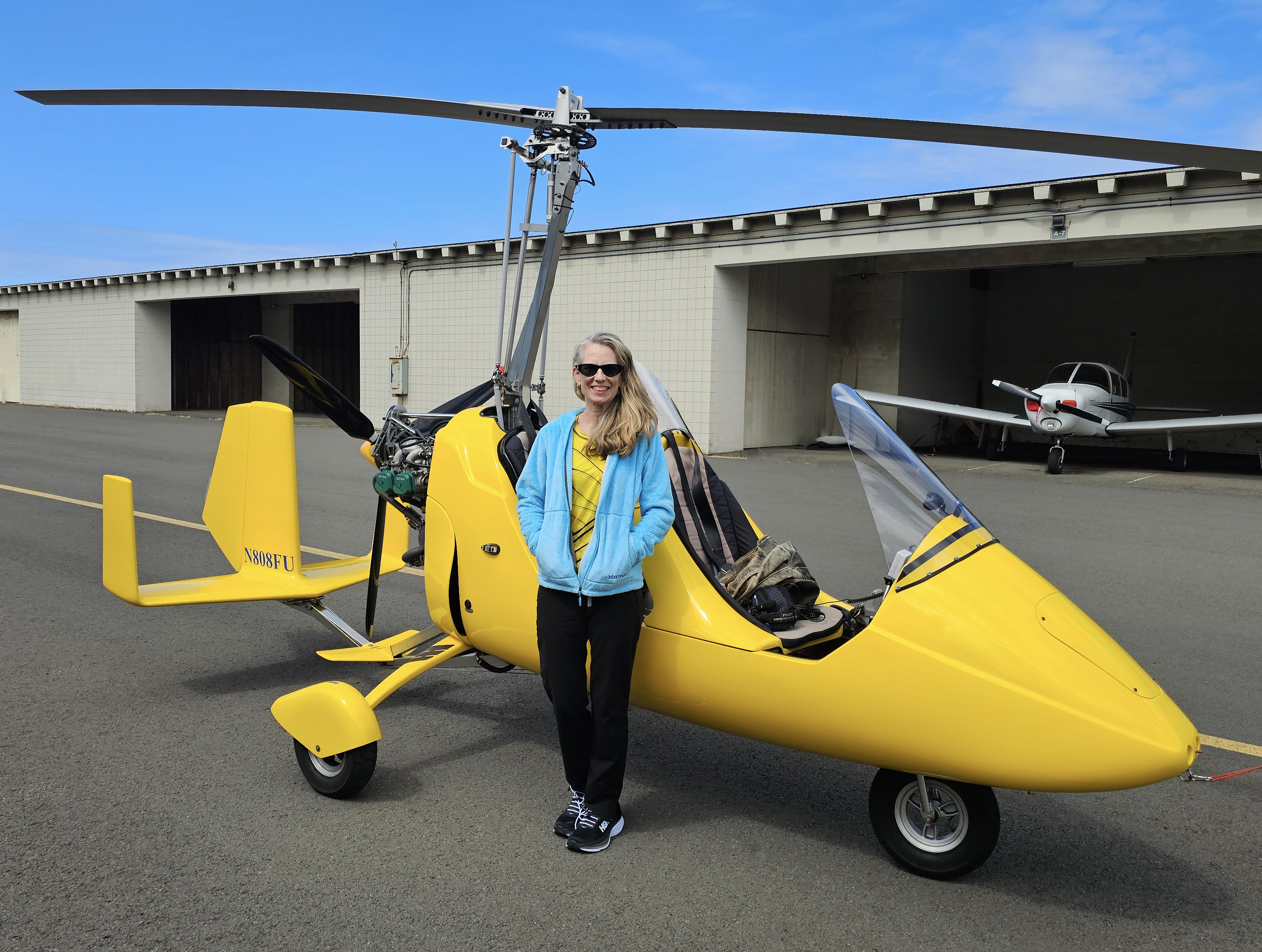
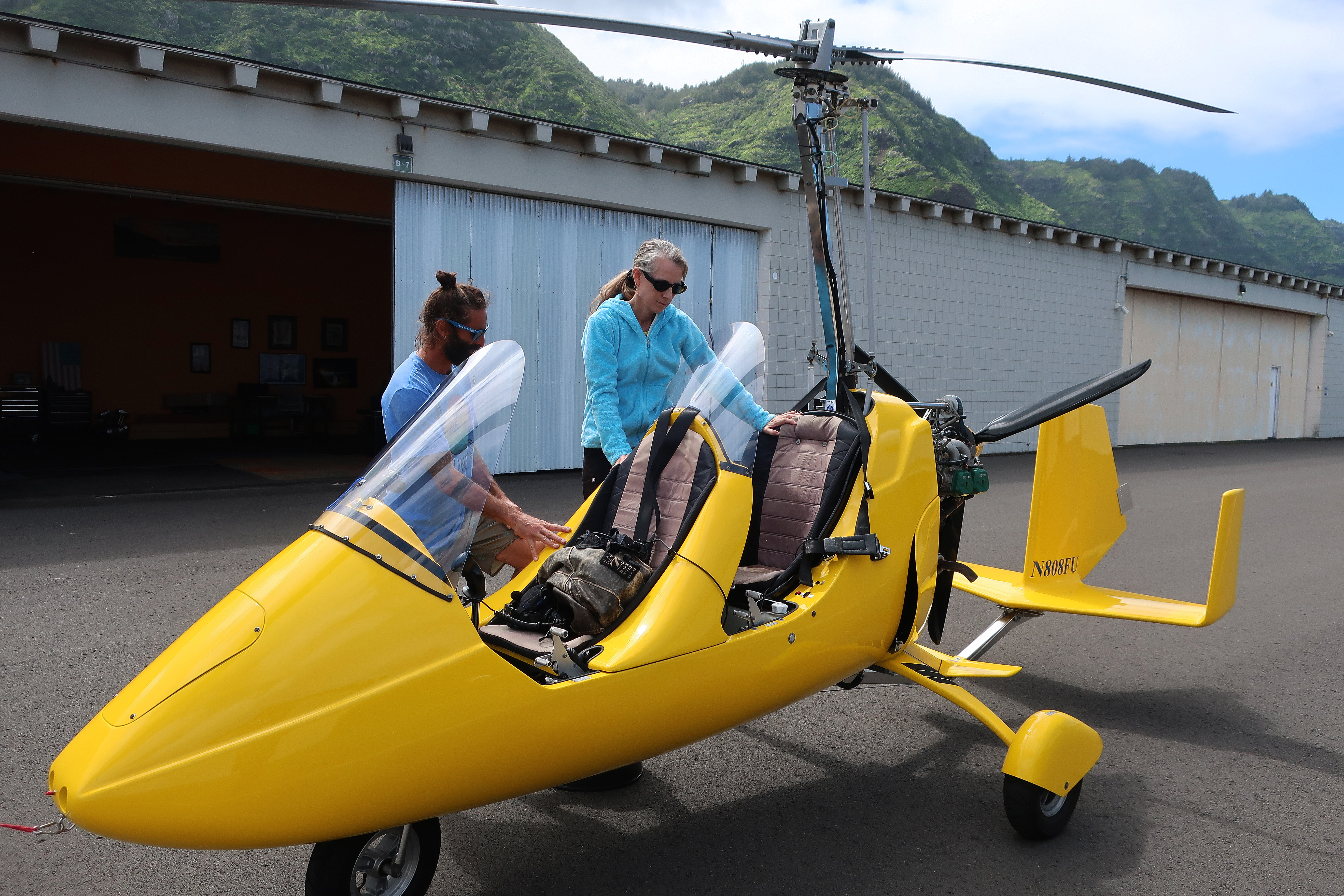
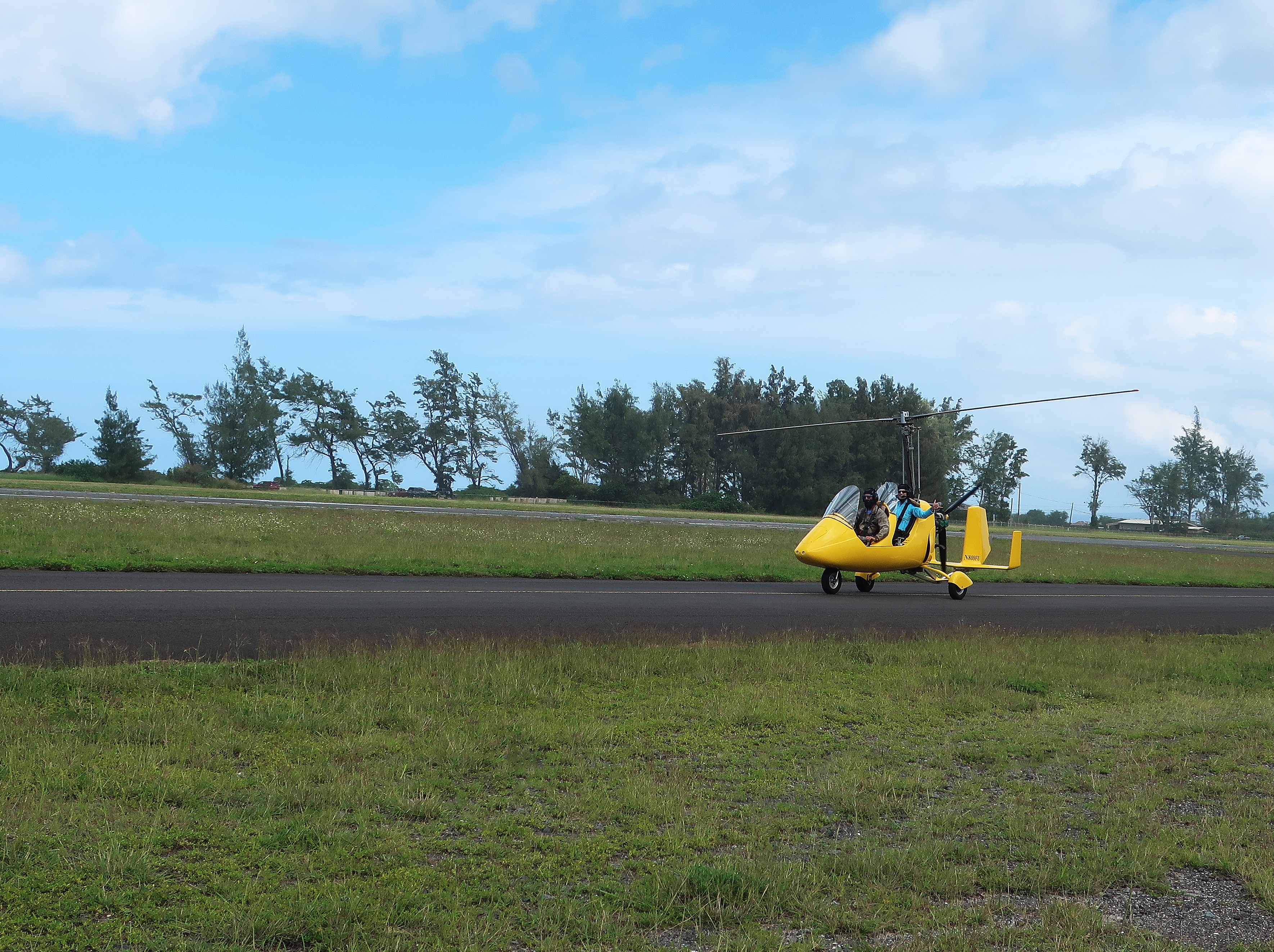
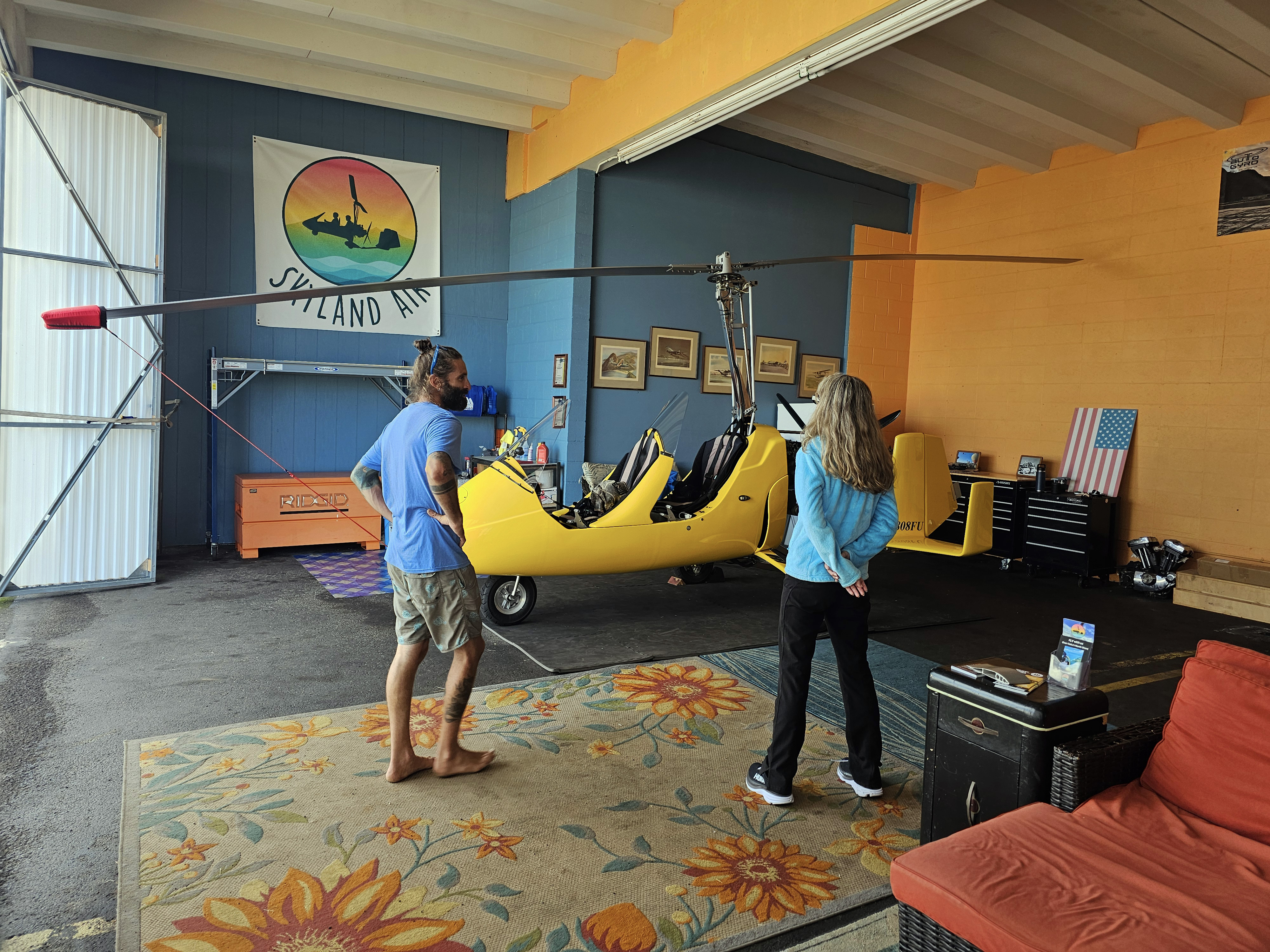
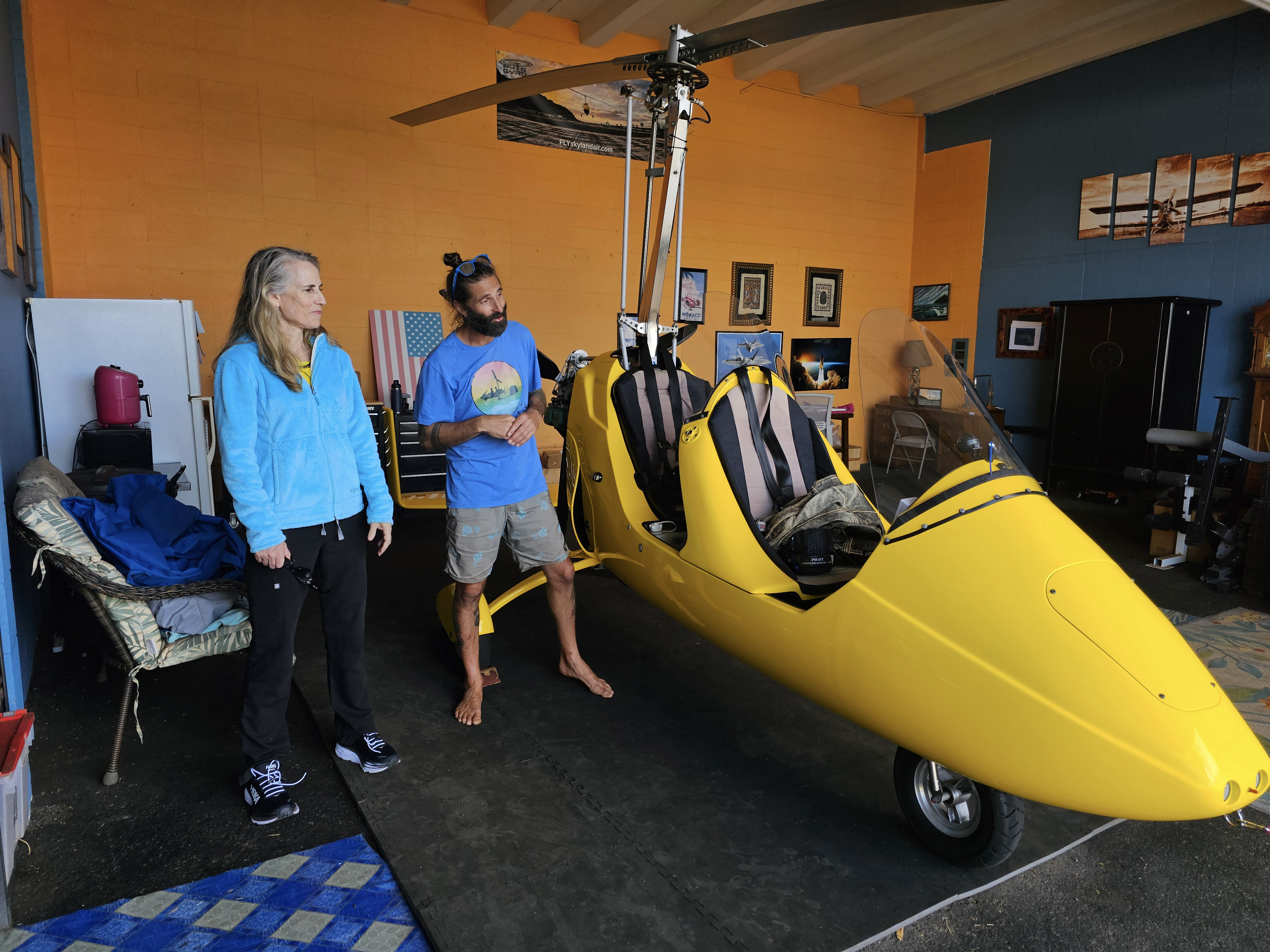
Pictured: Jay with his gyroplane, which you can take a ride in through SkyLand Air.
When I was a child I used to be filled with wonder whenever my parents put me on a plane. Back in the 80’s, you could walk your child right to the boarding area, pass them off to a fight attendant, and someone else could pick them up on the other side. Flying was still something people in the United States thought of as a lavish adventure. The food wasn’t bad, and the seats weren’t small and cramped. It wasn’t the 1950’s-level luxury experience, but before all the security lines and cramped spaces of modern aviation, it was still fun to fly.
I used to sit in my seat -always by a window- and watch the world fall away. My imagination ran wild as we flew through white, puffy clouds and across vast expanses of forests, oceans, deserts, and cities. When my parents waved goodbye, I was a child they were glad to be free from. When I landed and my grandma or aunt or relative-of-the-summer picked me up, I was an extra burden for them to carry. But in the sky I could be anything. I was a Pegasus from a magical cloud kingdom, a bird having an adventure, or a resident of a vast cloud city.
At some point, flying became An Ordeal. Buying tickets became increasingly stressful as airlines invented non-refundable tickets, baggage fees, and other forms of torture. Security became a harrowing experience. Waiting at the gate became worse as chairs got smaller and less comfortable. Seats on planes got smaller, and no one ever got upgraded anymore because there was an empty seat in first class. It became a thing I dread, which I only do because I like to be new places and have new experiences.
Over my lifetime I’ve been sky-diving, been on an extremely dangerous flying pedal bike in Mexico, and been in a helicopter with a former fighter pilot. I’ve owned and rode a motorcycle down a freshly paved freeway through the warm, inky nights of Phoenix, Arizona; (which is almost exactly like flying). And, in my travels around the world, I’ve been in every size and description of commercial plane.
However, I was 43 before I ever went up in a Gyroplane.
We all know from history class that Leonardo DaVinci drew the first plans for a rotating-wing aircraft. If you love flying, you might also know that Juan de Cierva -a Spanish engineer- designed the first Autogiro in 1923. Later, and American aviator named Harold Pitcairn would further refine the design. The gyroplane is easily more than 100-year-old technology, even if you don’t count DaVinci’s designs.
I’d seen plans for a gyroplane before, but I’d never had the opportunity to fly in one.
I met Jay Eisenberg because of his rescue duck, Sizzle. An undersized Muscovy duck, Sizzle was rescued from an abusive owner who fed her nothing but Macaroni and Cheese. Jay wanted to know more about caring for ducks, so he reached out to me. I have several rescue ducks who have an Instagram account, and he found me through there. I brought some of my ducks to meet Sizzle, and we talked about feeding, bathing, and general care. I never even asked him what he did for a living or where he was from. I was laser-focused on sharing duck facts.
However, he reached out again when Sizzle wasn’t feeling well, and this time we did the pleased-to-meet-yous. Turns out Jay is from Ottawa, which is the capitol city of Canada. He started out in the air by skydiving, loving it, and becoming a sky diving instructor. He never thought about flying a plane until years later when a friend offered to take him up in a gyrocopter. He went up once, and was hooked.
Small planes like Cessnas provide an often-bumpy flight. Being in a helicopter can feel like you’re fighting the air itself. Even large commercial planes hit patches of turbulence and provide a jarring ride much of the time. I expected the gyrocopter to be a similar experience, particularly flying out of Dillingham Airfield and over to Ka’ena Point where the winds from around the mountains come together. It wasn’t anything like I expected. In fact, it felt like I was a bird taking flight and landing as easily as if I’d been born with wings of my own.
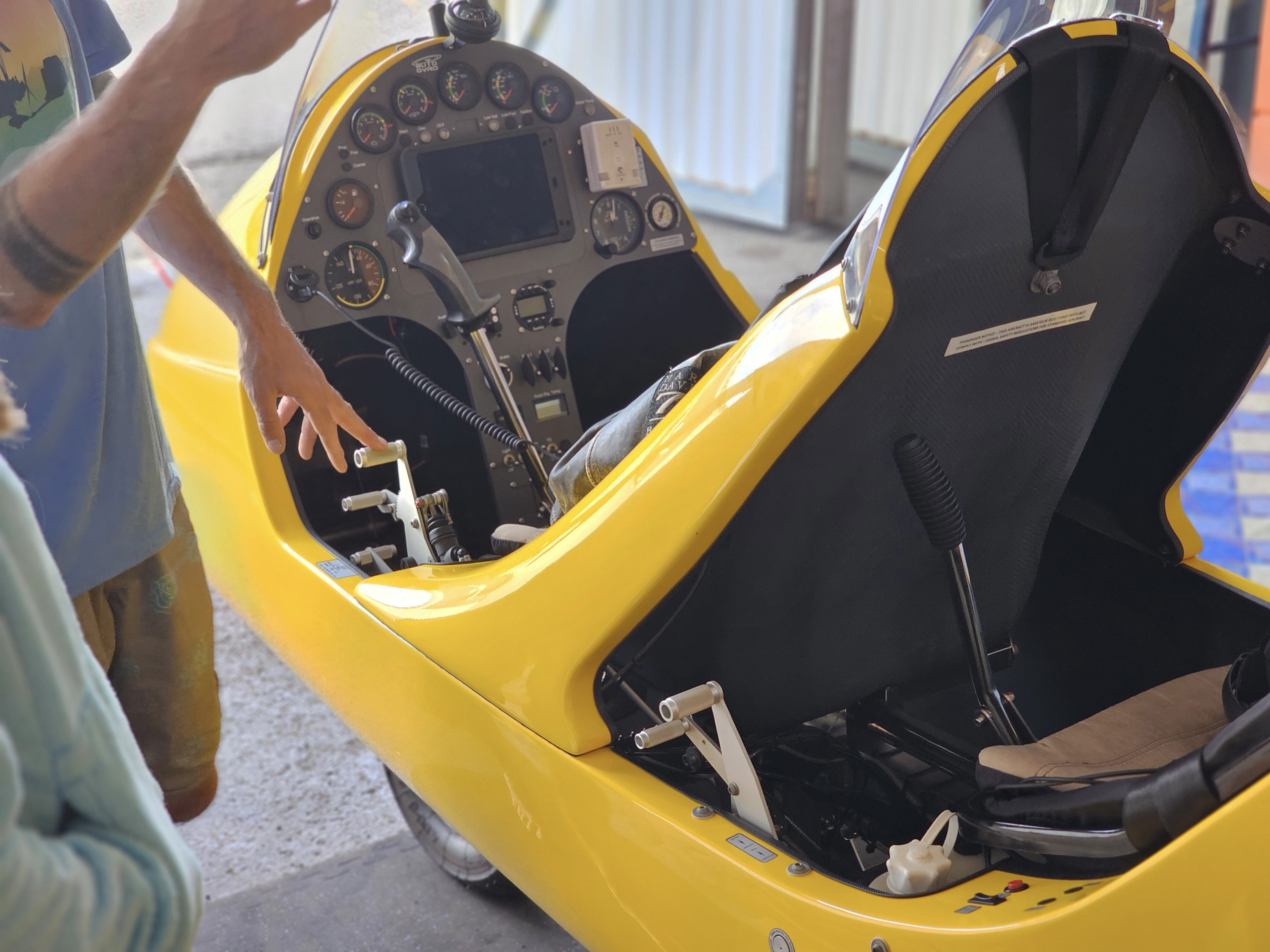
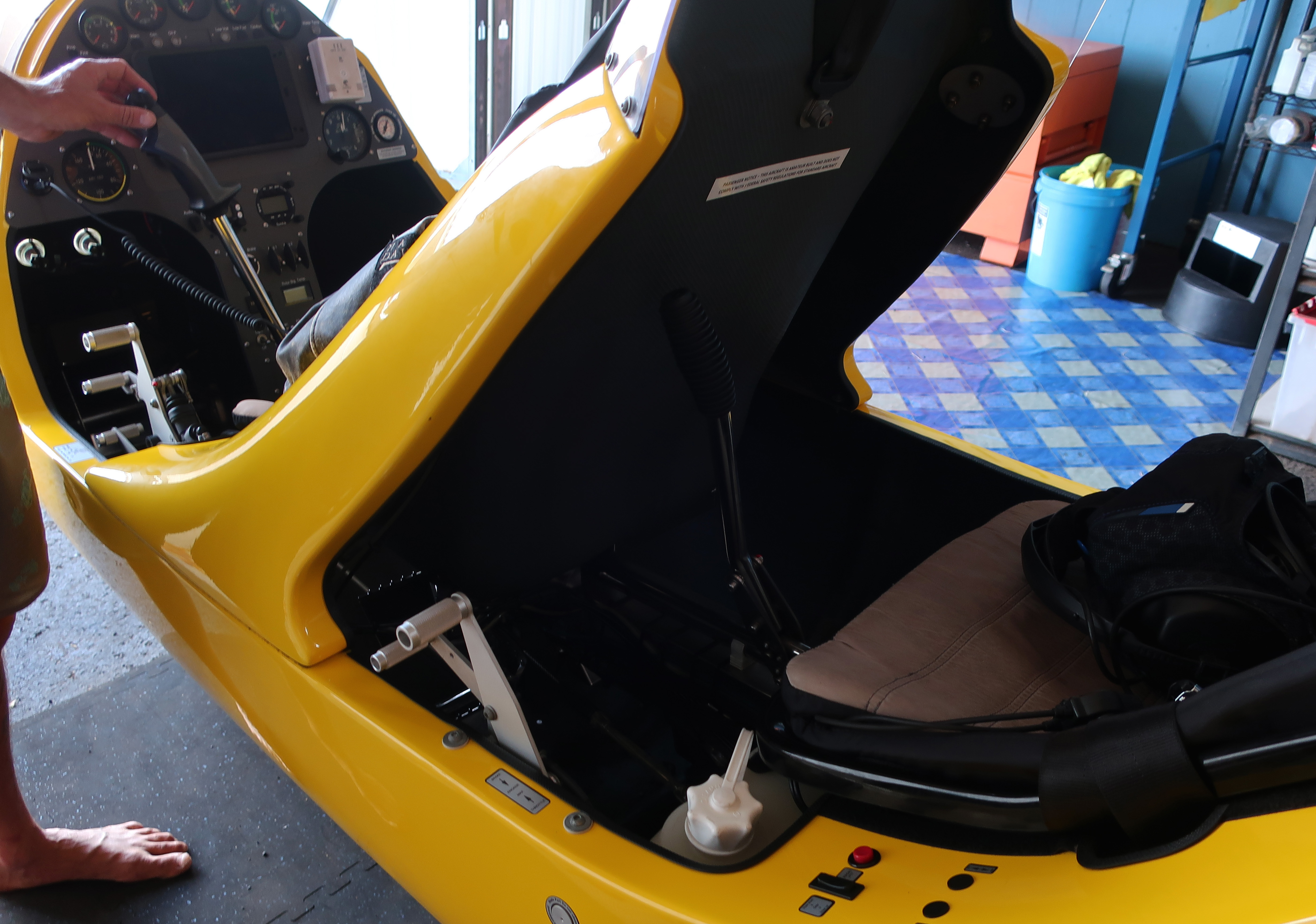
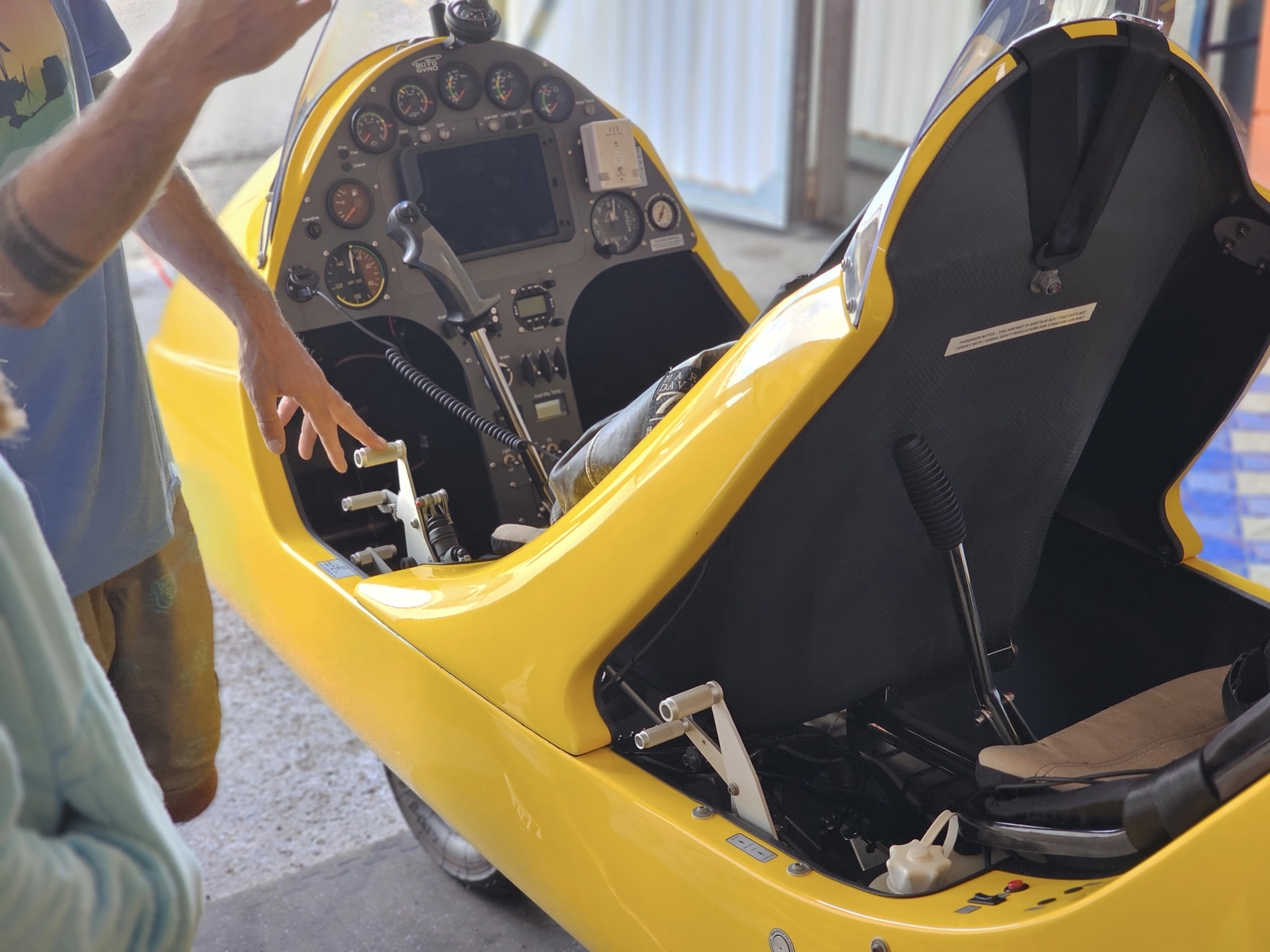
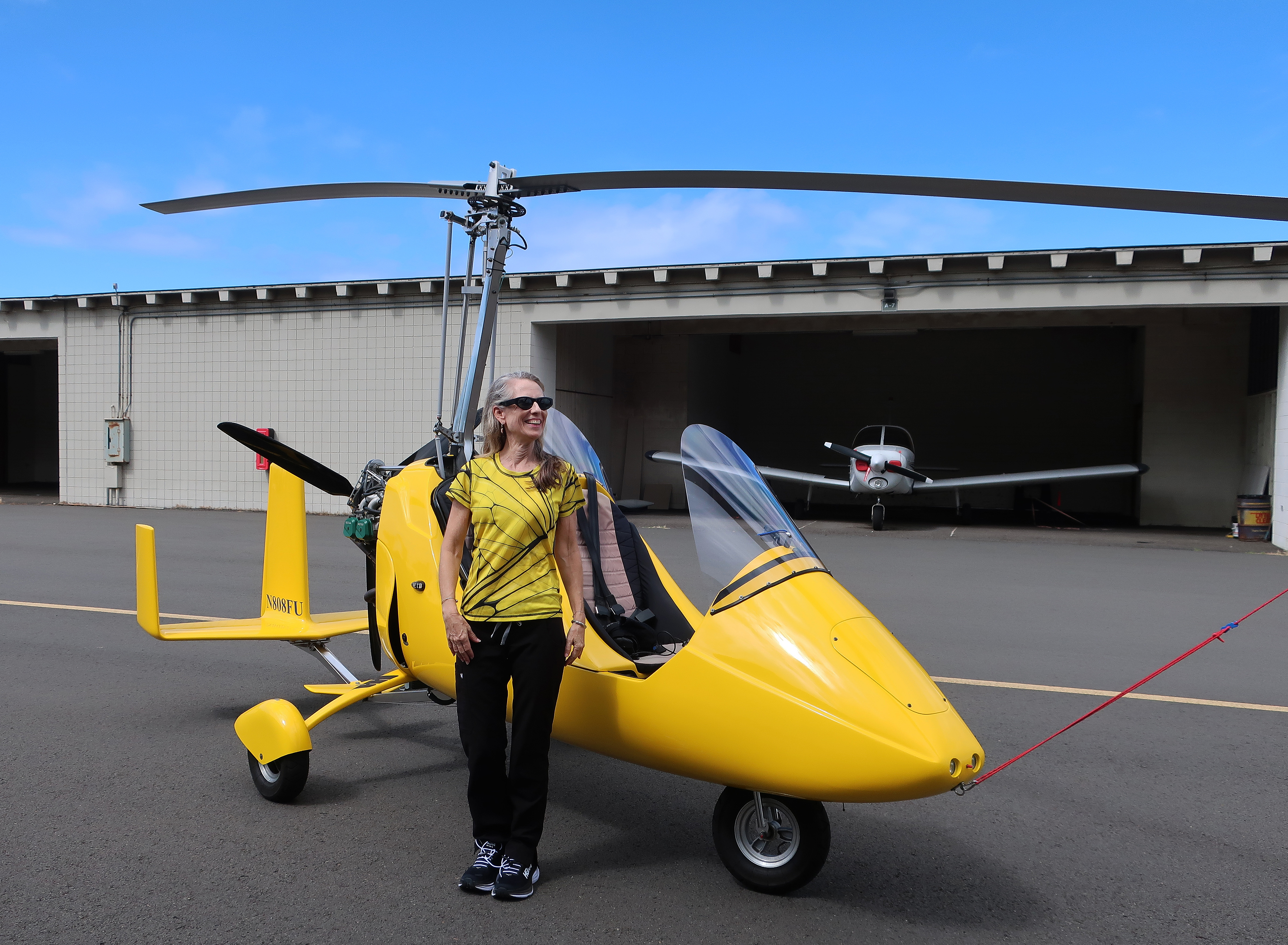
The gyrocopter has some body paneling, but it’s only for aerodynamics. The frame is the spinning blade -much like a helicopter’s blade- the propeller blade on the back, and the engine which isn’t much bigger than what was in my Kawasaki ZL6 Eliminator motorcycle. Gyroplanes are pretty basic in construction.
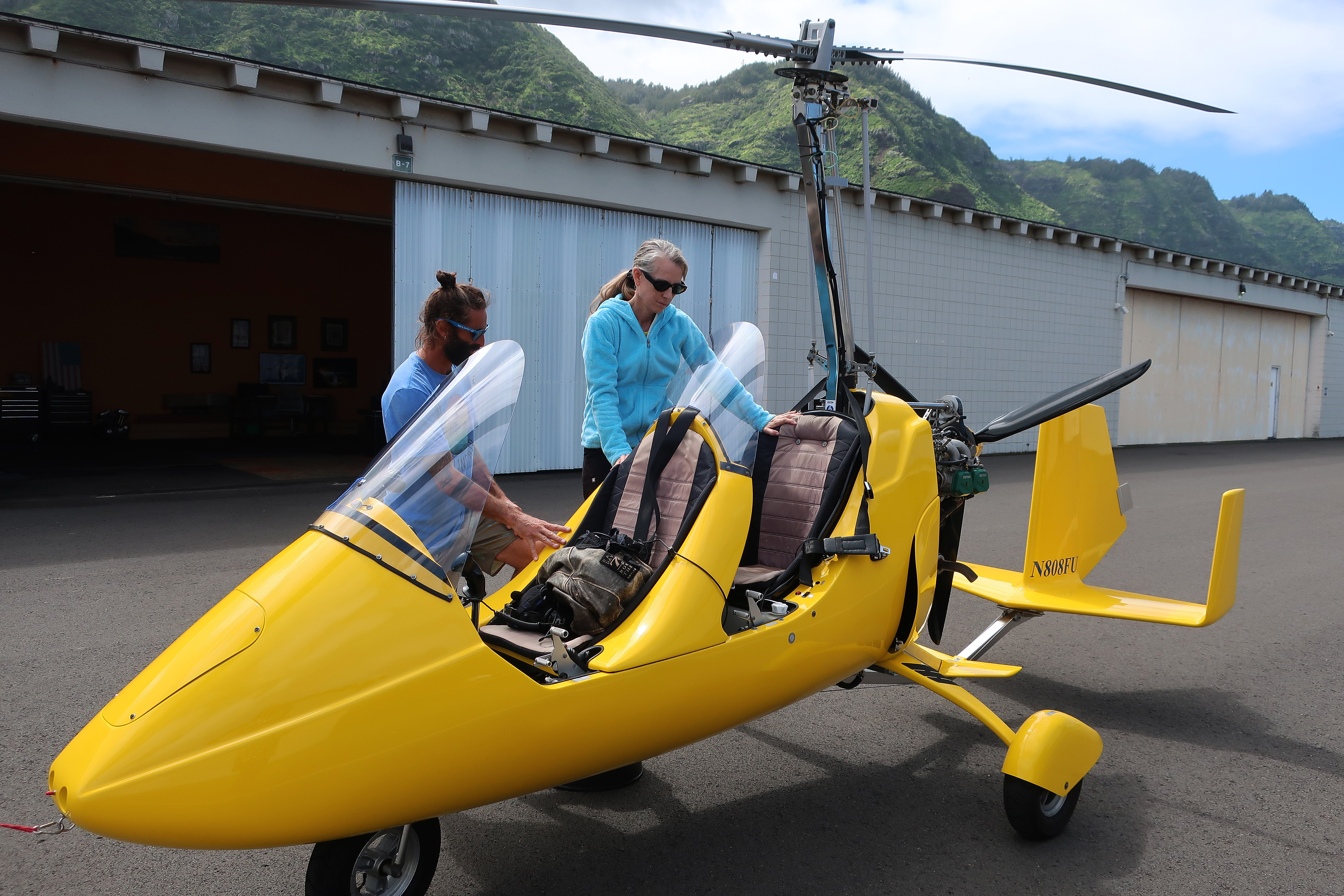
The engine turns the propeller which moves the craft forward. The unpowered rotor (like a helicopter blade) spins freely, providing lift as the air moves over it. The craft has actuators that tilt rotor backwards and forwards to help control its position in the air. Due to this arrangement of features, gyroplanes are known for their short takeoffs and landings, meaning they require very little runway. The technical aspects of it are pretty neat, and you can look into that if you’re interested, but the best part is what it’s like to actually fly in one.
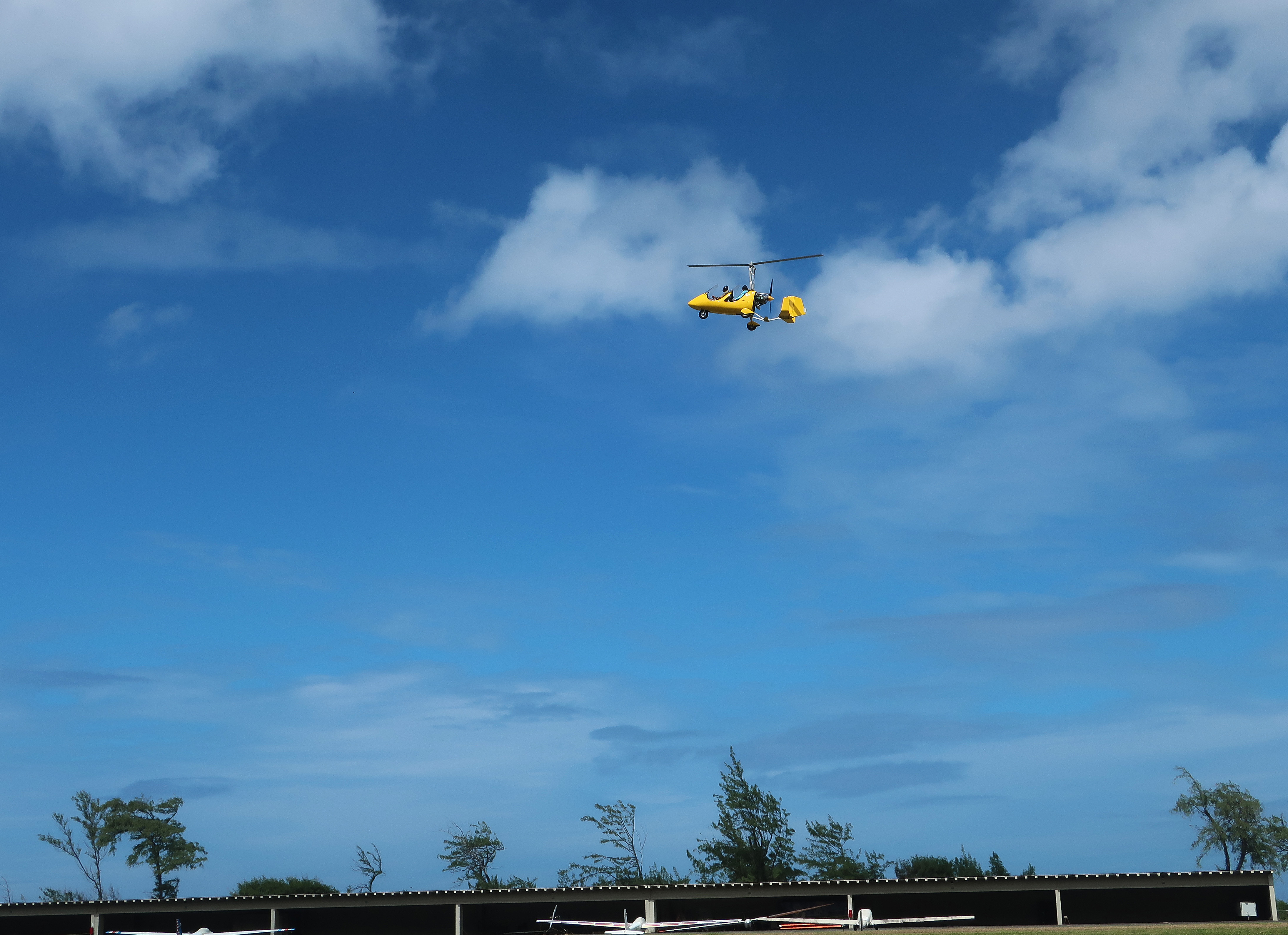
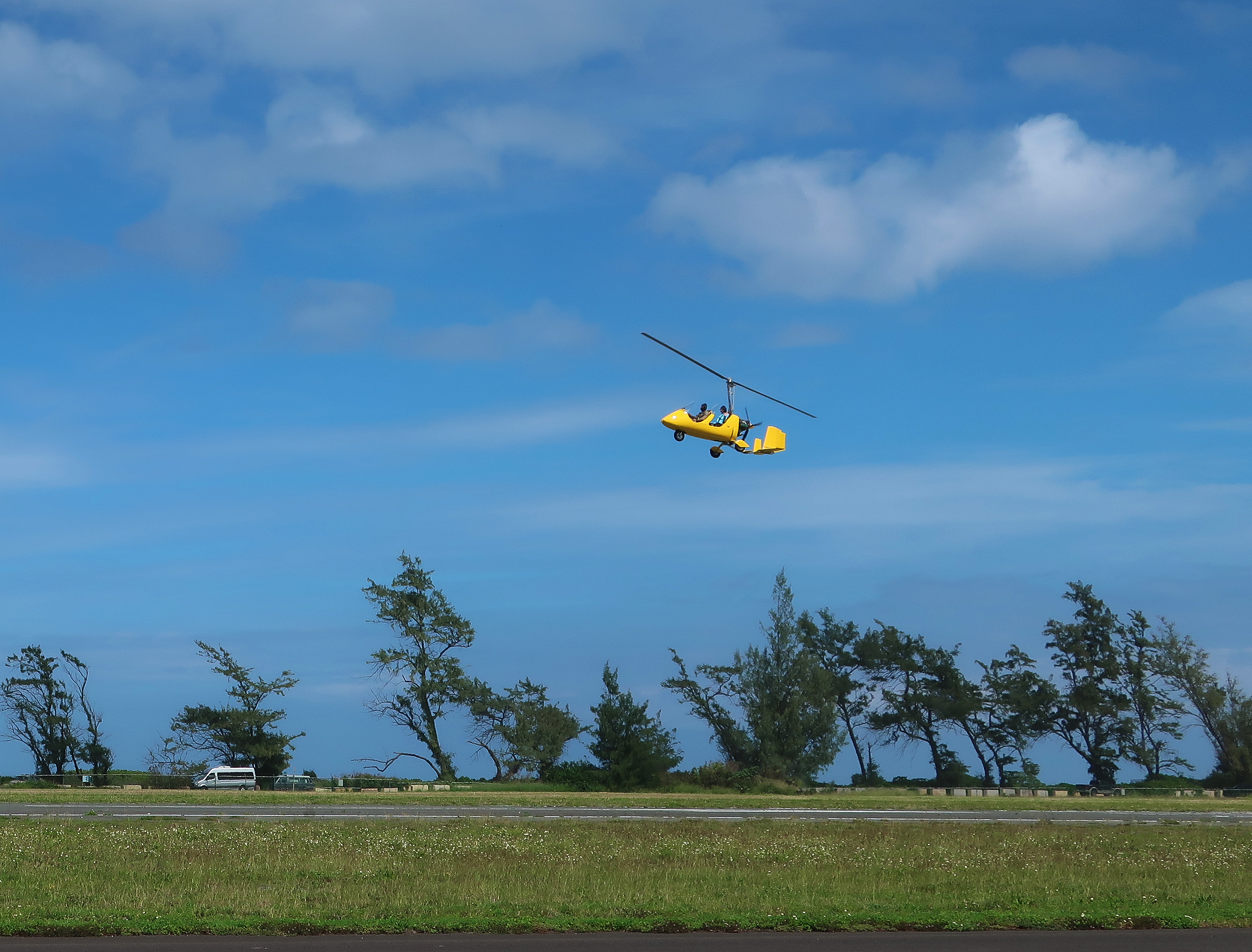
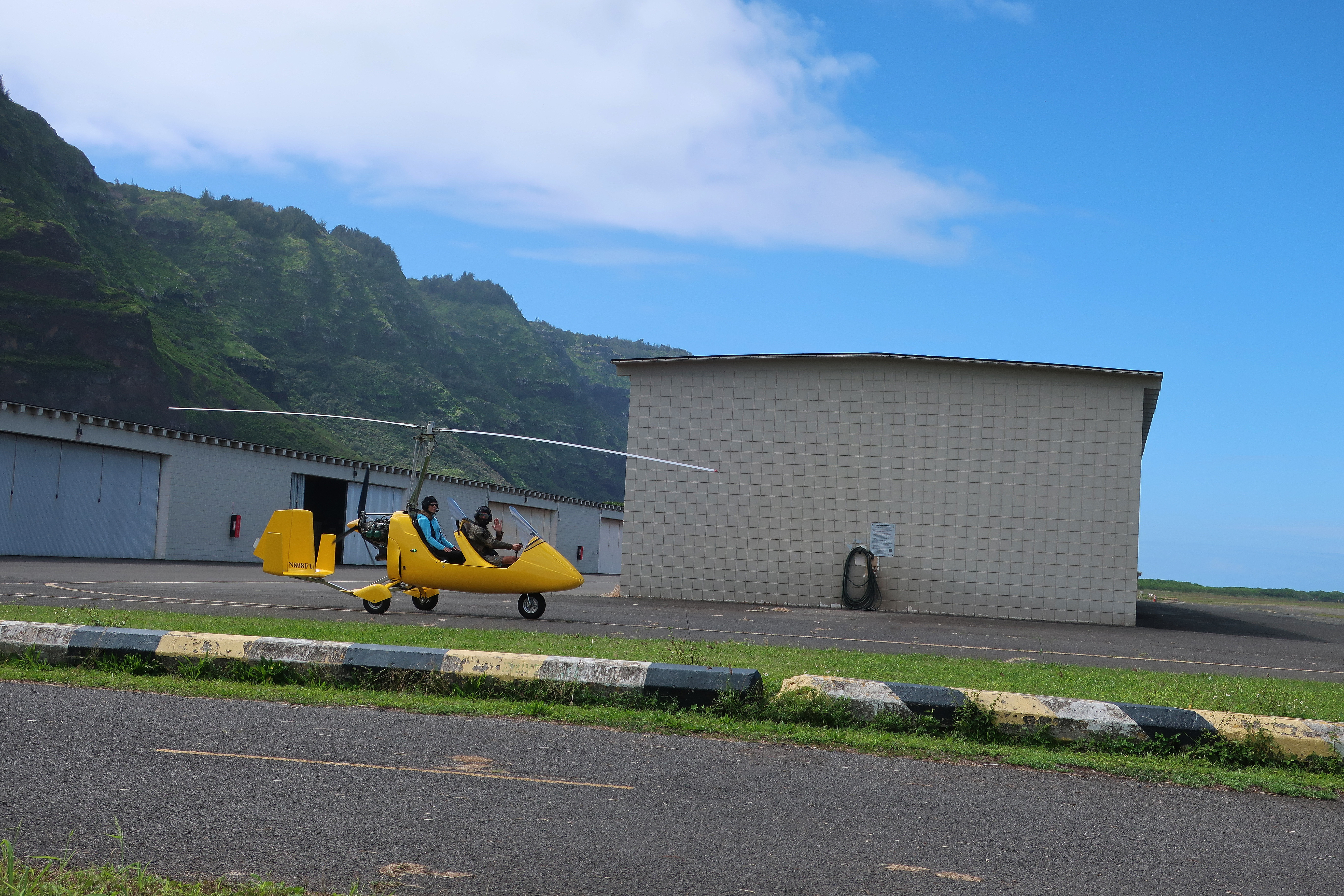
Takeoff was seamless and far more graceful than one of my ducks taking flight. We simply lifted off the ground as if it was easy. Gaining altitude was smooth, free from jerks or bumps. Cruising at about 1,500 feet, we headed towards the point. You’re high enough up to get a good view, but low enough down to make out schools of fish, whales breaching, and albatross couples dancing together in the air during their nesting season. At the point we climbed to 2,500 feet to get the best view of the Waianae coast on the leeward side of O’ahu. Seeing it from a commercial plane you barely get a glance because of how fast you’re moving and how high up you are. Seeing it from an open-air ultralight, it’s not just seeing, it’s experiencing it.
I thought it would be windy and cold. I flew in a helicopter with the doors off on a tour once, and it was gale force winds and frigid temperatures. I held on for dear life as the awkward machine struggled around in the air as if trying to buck us off. I saw some of the scenery, but with the noise and the turbulence, it was also a bit of an endurance test.
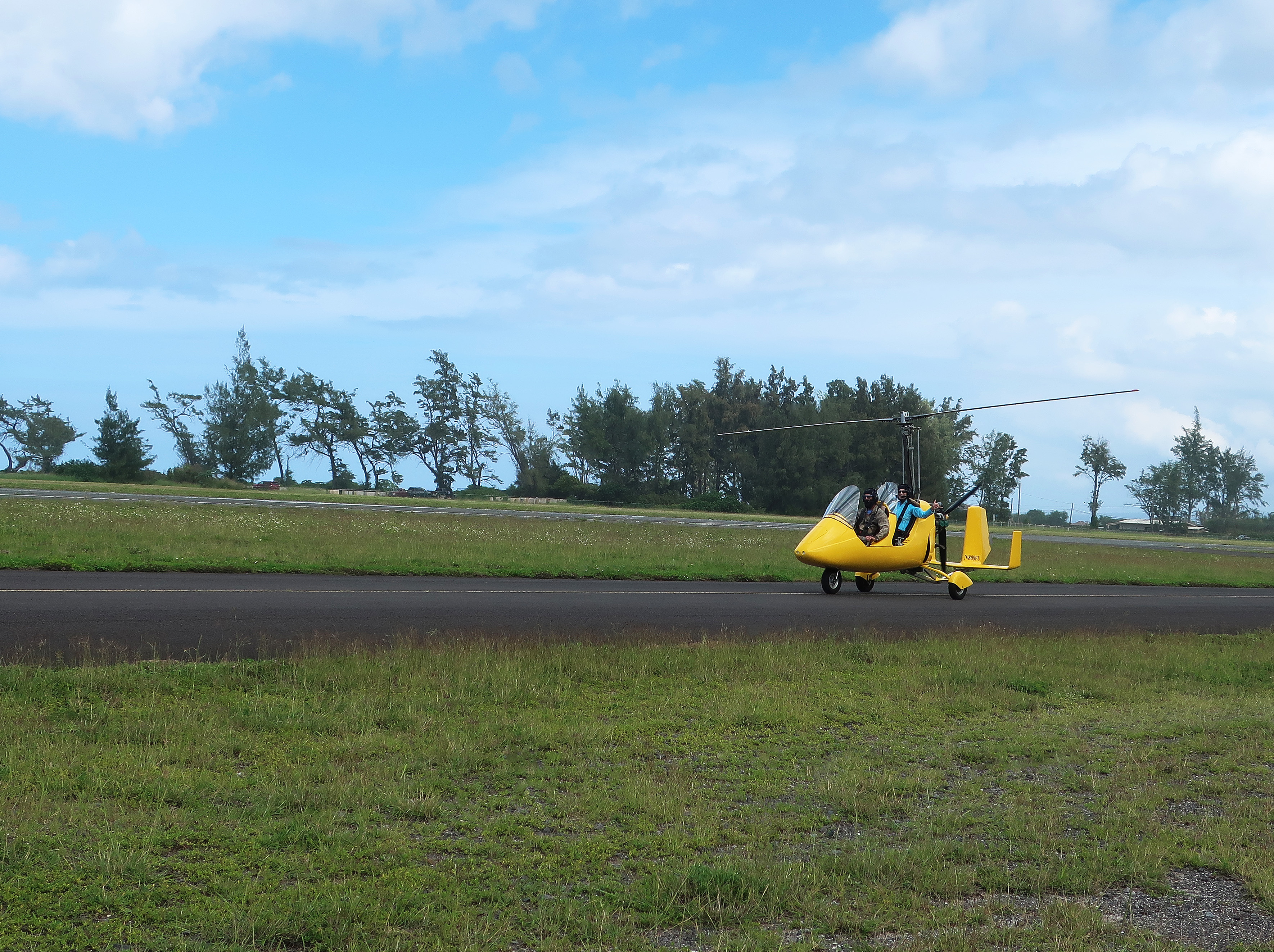
In contrast, being in the gyrocopter there was barely a breeze, and we weren’t high enough up to be cold. It’s not even as intense as going over the H3 in a convertible. In fact, it was really peaceful. I don’t think I’ve felt peace like that in the air since I was a kid dreaming about the shapes I saw in the clouds while a flight attendant occasionally “supervised” me.
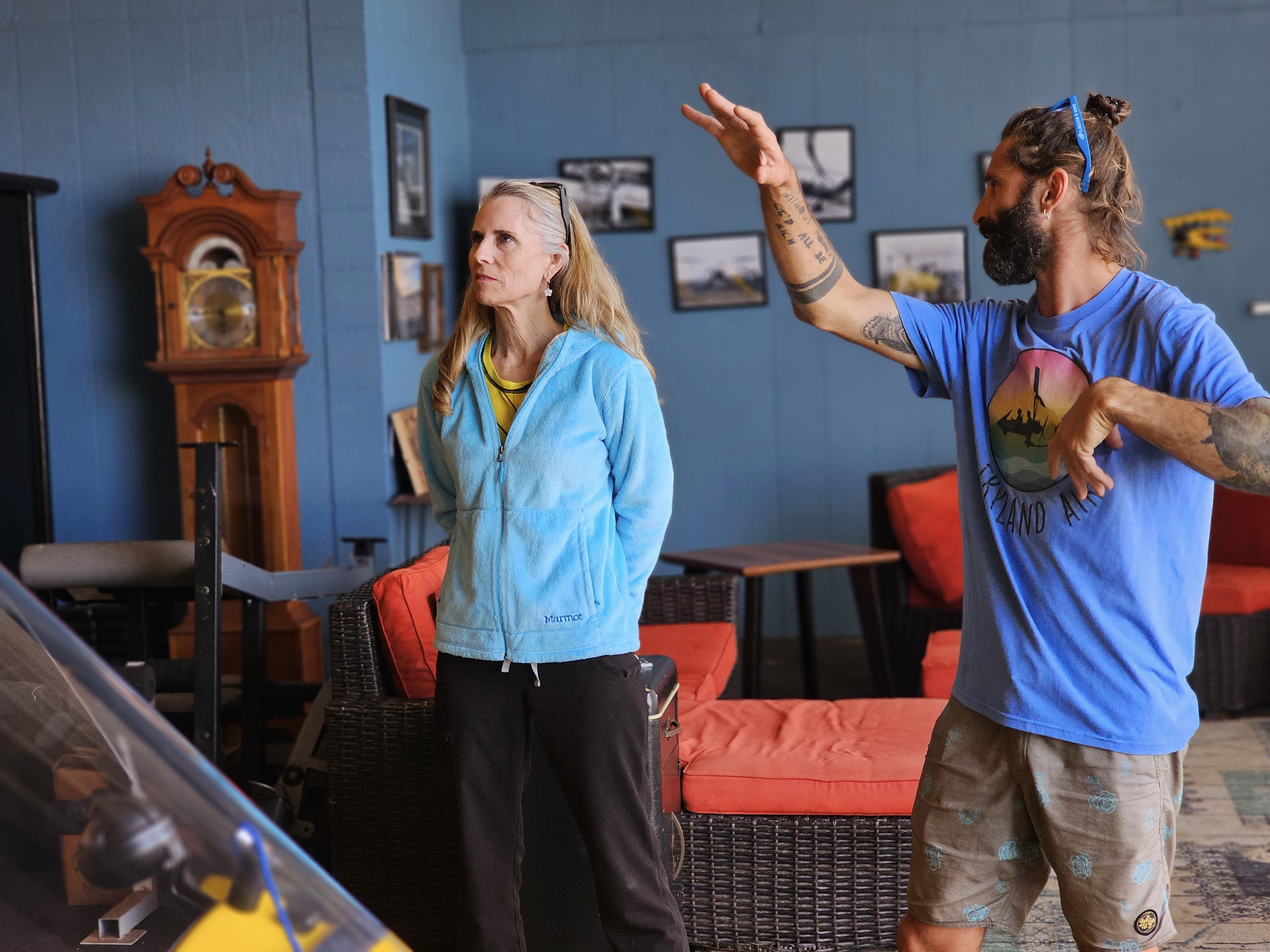
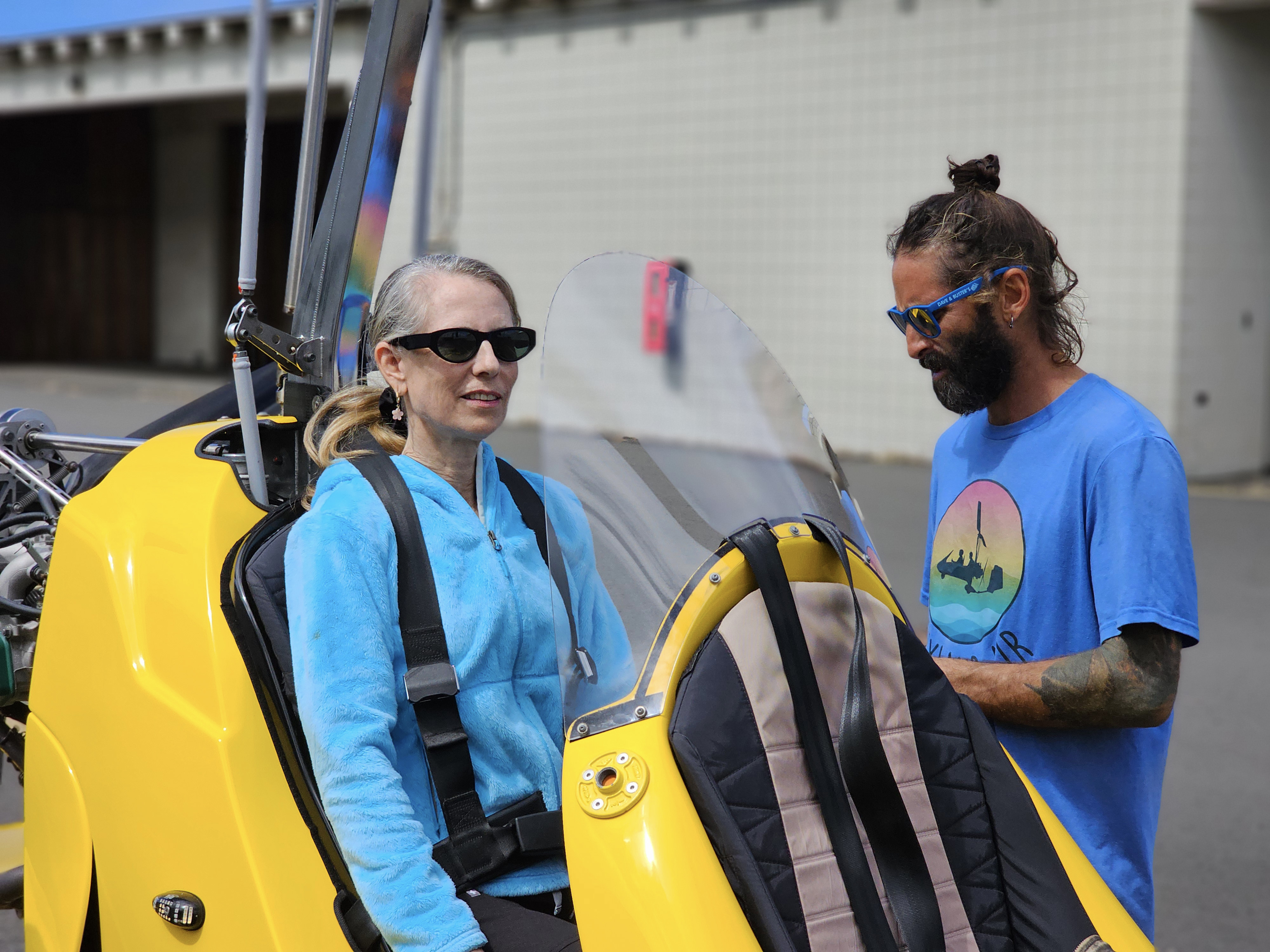
My hair didn’t get destroyed by the wind. My skin wasn’t raw from the cold. I barely had to pop my ears when we landed. It was amazing. The best part isn’t even how calm and zen it is to hang in the air in a gyroplane. You see, Jay doesn’t give tours; he gives lessons. I didn’t just get in a plane and go for a ride. I got instructed in the controls, and then when we were at cruising altitude, I got to take over the controls and actually fly the plane myself. My first time out. I flew the plane.
For those who live on O’ahu, Jay will actually instruct you for the full 20 to 40 hours of flight training required to pursue a Gyrocopter pilot’s license. For those who are just visiting, it’s an opportunity to get a taste of flying an aircraft which might lead them to try for a pilot’s license when they get home. For those who don’t want to go for a pilot’s license, they can keep the certificate for the successful completion of their first lesson as a memento.
When we touched down -as gently as a bird landing on wire without moving it- I felt a disappointment that I wasn’t prepared for. I hadn’t even realized how much fun I was having until it was over. All I wanted to do was go back up in the air and fly around some more.
From the air, these islands show so much more of their beauty. You can see the contours of the land; from the ancient lava flows that became reefs with sand settled between them, to the pods of whales breeching in excitement as they celebrate the birth of babies You can see the way the clouds settle around the mountains and hug them so that they look majestic and surreal. From the air, Hawai’i is even more beautiful than it is on the beach.
Instead of giving this experience a recommendation, I feel that it should instead come with a warning. Flying a gyrocopter is pretty amazing, and it’s one of those things that’s easy to get hooked on like good coffee or gambling. At $250 a trip, it’s more expensive than good coffee but cheaper than the average night of poker or roulette. Like gardening or raising chickens, it’s easy to convince yourself that it’s okay to spend the money because it will pay off later. However, I doubt I’d use a pilot’s license for anything beyond decorating my wall. I guess it could keep my degree company. I never use that thing either. At best, they could be a good start towards a collection of very expensive pieces of paper.
So, buyer beware. Flying a gyrocopter is both peaceful and addictive. And, it might be the best way to see our island home.
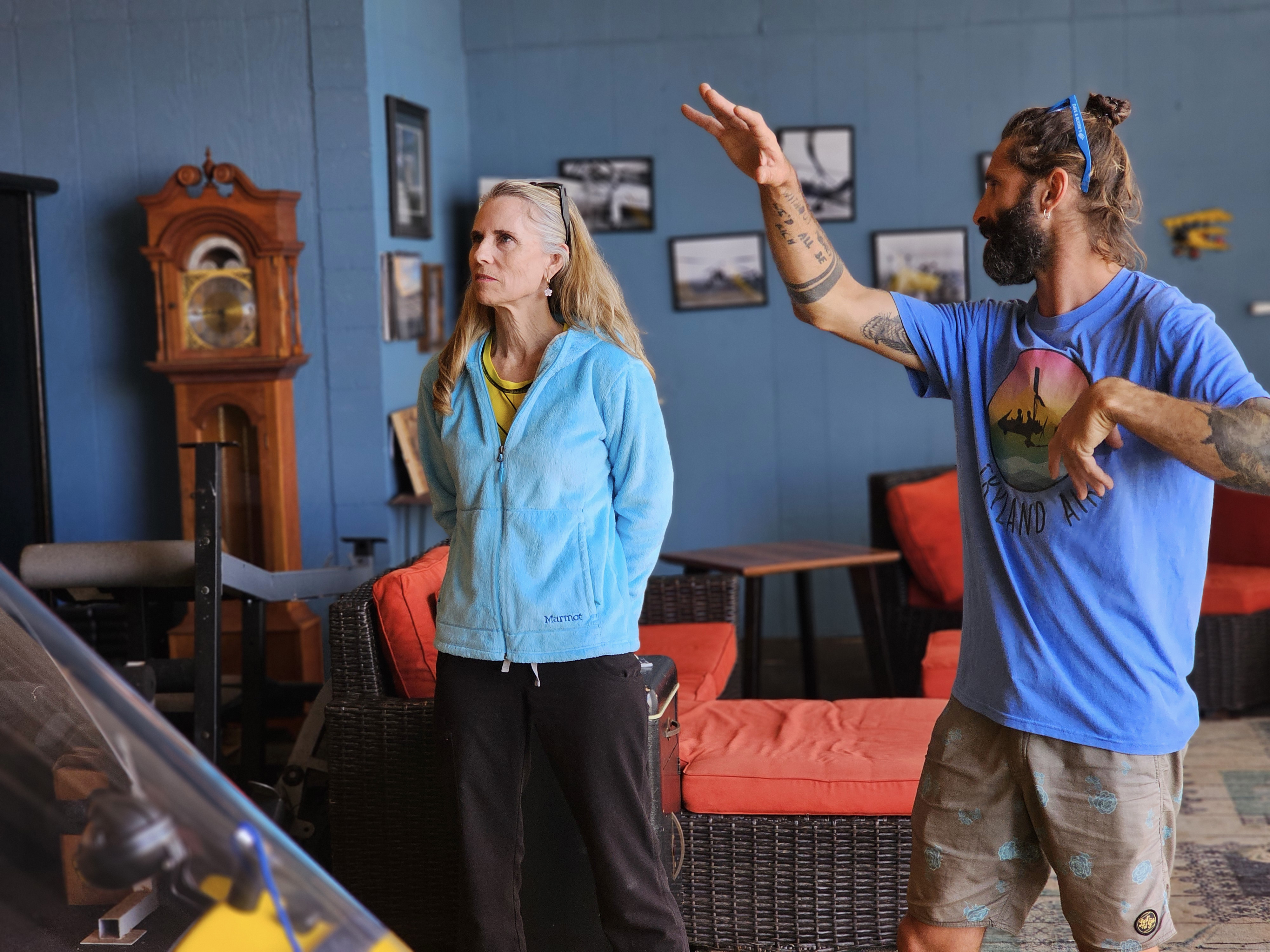
Thank you to my friend Jessica who agreed to a photo shoot because I’ve never loved pictures of myself, and also because a bunch of selfies seemed less useful than pictures from a distance that let you take the whole experience in.












 JD's Blog