In the Hawai‘ian Islands, there are many invasive species. Some, like the sheep and goats on Mauna Kea, have destroyed all the high-altitude forests that used to exist on that mountain. Others, like the pigs, spread Rapid ʻŌhiʻaDeath (ROD) and diseases that are communicable to humans.
Then -as impossible as it sounds- there are the domestic house cats taking out our Hawaiian Monk Seals. The massive habitat and species loss has led Hawaii to be known as the part of the United States with the highest extinction rate.
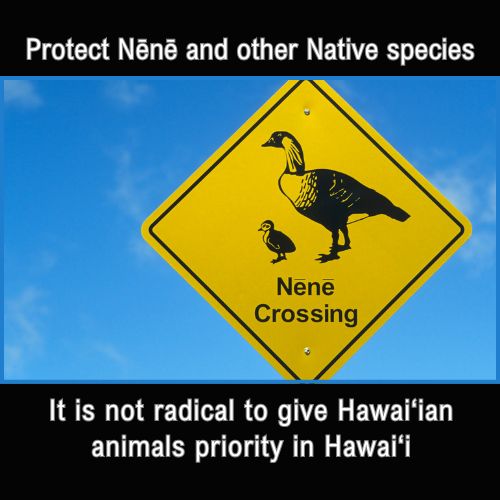
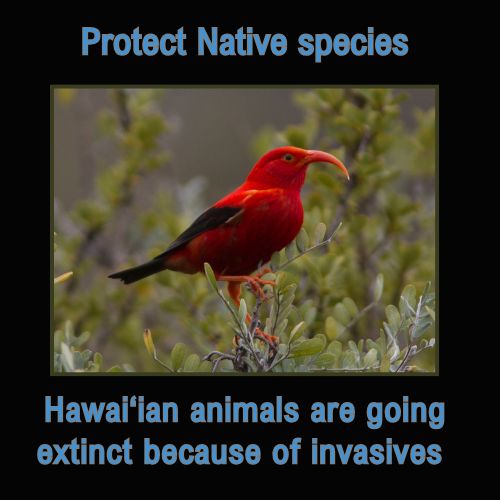
For example, in 2023 eight Hawaiian forest bird species were officially declared extinct. These included the Kauaʻi ʻōʻō, Kauaʻi ʻakialoa, Kauaʻi nukupuʻu, Kāmaʻo, Maui Ākepa, Maui nukupuʻu, Kākāwahie, and Poʻouli.
Sheep and goat populations can be controlled fairly easily because they intentionally avoid populated areas. This allows the Department of Land and Natural Resources (DLNR) to cull them from a helicopter. This helps control the populations, and the meat is always offered to hunters trying to feed their families.
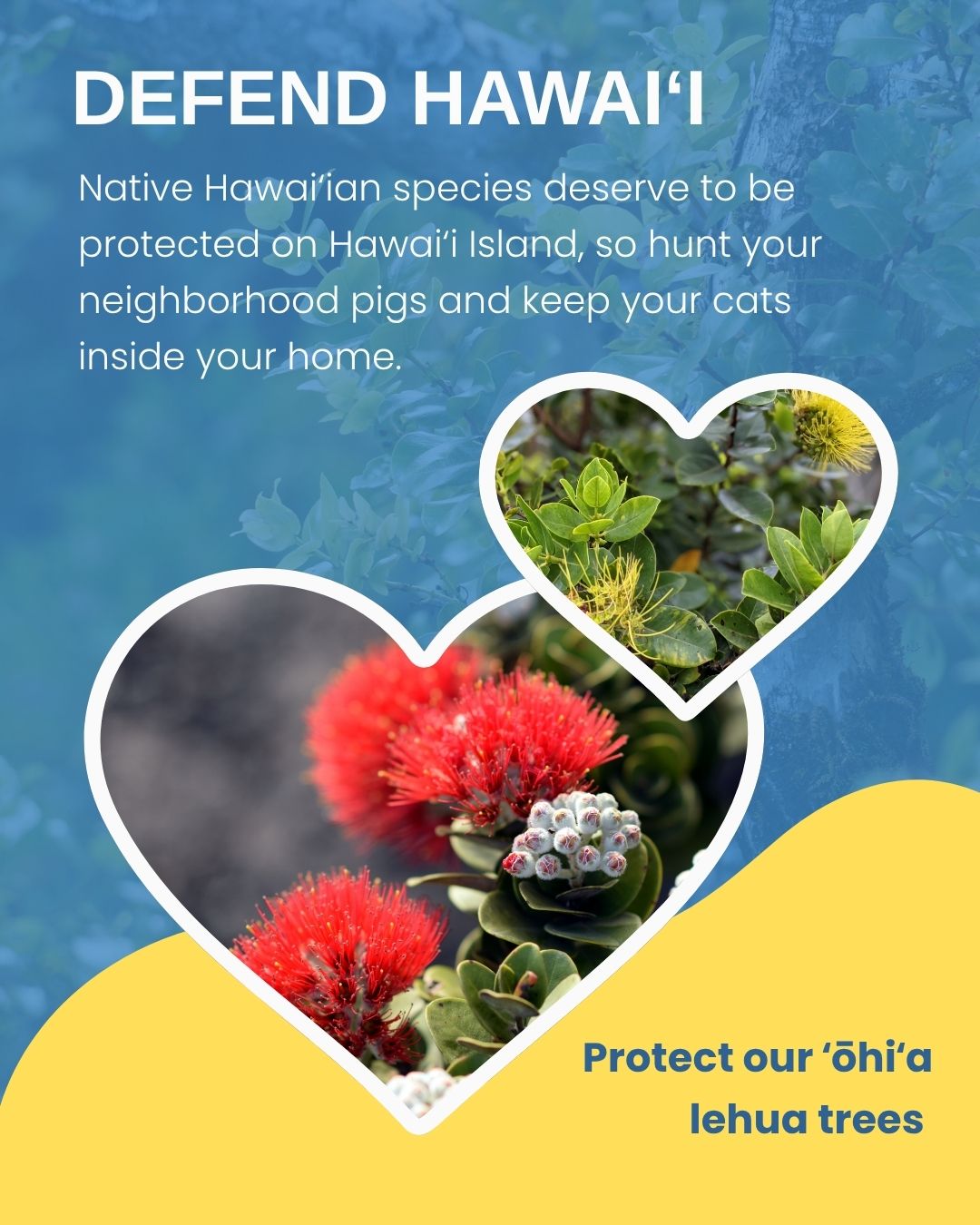
This kind of control cannot be carried out in populated area. Some animals -like the wild pigs- tend to live around humans. This means there is no easy way to cull them. The State of Hawaii has therefore made it easy for hunters to take wild pigs. Ungulates (hooved animals) are all invasive in Hawai‘i, but feral pigs have helped take down the majority of ʻōhiʻa lehua forests that once existed on Hawai‘i Island.
Feral pigs also spread Brucellosis, Leptospirosis, Roundworm, and Pseudorabies. This means they can cause huge disease outbreaks within populations of humans. They are a public health hazard, in addition to being a driving force for the extinction of Native Hawai‘ian plants and animals.
When it comes to domestic cats, people are often unaware of the damage they do. Unlike the feral ungulates in Hawai‘i, domestic house cats have never caused the death of humans. They don’t cause car accidents or spread disease that humans can get. This often makes it easy to forget how harmful they truly are.
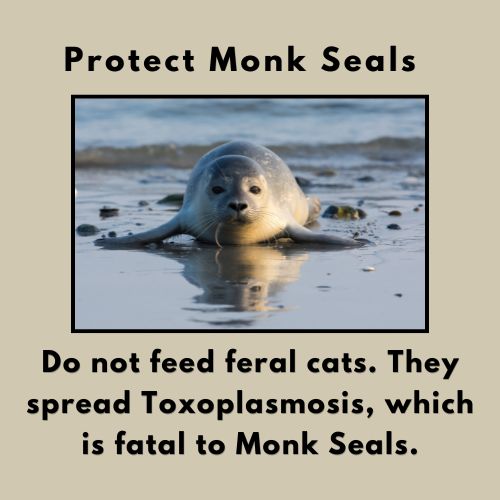
Cats in Hawai‘i often carry a disease called Toxoplasmosis. It’s not fatal to cats, but it is fatal to Native Hawai‘ian Monk Seals. Cats love to bury their waste in the sand, along riverbanks or at the beach. This waste has Toxoplasmosis in it, and when water brings it to the ocean, the seals are infected. Even when it’s caught early, state vets have been unable to save infected seals. Diseases behave differently in every species. In Monk Seals, Toxoplasmosis is deadly.
It gets worse. The invasive feral cats in the Hawai‘ian Islands pick up diseases like Pokémon. For example, Feline Leukemia Virus (FeLV) and Feline Immunodeficiency Virus (FIV) are highly contagious and infect a high percentage of feral cats Hawai‘i. They also carry Roundworms, hookworms, and tapeworms. In the Hawai‘ian Islands, feral invasive cats also often spread mites and other small parasites which are transmissible to domestic pets and humans.
The bottom line is: The modern domestic house cat descends from a proud lineage of domestic cats native to Egypt, Israel, Jordan, and other Middle Eastern countries. They are native to a desert environment where very few parasites can survive, and are not good at fighting off worms, mites, and other parasites and illnesses. In a place like Hawai‘i where the temperate climate allows for the survival of every parasite, disease, and bacteria to thrive, cats are -sadly- incubators. They become miserable and diseased quite quickly.
And remember, all these invasive animals aren’t just miserable outside the environments they come from. They are also destroying the ecosystem that they are in. The Hawai‘ian Islands play host to a wide variety of invasive species, and this is the direct cause of our extinction crisis. It’s extremely important that we do something about this problem, because if we don’t eliminate the feral invasive animals in our midst, we won’t have any Native Hawai‘ian species left to protect.
Speaking on behalf of the sea turtles, the monk seals, the honeycreepers, and the ʻōhiʻa trees, it’s time we do more to eradicate invasive animals in the Hawai‘ian Islands.