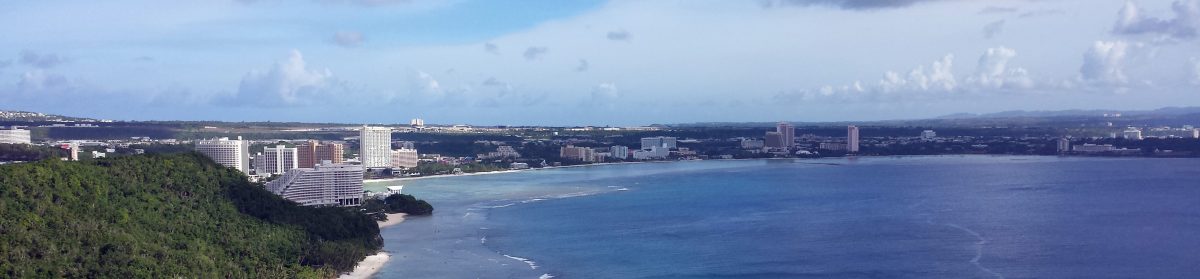

I’ve been interested in plants since I was a child.
My great-aunt Jean Gomes used to tend the rose garden in San Francisco, and she had a very impressive native plant garden at her home in San Jose. She used to give me seeds whenever she saw me. I remember she gave me California Poppy seeds once. In the summer I learned that they are called Poppies because they really do POP! The seeds pods exploded with impressive force, and they dispersed their seeds across the entire hillside in one season. I deserved no credit for this, but I felt pride anyway. Seeds I planted grew poppies, and those poppies flourished and spread.
I was hooked.

I’ve grown plants in California, Arizona, South Korea, Oregon, Guam, and Hawaii.
When people tell me that my garden here in Hawaii is impressive, I chuckle to myself. This is gardening on easy mode. I buy a bell pepper, cut it up, and toss the seeds in the yard. A few months later, I’ll find little baby bell peppers out there. Sure, I till the soil from time to time and add mulch twice per year, but that’s a small amount of effort compared to the other places I’ve lived.
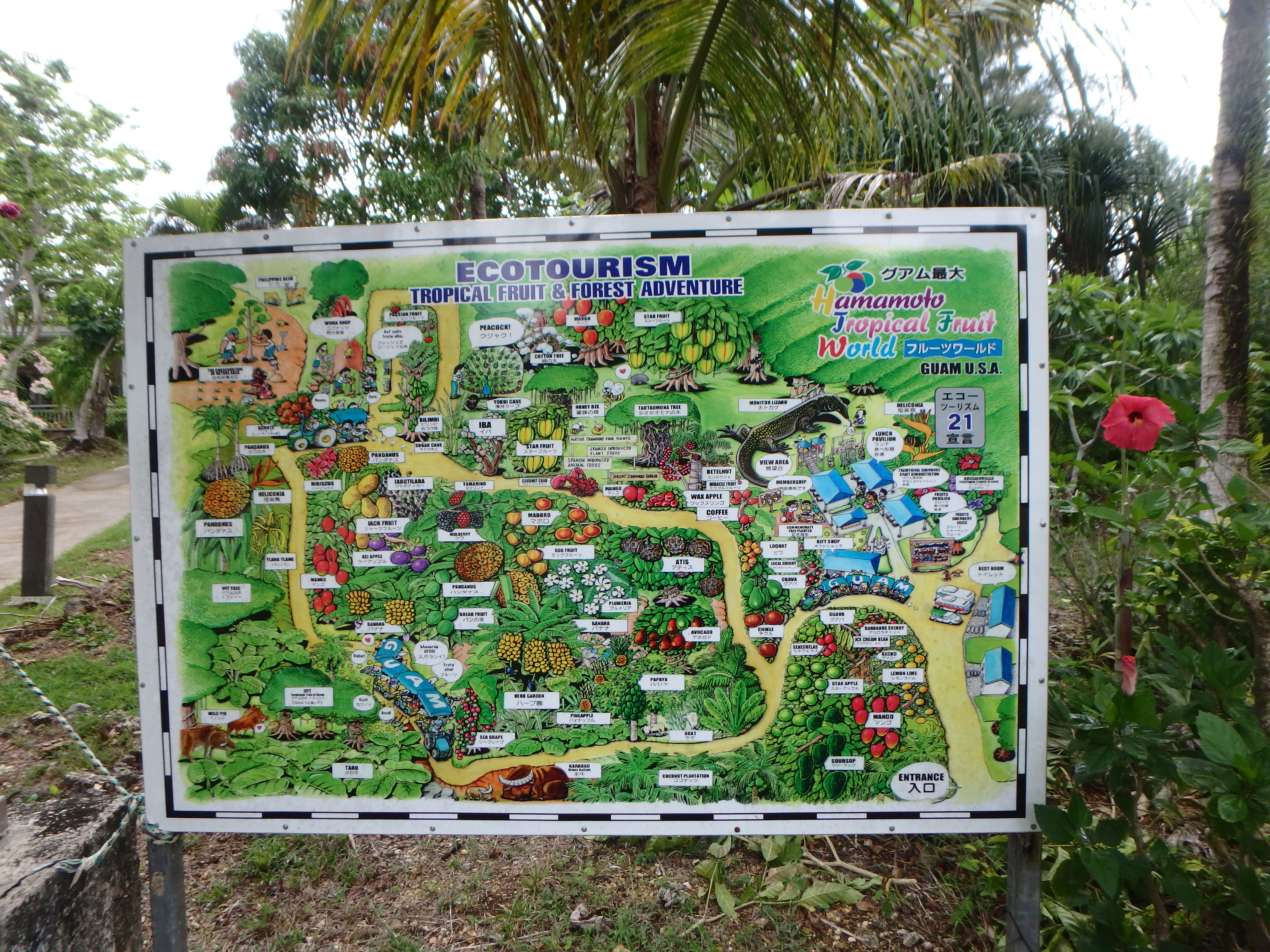
However, this is my first time doing yard work with a machete. Guam is a coral atoll and it wasn’t actually that easy to grow things there. Even if you could coax some plants to grow, they would fall prey to the wide variety of bugs and diseases in the jungle heat. The equator seems to be the perfect place for life (excluding me -of course- because I found it way too hot).
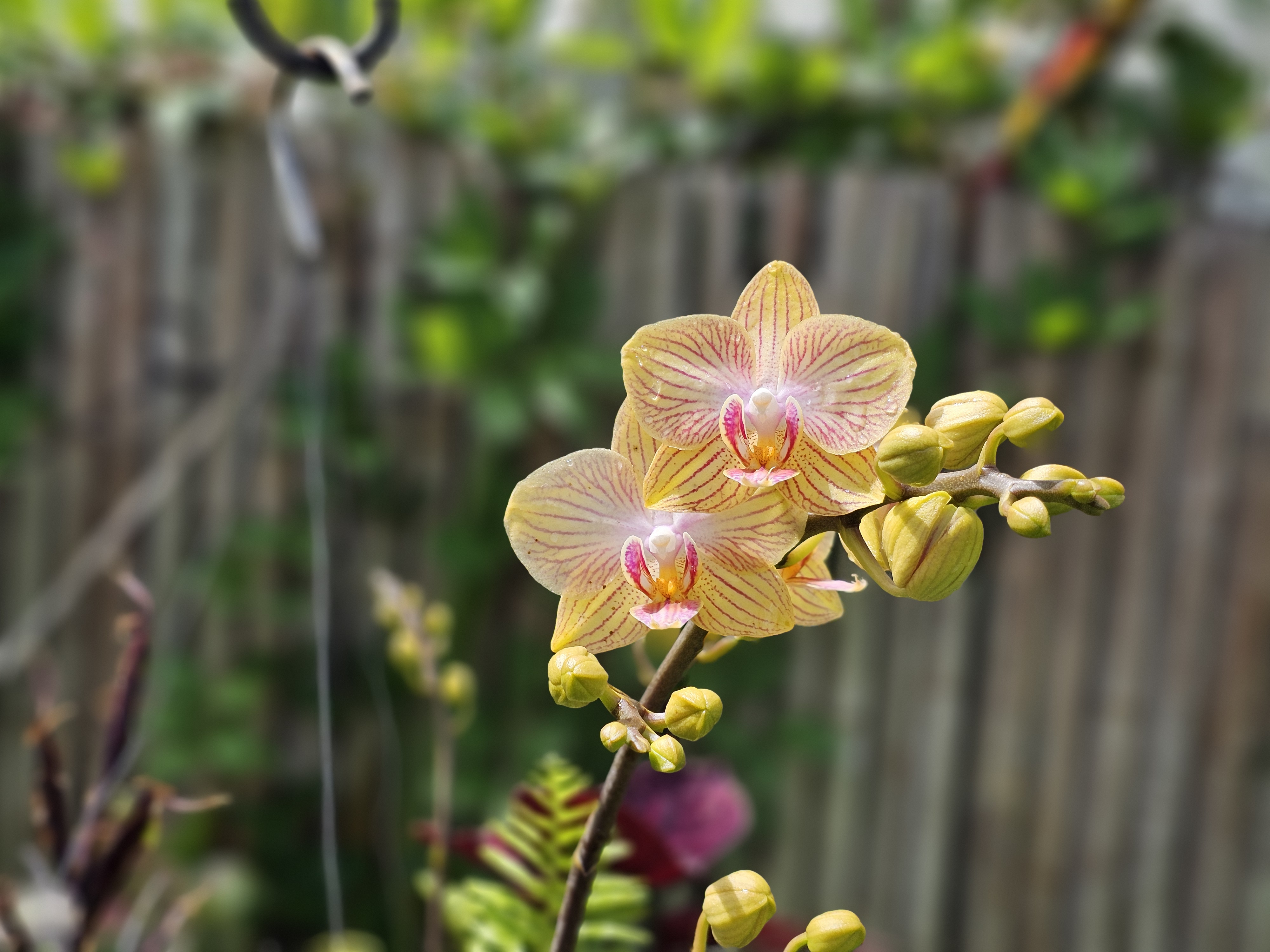
In Hawaii, it’s cool enough that there are less bugs and diseases. Yet, it stays warm enough that everything seems to find it the perfect home. The juxtaposition of tropical plants growing side-by-side (or occasionally on) cold-weather plants is what I enjoy the most. I like to joke with my family in Oregon that gardening in Hawaii is just silly, because I have orchids on my peach trees and snow peas next to my dragon fruit.

When I was in Arizona, I remember struggling to convince oranges and hatch chilies to grow. Seeing everything wilting in despair on hot summer days made me feel like I was a terrible gardener. Yet, it really was the harsh environment that was to blame.
Perhaps I should have settled for a cactus garden and just learned to eat prickly pear.
The key to gardening anywhere really is learning what grows in the specific environment that you find yourself in. In Oregon I found that strawberries had no interest in the soil in my adopted mother’s yard. In Hawaii, my micro-climate is too wet for gourds and melons. Even in places where most things grow easily, there will be plants that refuse to cooperate with you.
So, what are my favorite things that grow in the mountains of Oahu?
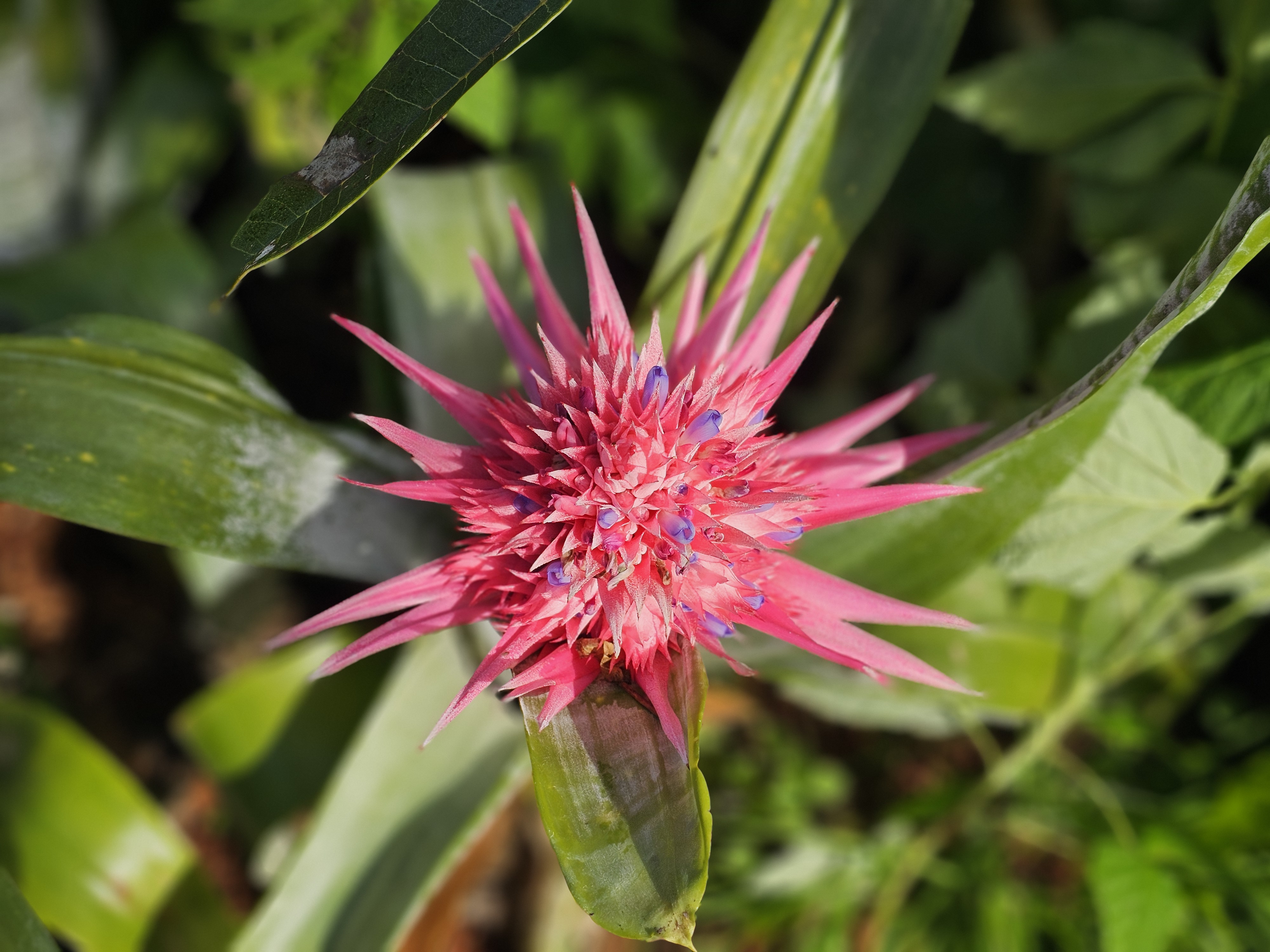
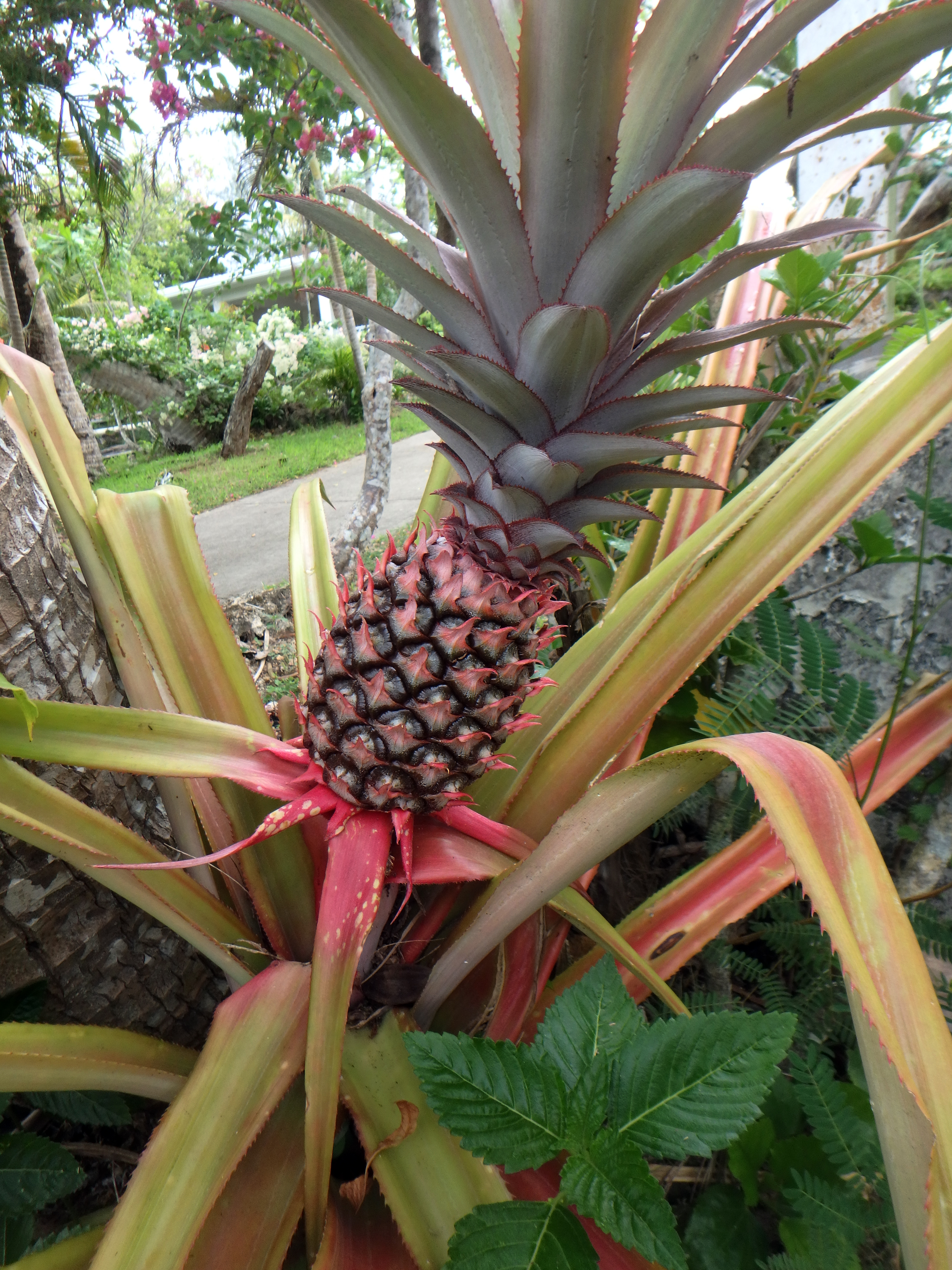
I am not generally a fan of bromeliads because mosquitoes like to breed in all the places they’ve evolved to trap water. Still, if you’re going to have a bromeliad, the Star Bromeliad certainly is pretty. For those of you who are geeks, this is the plant used in my Star Trek: The Next Generation episodes.
I’ve also collected several varieties of lilikoi (passion vines). There is a red variety that is particularly striking, but they are all beautiful. Lilikoi is actually my favorite flower, though telling people that as a kid made it a bit too obvious that I was a book worm who didn’t spend enough time outdoors around the plants more local to me.
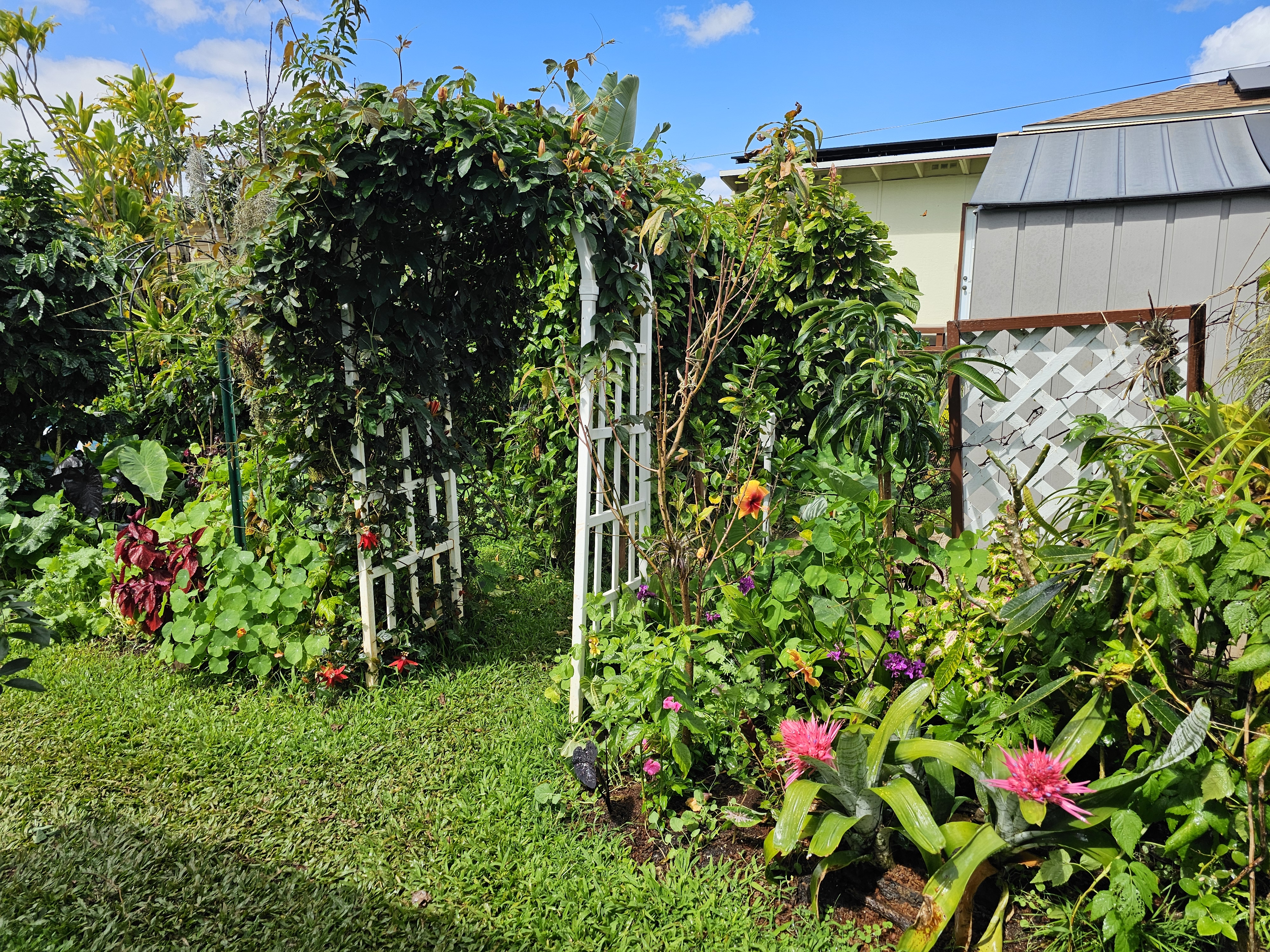
The flowers aren’t all for looks. They provide a necessary pop of color that attracts birds, bees, and butterflies. You need to stay on good terms with your local pollinators if you want to get the best quality fruit!
So far, I’ve had great success with mulberries and a gem avocado. My Georgia Peach seems to feel at home here, and I have a variety of heritage raspberries that are very happy. It does not get cold enough -even up here in the mountains- for my cherry tree of my apricot tree to have fruit, but they still blossom in spring, so that’s enough for me.
I also grow several varieties of Hawaiian Kalo, and I have an endangered Hawaiian palm that I’m spoiling as best as I can. Hibiscus love it here, and so does everything you could ever want in a salad. I’ve got spinach, radishes, and about eight kinds of lettuce. The carrots find the volcanic soil agreeable, but too dense to grow down. They come out of the ground when they’re ripe looking like potatoes!
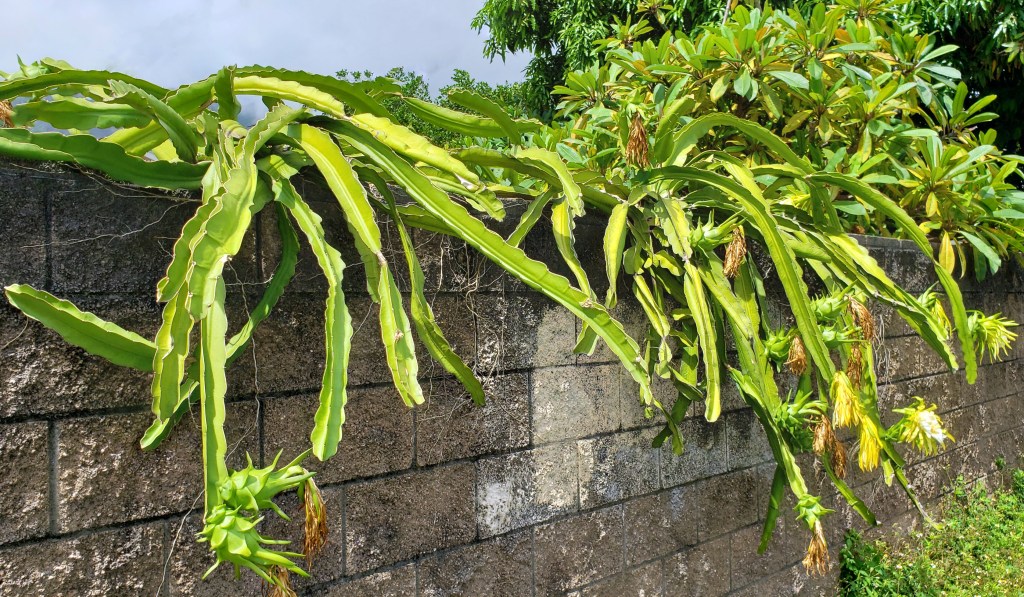
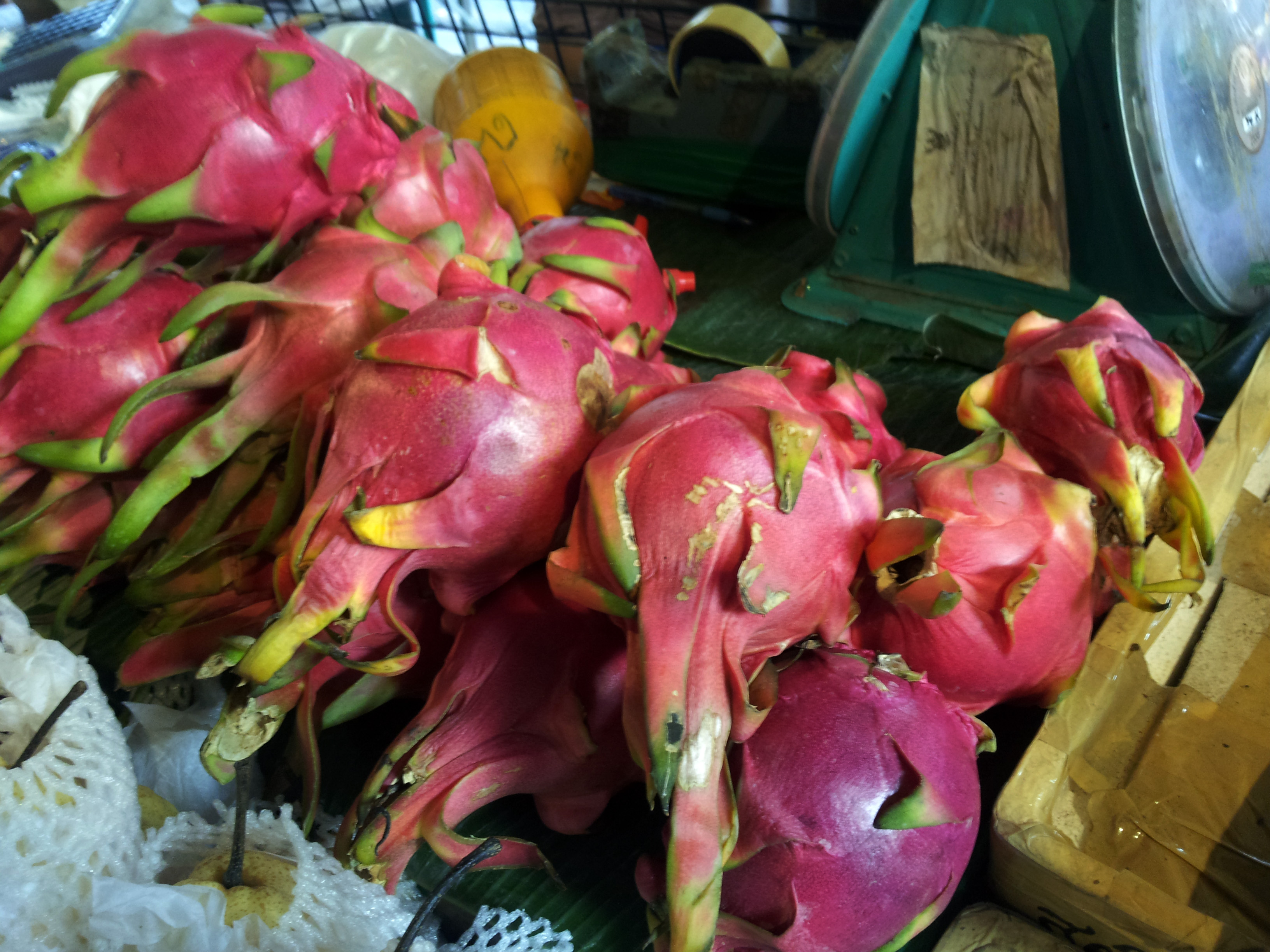
Dragon fruit is also a very popular thing to grow in the islands, and it’s like playing Pokemon trying to catch them all.
Honesty time: I’ve never watched Pokemon or played any of the associated games, so all my knowledge comes secondhand from the husband. But, they’re lots of small creatures that you catch and collect, right? Dragon fruit are the tropical gardeners version of that.
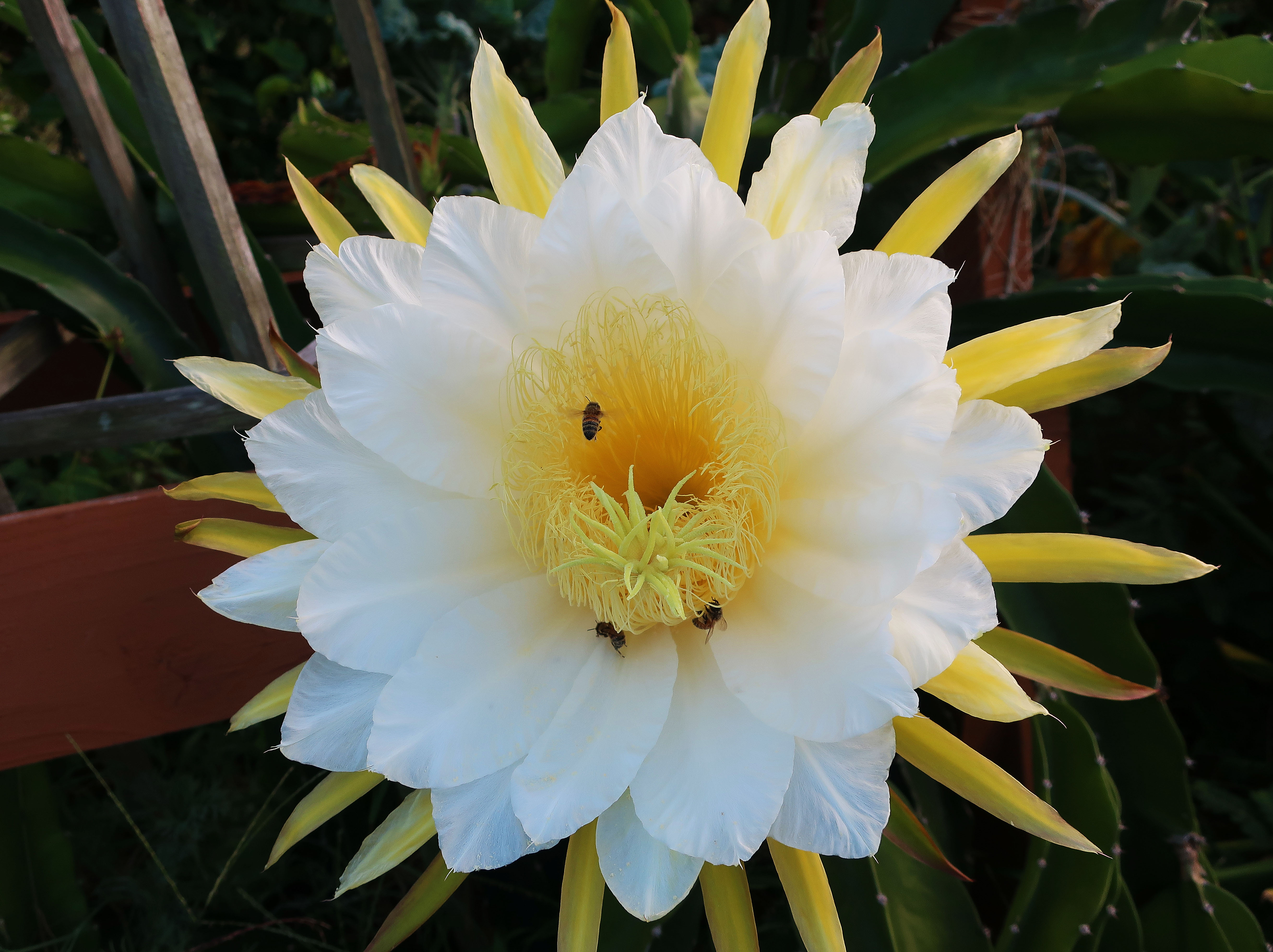
As lazy person, I mostly hunt down self-fertilizing varieties, which tend to have white flowers and fruit with pink or white insides.
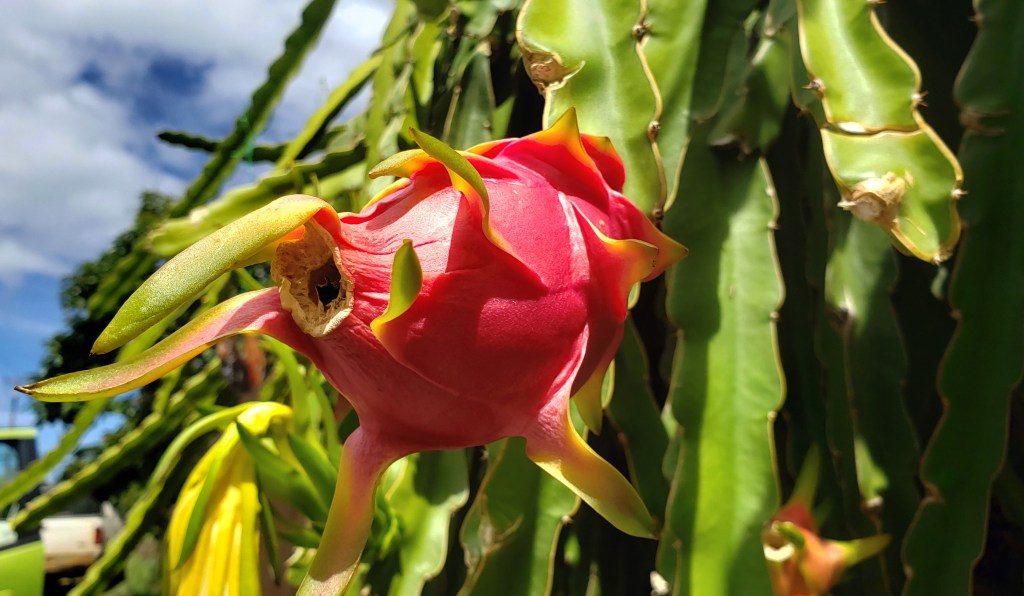
However, I have a yellow variety that must be hand-pollinated, and a Bruni dragon fruit because its flowers are a purple/red color and they’re really pretty.
With nothing around for scale, it might be easy to imagine these flowers as something you might find in a bouquet at a florist. However, they’re actually between 12 and 18 inches in diameter, making them almost comical to stand next to.
The fruit was not common in stores when I was younger. Now that the world has become a more global place, you can find dragon fruit in most grocery stores. It tends to be the kind with the white flash since they contain more pectin and therefore ship with less bruising and crushing. As to which variety tastes best, every gardener I meet here has a different opinion.

The most interesting thing about gardening on an island is that a plant that will thrive by the ocean will die of powdery mildew up here in the mountains. And, a raspberry that loves it up here with me will wither and die at lower elevations.
Most volcanic islands like Hawaii have a tropical side and a desert side due to the way weather moves around mountains. We are right in the middle, so we tend to get the best of both worlds. It likes to rain every morning, and then clear up by noon. For those who aren’t a fan of bright light early in the morning, this is your paradise.
Although I utterly failed at growing a saguaro here, I have had luck with several other varieties of cactus. While cactus tend to drown up here, the leeward coast is full of various varieties of cactus imported here from deserts around the world.
The import laws are strict now. That’s a recent development meant to prevent invasive bugs from making it here. In the 70’s, you could import pretty much anything. Protea became very popular in Hawaii, though they hail from South Africa originally. They’ve been here long enough that I’ve heard locals call them Hawaiian volcano flowers when talking to tourists. I enjoy how anything that takes root here becomes Hawaiian, regardless of its origin. Just think of malasadas and ukeleles. Sure, they’re Hawaiian now, but 100 years ago they were Portuguese.
This really is an amazing place for plants -but no matter where you are- you can always find something neat to grow. Happy gardening!













 JD's Blog