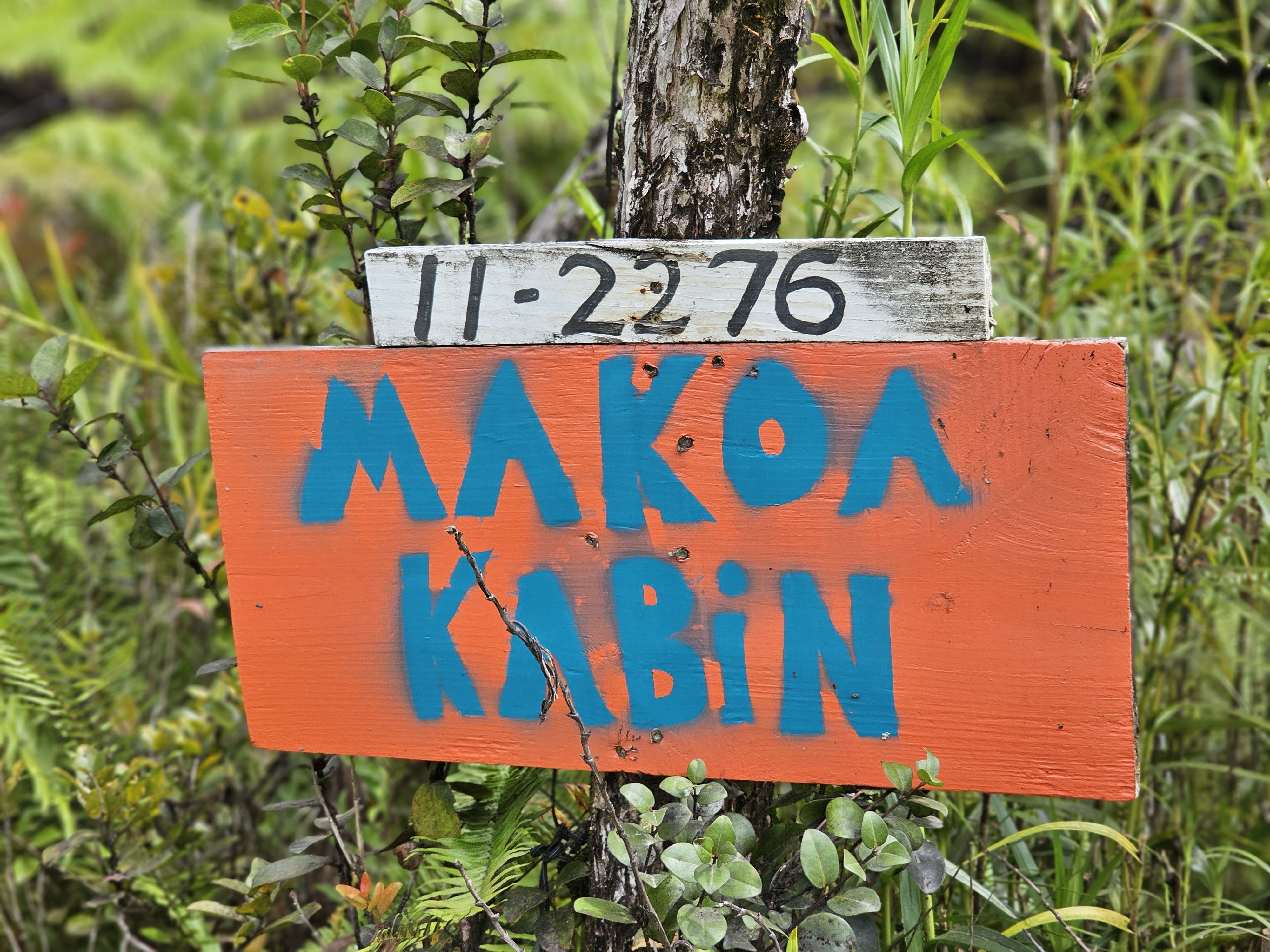
Way down a dirt road in a quiet little forest, Makoa Kabin is a peaceful retreat from the world. It is surrounded by beautiful tropical forest, and at night the coqui frogs lull you to sleep.
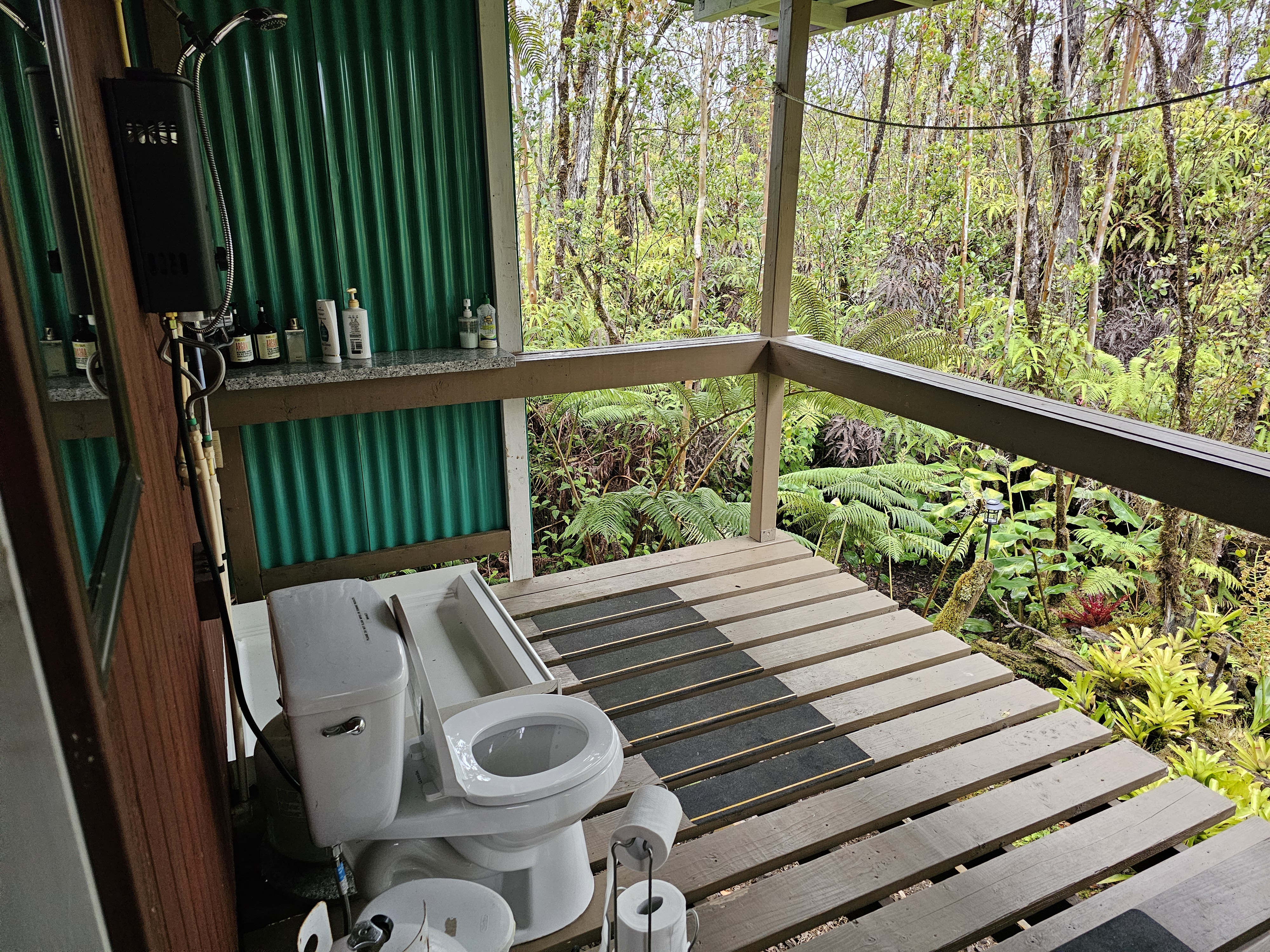
While the Kabin has everything you need to enjoy a nice vacation, the life it offers is one that is much different than city life. The bathroom and kitchen are open air. Given the year-round nice weather, this is not as crazy as it may sound to someone from the mainland. It allows for the peaceful forest to be a bigger part of your stay.
However, the Kabin is off grid. This means it uses solar panels and a battery backup. You’ll hear the inverter kick on to charge the battery during sunny days, and you’ll hear it kick on at night to shunt battery power to the motor in the fridge.
This means being more mindful. When living off grid, it makes sense to avoid opening the fridge at night, and to avoid watching TV and having all the lights on after dark. It’s better to go to bed at sunset and wake up at sunrise, following the rhythm of nature.
For some, following the rhythm of nature can seem hard at first. However, studies show that it’s actually really good for us to wake up with the sun and go to sleep when it gets dark. It helps re-set our circadian rhythms so that we can get better sleep.
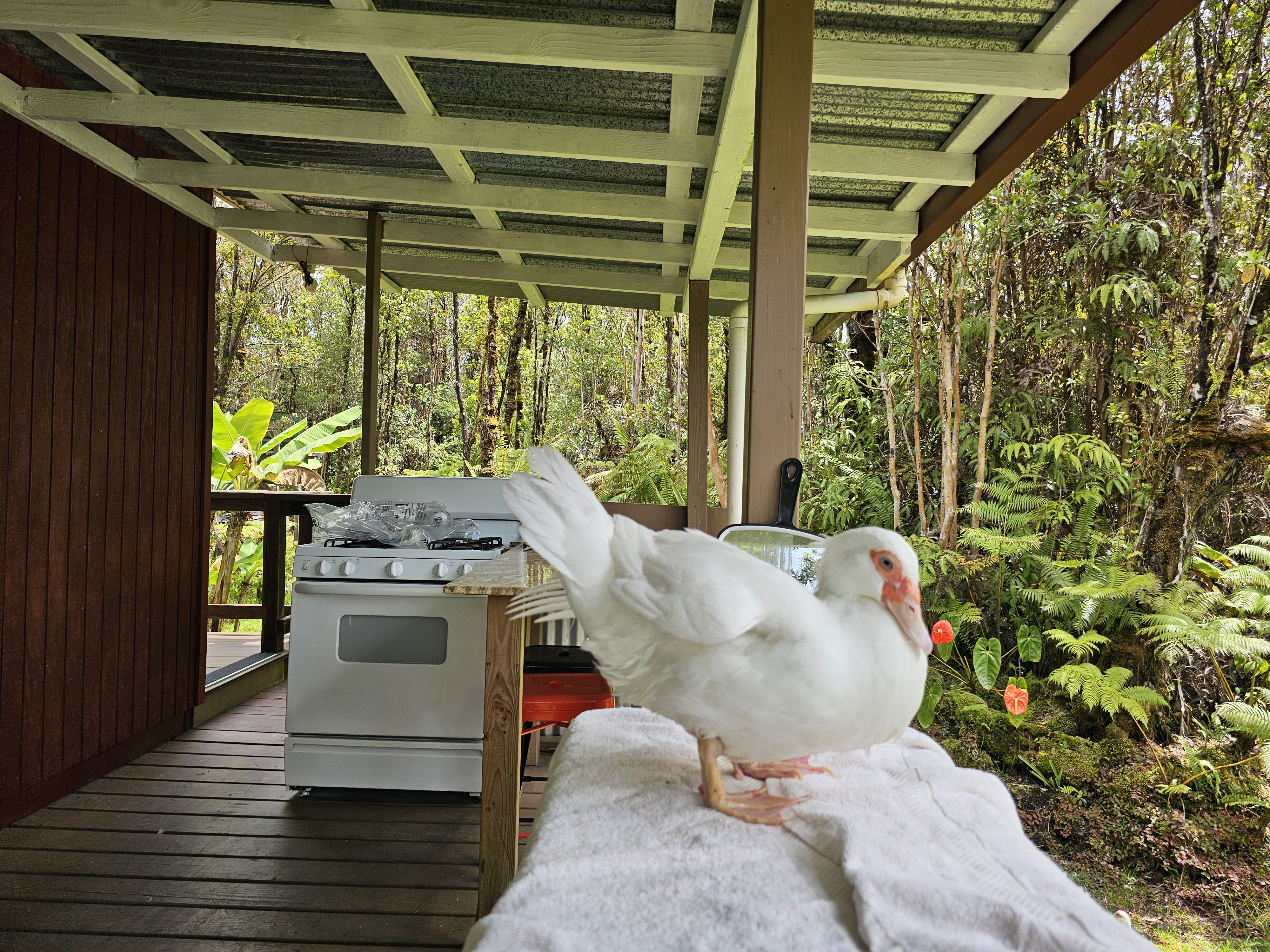
The Kabin allows you to stay with your pets, so here you can see a picture of my duck Sizzle in the kitchen. She enjoyed the view and watching the chickens who live at the Kabin as they dug in the grass looking for bugs and worms.
I spent a lot of time on the deck just watching and listening to the forest. It was peaceful, and exactly what I needed after the first half of my year. The caretaker Jeanette was kind, thoughtful, and very patient with feathers being all around the yard.
Although staying at Makoa Kabin requires mindful use of electricity and water, I believe its charm outweighs any restrictions you might feel living closer to nature. I’d recommend a stay there.
When you visit Hawaii, you have many options for tourist activities.
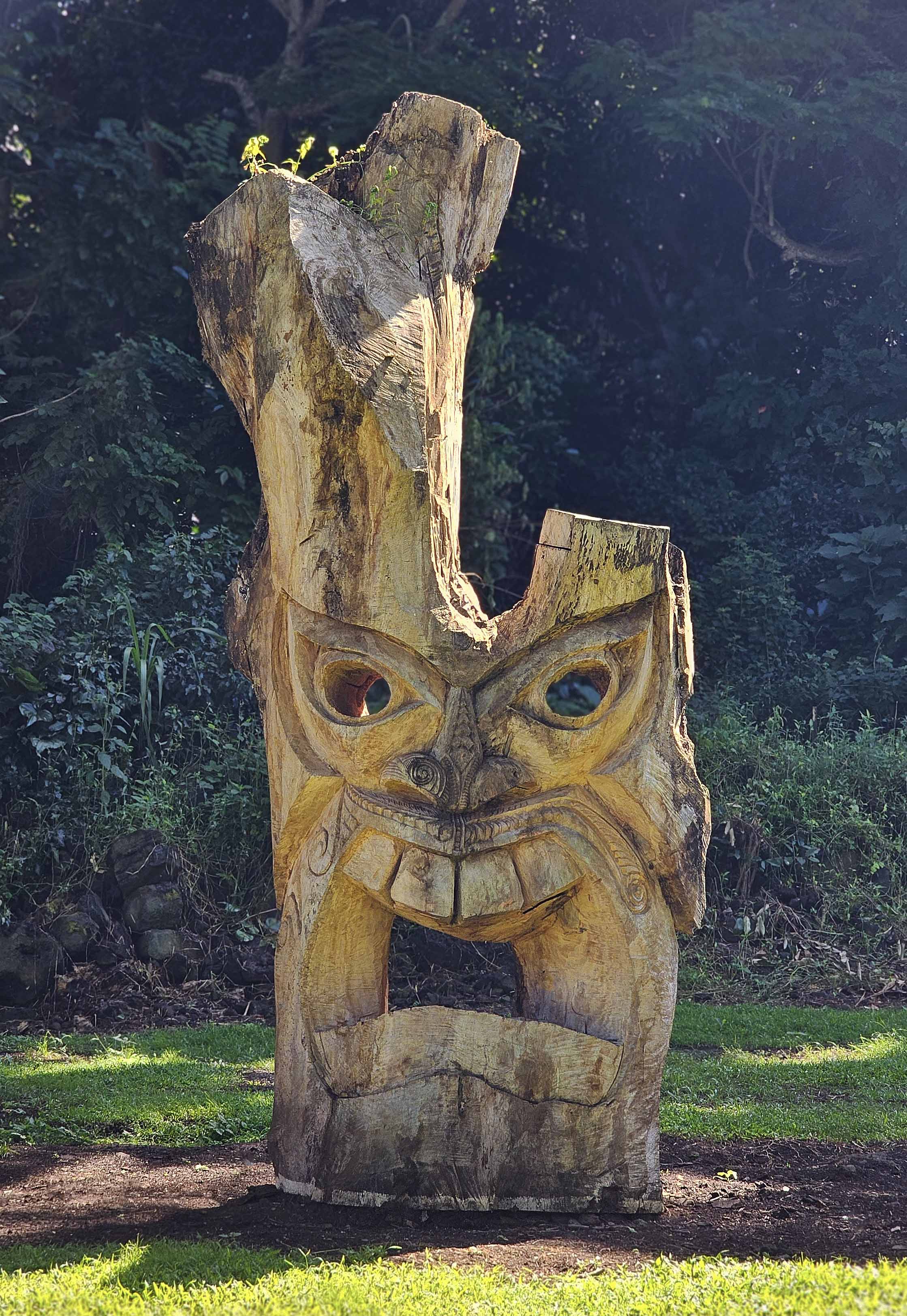
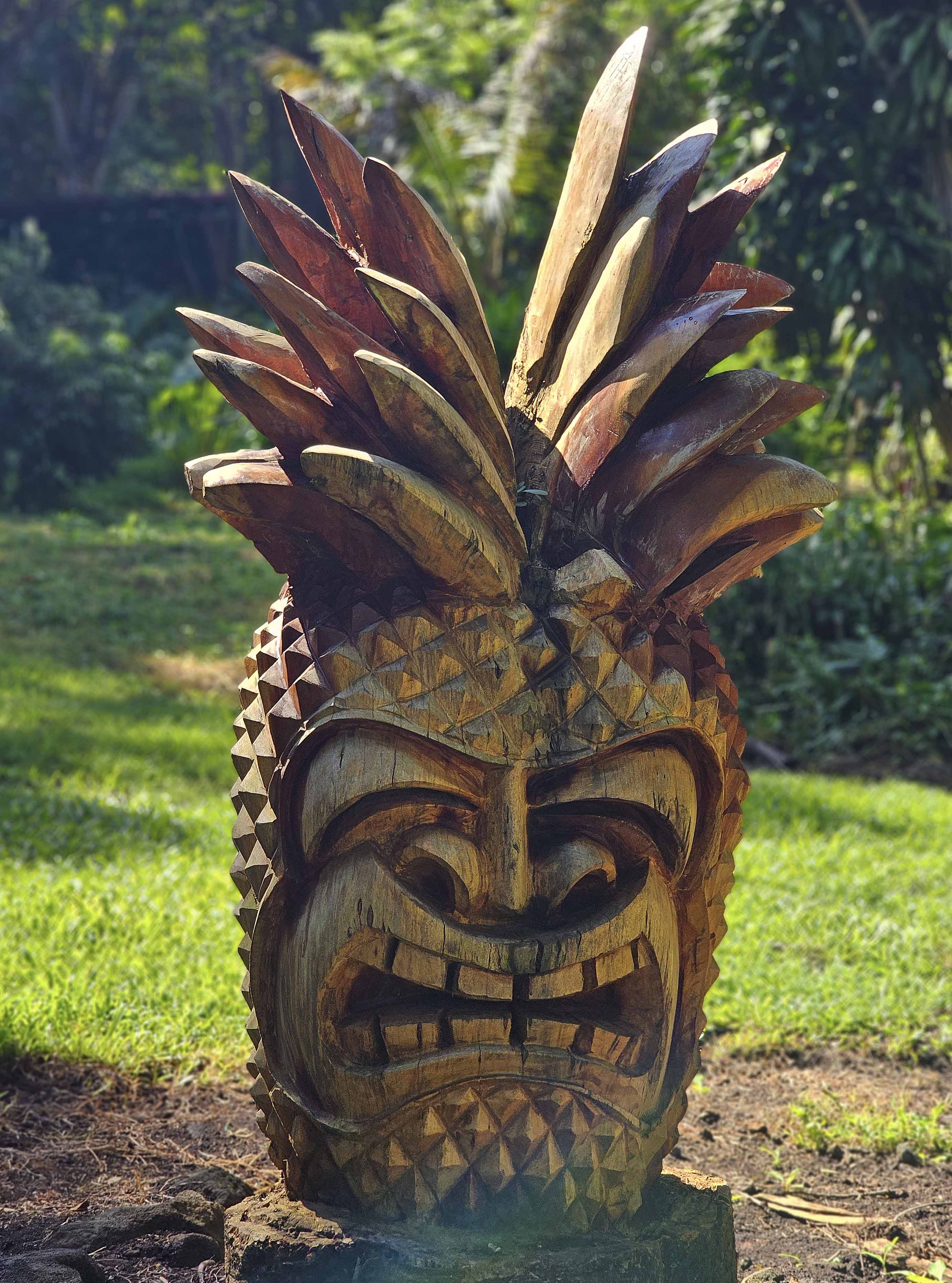
A “carving tour” might sound odd, but the ancient art of shaping wood has been a huge part of Pacific Islander culture since there were Pacific Islanders. If you have interest in Hawaiian history or culture, then a carving tour is a fun way to learn more.
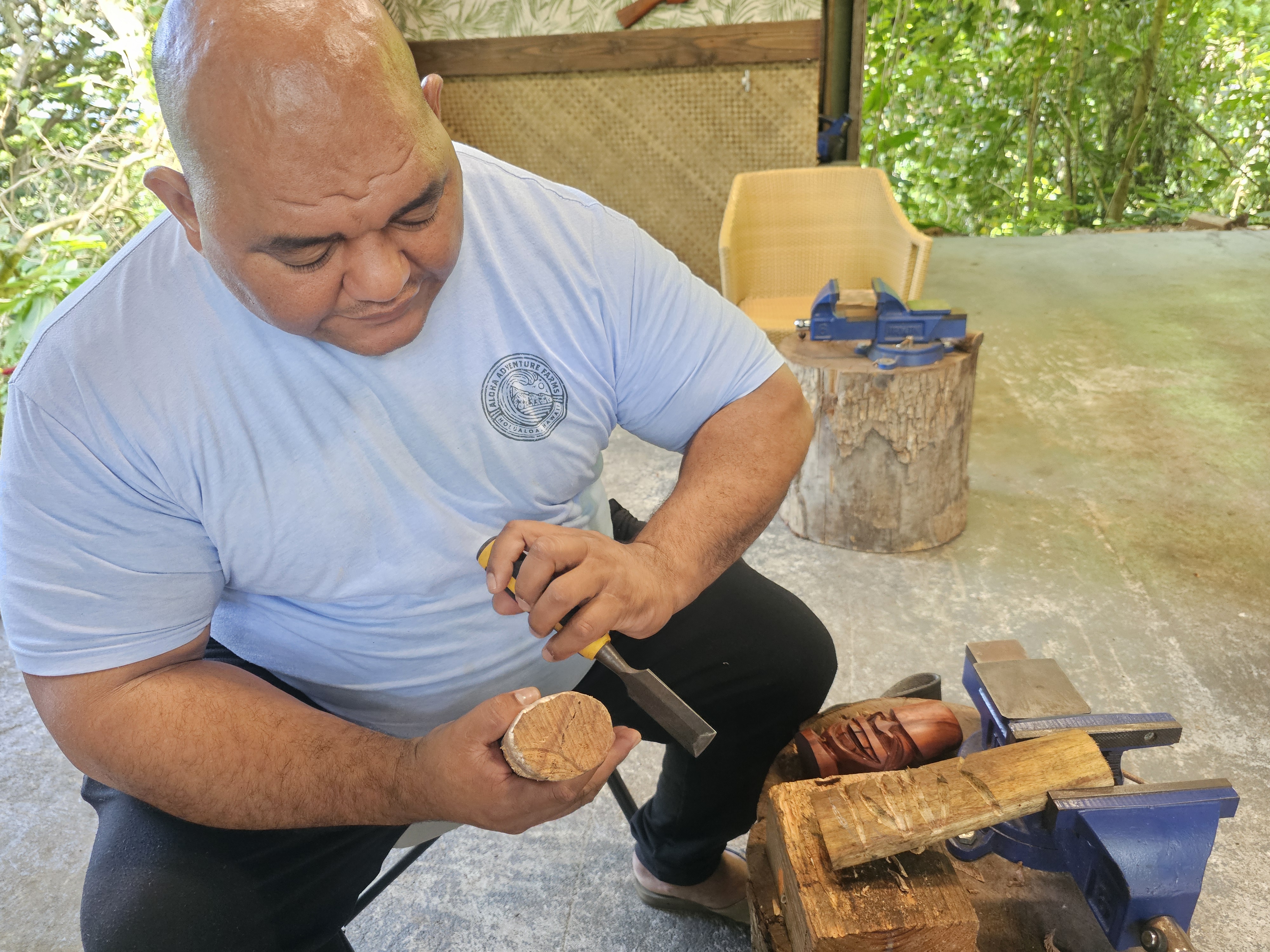
The tour is taught by a Tongan carving master named Mani. His father taught him all about wood carving since he was a child, and he is teaching his own children to carve as well. It’s a meaningful way to keep Pacific Islander culture alive.
Ancient Pacific Islanders carved wood into canoes to travel between islands, into dishes to eat from, and into Tiki figurines to ward off evil spirits.
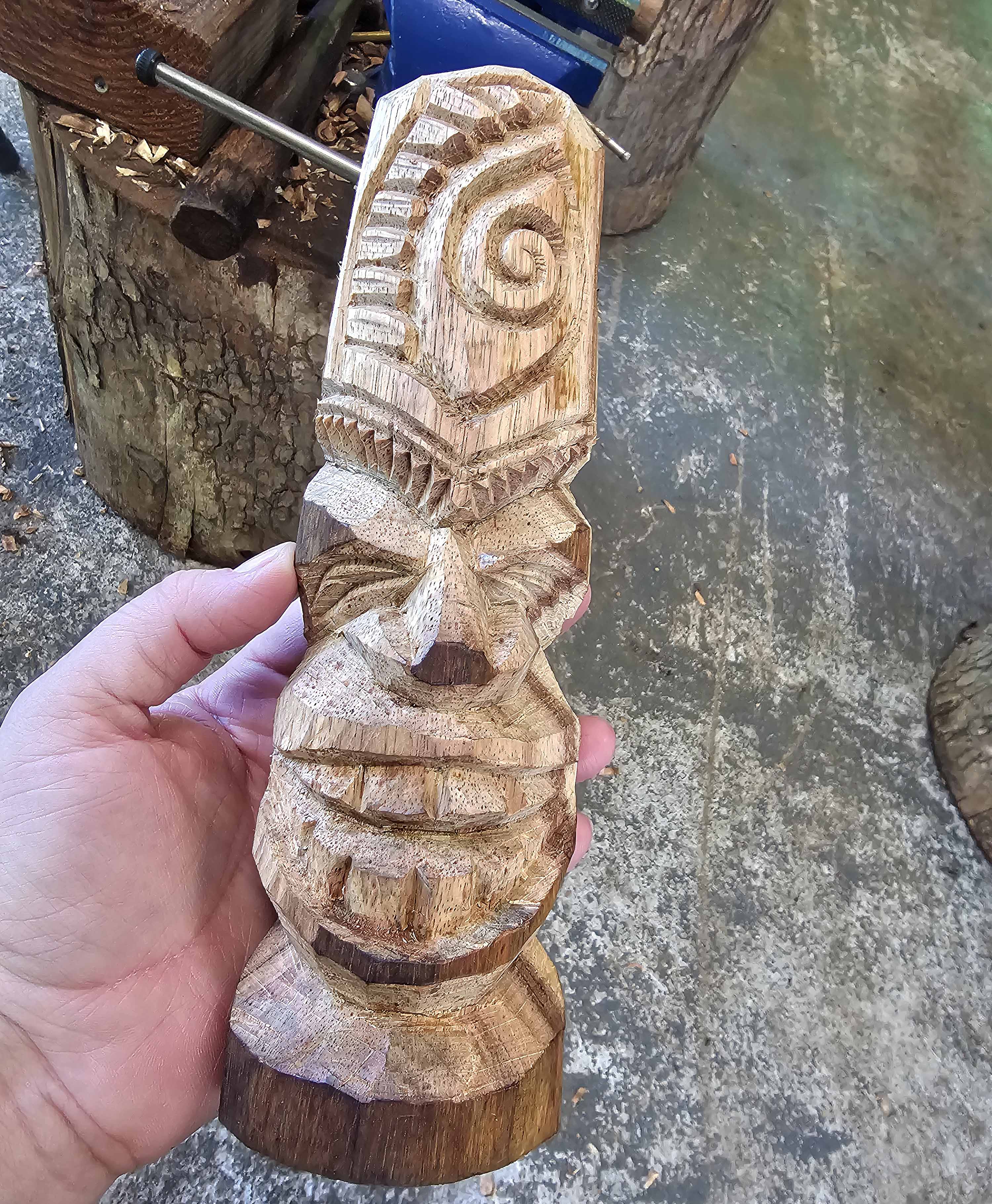
During the tour, you are given a piece of Koa wood, and under the direction of the instructor, you shape it into the Tiki of your choice. However, you also get to talk story about the history of wood carving in the Pacific Islands, and about the meaningful place it holds in cultures from South Korea to the Pacific Northwest, and everywhere in between.
I didn’t do the ATV Culture Tour, but that tour takes you around to recreations of villages representing Hawaii, Fiji, Tonga, and Samoa. You’re able to learn about some of the cultures that make up the Pacific Islands.
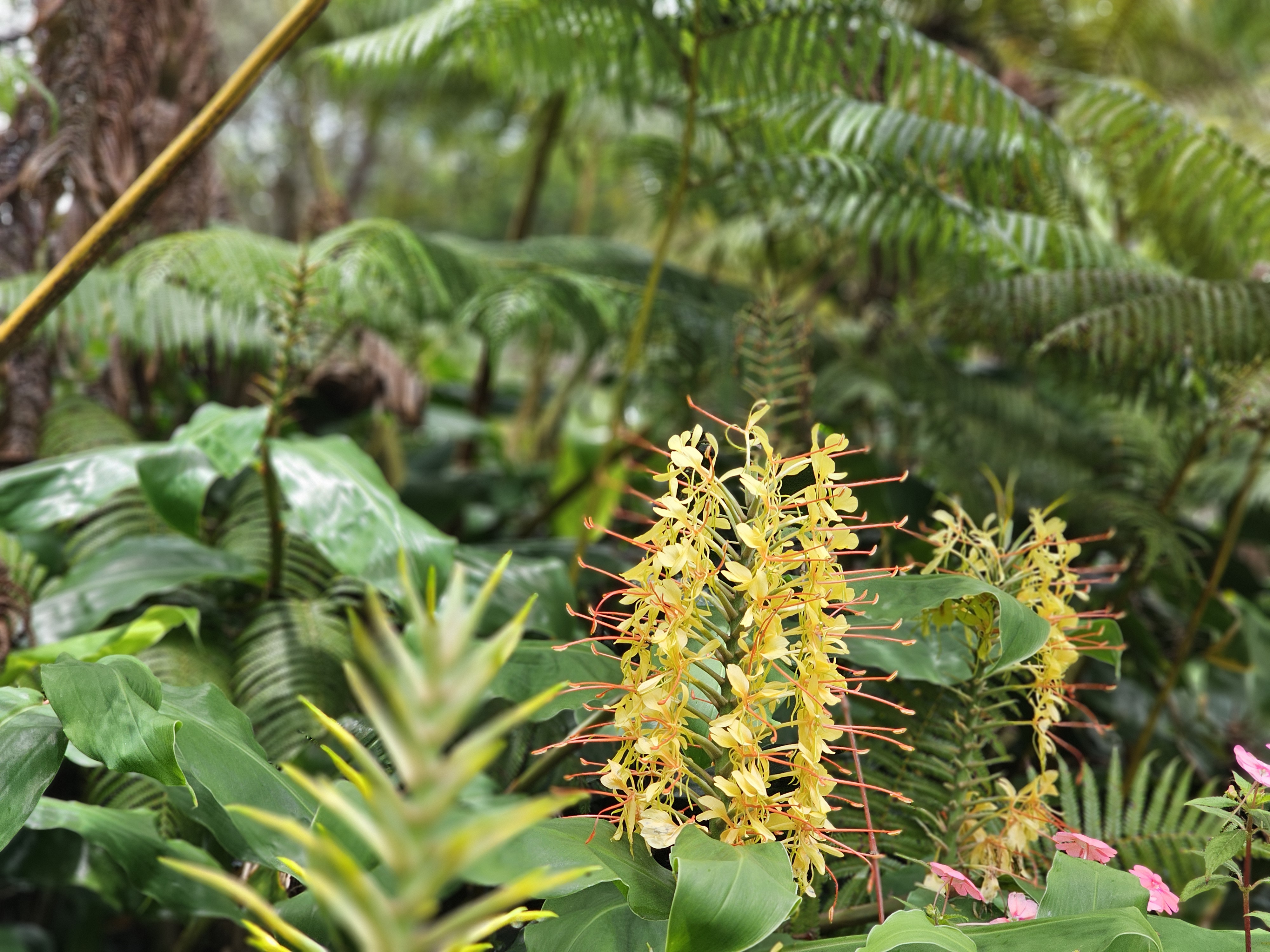
Walking around the property is also nice. There are vanilla vines on the gift shop. The ancient Hawaiian jungle is filled with interesting plants and amazing views. It’s a peaceful place to spent time.
Aloha Adventure Farms is a nice place to spend a day. If you visit the Big Island of Hawaii, it’s worth a trip.
The State of Hawaii (or the Kingdom of Hawaii, depending on who you ask) is made up of 137 islands, islets, and shoals. However, there are seven islands which are generally recognized as the main islands:
Hawaii (also called the Big Island), Oahu, Maui, Niihau, Molokai, Kauai, and Lanai.
Though I have family on Maui, I have been living on the most populated island for the last seven years. Oahu was our home, and the town of Wahiawa was such a charming, wonderful community that we hated to leave.
However, Oahu is an expensive island. Not as expensive as Maui, perhaps. But, more than I can afford right now.
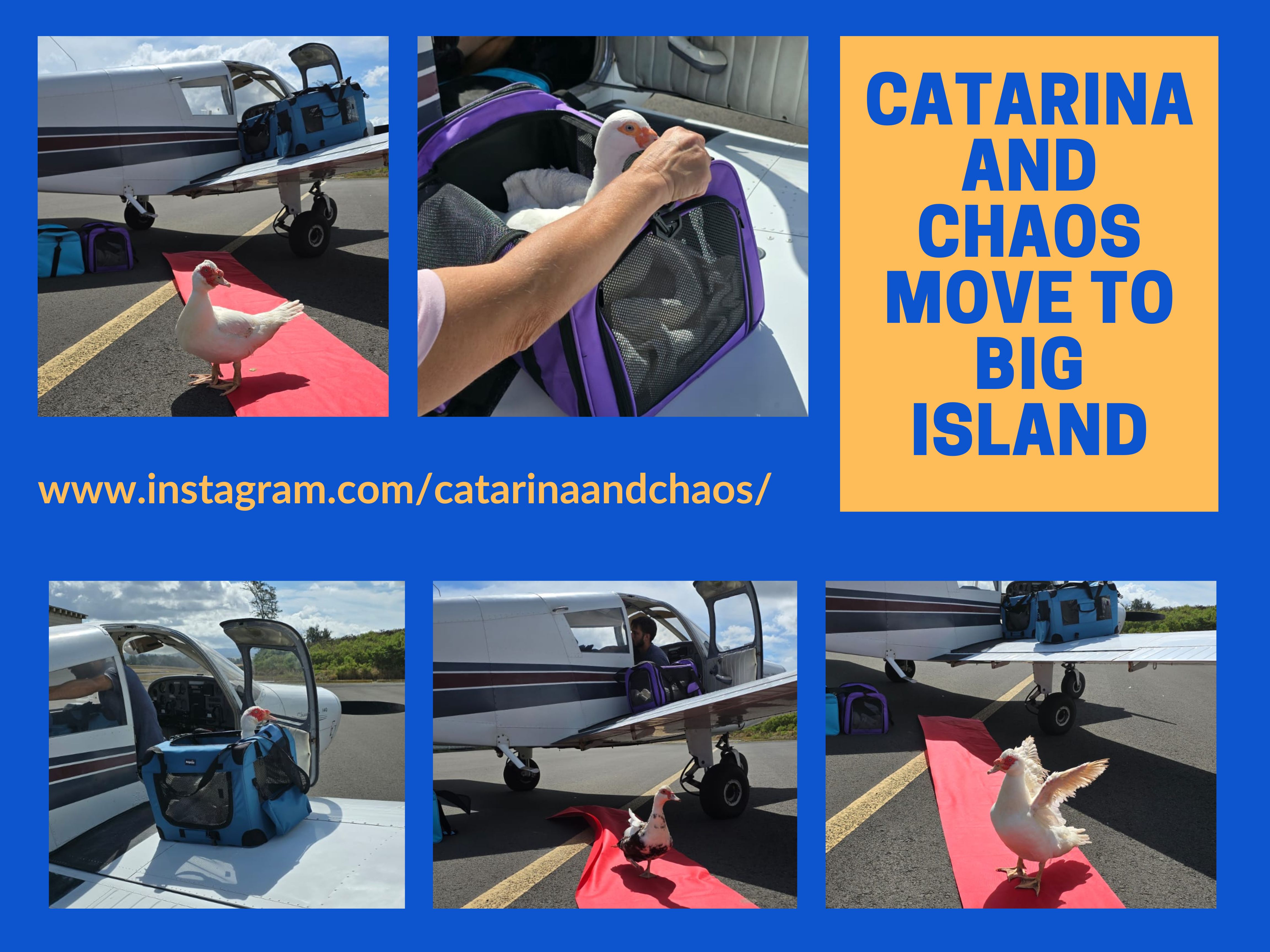
In search of a more affordable place for the flock and myself, we made the move to Hawaii Island, nicknamed “The Big Island.”
Hawaii Island is very large, which means land is more affordable. This isn’t without risk. After all, this is the island with the volcano on it. However, there should also be many rewards.
For the ducks, I am excited to spend time at less crowded beaches and rivers. It’s been very scary to have dogs sicced on us, have people attack us, and generally be subject to the lack of Aloha on Oahu. It’s the city island. You can’t go anywhere on the island and be alone. It’s expensive and crowded, and though many people there are kind, many aren’t.
For me, I am excited to have more job opportunities, more affordable housing, and a slower lifestyle like I lived in Guam.
I loved my garden in Wahiawa. I loved the weather and my bedroom and my job at the VA Pacific Islands Health Care System. But, change is a normal part of life, and you have to admit, it was unusual for me to stay in one place for seven years…
Here’s to the next adventure!
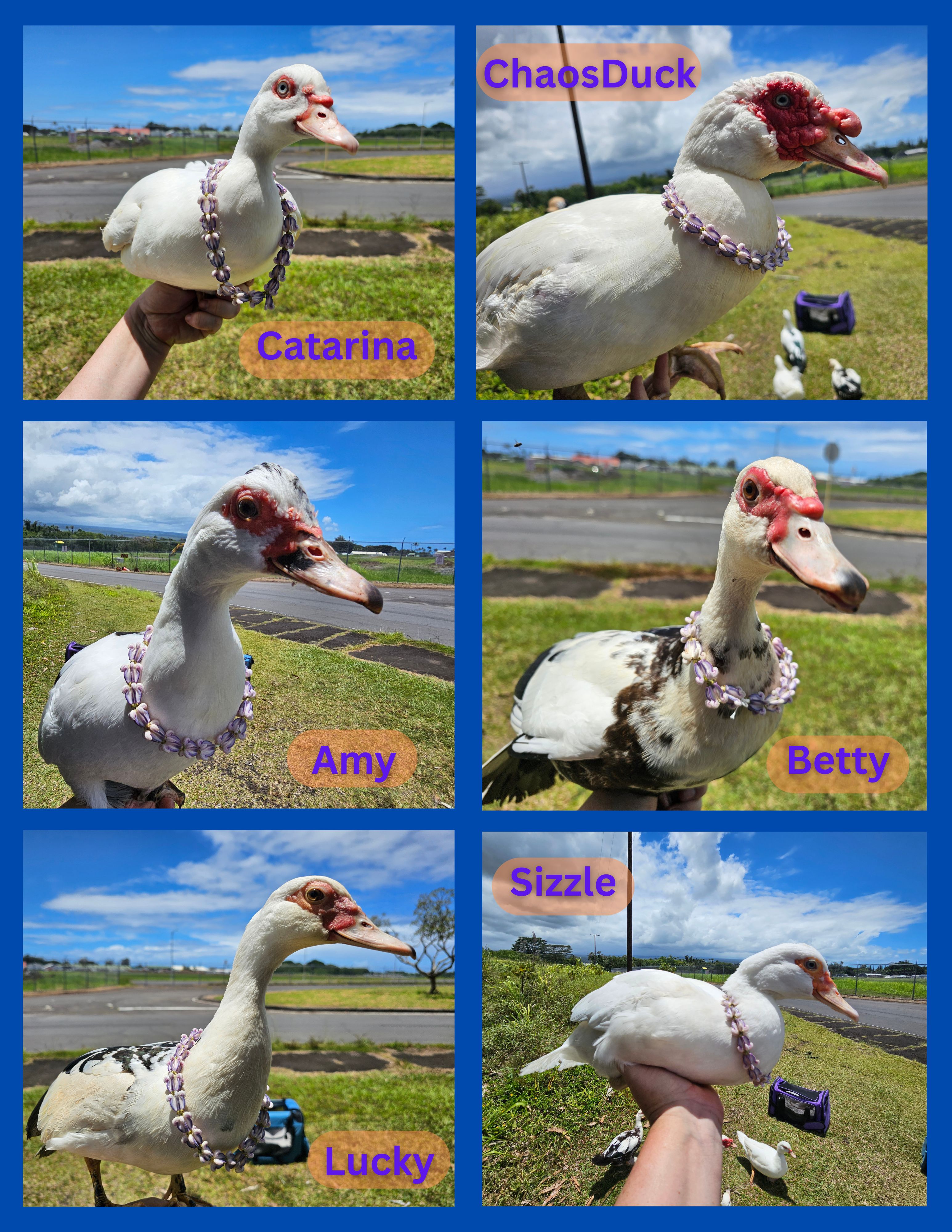
All the foster peeps were adopted, and it’s just Catarina La Pata Mascota, Chaos Duck, Amelia DuckPond, Betty DuckPage, Lucky Ducky, and Sizzle with me now.
I’ve been interested in plants since I was a child.
My great-aunt Jean Gomes used to tend the rose garden in San Francisco, and she had a very impressive native plant garden at her home in San Jose. She used to give me seeds whenever she saw me. I remember she gave me California Poppy seeds once. In the summer I learned that they are called Poppies because they really do POP! The seeds pods exploded with impressive force, and they dispersed their seeds across the entire hillside in one season. I deserved no credit for this, but I felt pride anyway. Seeds I planted grew poppies, and those poppies flourished and spread.
I was hooked.
I’ve grown plants in California, Arizona, South Korea, Oregon, Guam, and Hawaii.
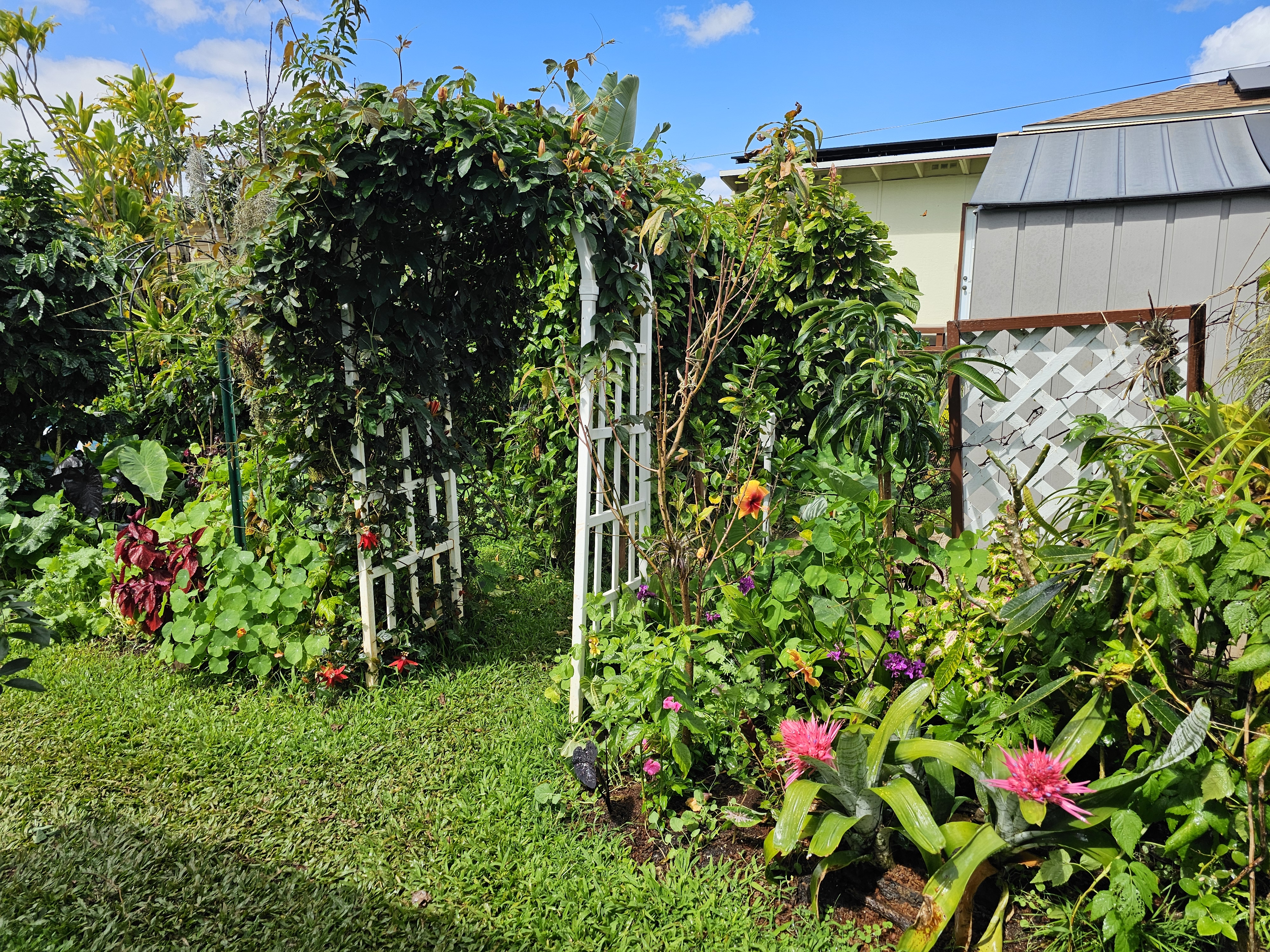
When people tell me that my garden here in Hawaii is impressive, I chuckle to myself. This is gardening on easy mode. I buy a bell pepper, cut it up, and toss the seeds in the yard. A few months later, I’ll find little baby bell peppers out there. Sure, I till the soil from time to time and add mulch twice per year, but that’s a small amount of effort compared to the other places I’ve lived.
However, this is my first time doing yard work with a machete. Guam is a coral atoll and it wasn’t actually that easy to grow things there. Even if you could coax some plants to grow, they would fall prey to the wide variety of bugs and diseases in the jungle heat. The equator seems to be the perfect place for life (excluding me -of course- because I found it way too hot).
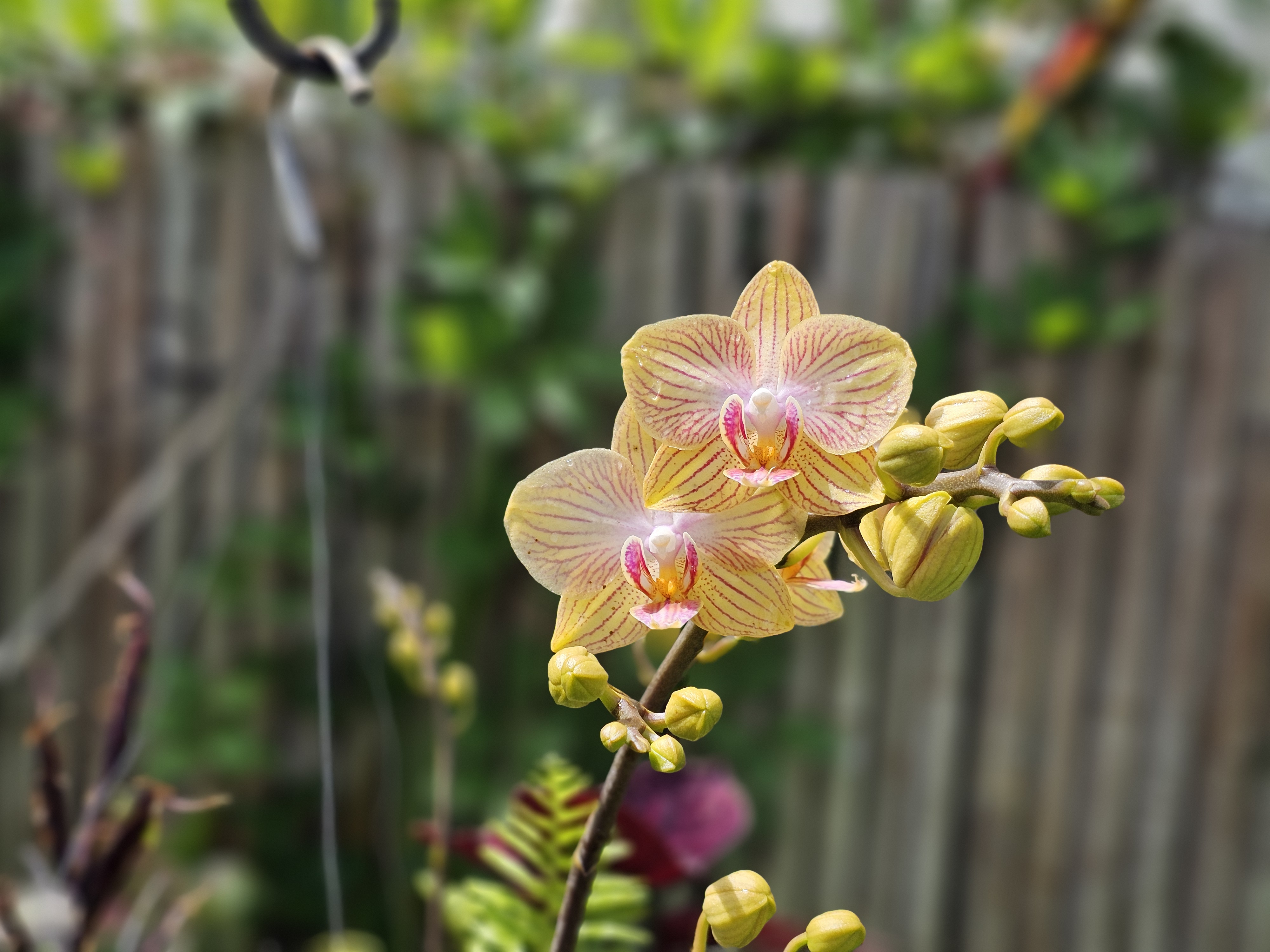
In Hawaii, it’s cool enough that there are less bugs and diseases. Yet, it stays warm enough that everything seems to find it the perfect home. The juxtaposition of tropical plants growing side-by-side (or occasionally on) cold-weather plants is what I enjoy the most. I like to joke with my family in Oregon that gardening in Hawaii is just silly, because I have orchids on my peach trees and snow peas next to my dragon fruit.
When I was in Arizona, I remember struggling to convince oranges and hatch chilies to grow. Seeing everything wilting in despair on hot summer days made me feel like I was a terrible gardener. Yet, it really was the harsh environment that was to blame.
Perhaps I should have settled for a cactus garden and just learned to eat prickly pear.
The key to gardening anywhere really is learning what grows in the specific environment that you find yourself in. In Oregon I found that strawberries had no interest in the soil in my adopted mother’s yard. In Hawaii, my micro-climate is too wet for gourds and melons. Even in places where most things grow easily, there will be plants that refuse to cooperate with you.
So, what are my favorite things that grow in the mountains of Oahu?
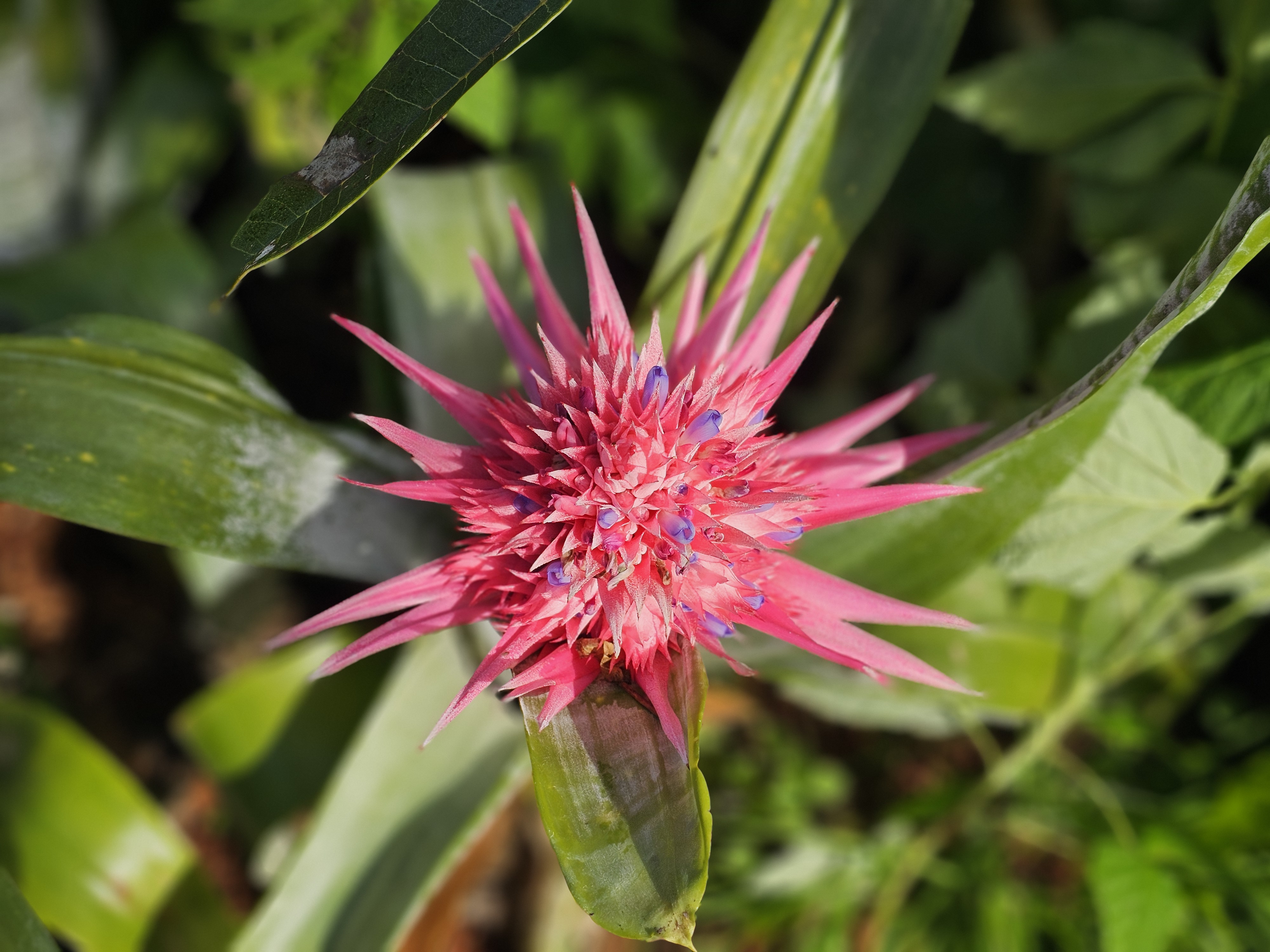
I am not generally a fan of bromeliads because mosquitoes like to breed in all the places they’ve evolved to trap water. Still, if you’re going to have a bromeliad, the Star Bromeliad certainly is pretty. For those of you who are geeks, this is the plant used in my Star Trek: The Next Generation episodes.
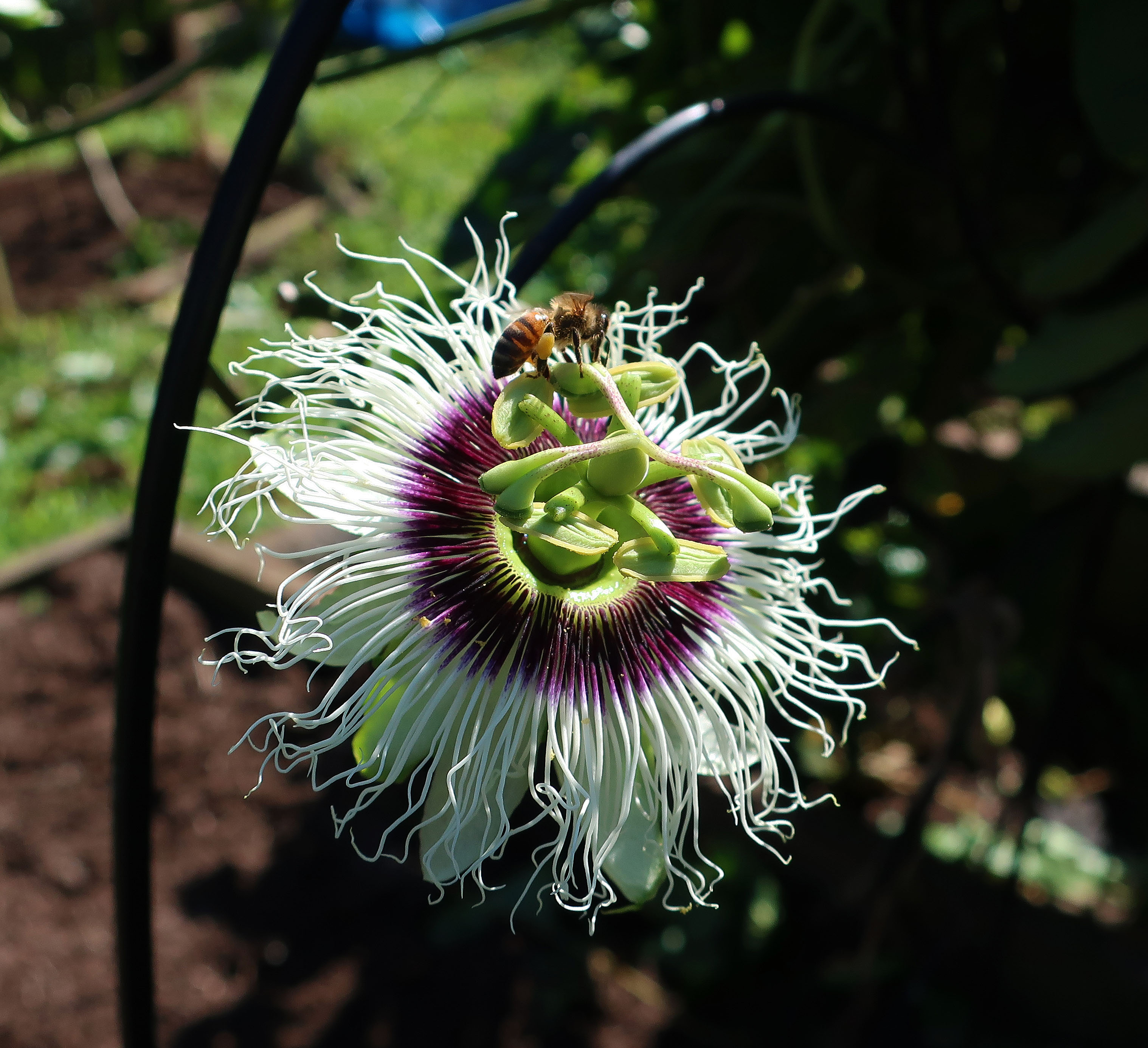
I’ve also collected several varieties of lilikoi (passion vines). There is a red variety that is particularly striking, but they are all beautiful. Lilikoi is actually my favorite flower, though telling people that as a kid made it a bit too obvious that I was a book worm who didn’t spend enough time outdoors around the plants more local to me.
The flowers aren’t all for looks. They provide a necessary pop of color that attracts birds, bees, and butterflies. You need to stay on good terms with your local pollinators if you want to get the best quality fruit!
So far, I’ve had great success with mulberries and a gem avocado. My Georgia Peach seems to feel at home here, and I have a variety of heritage raspberries that are very happy. It does not get cold enough -even up here in the mountains- for my cherry tree of my apricot tree to have fruit, but they still blossom in spring, so that’s enough for me.
I also grow several varieties of Hawaiian Kalo, and I have an endangered Hawaiian palm that I’m spoiling as best as I can. Hibiscus love it here, and so does everything you could ever want in a salad. I’ve got spinach, radishes, and about eight kinds of lettuce. The carrots find the volcanic soil agreeable, but too dense to grow down. They come out of the ground when they’re ripe looking like potatoes!
Dragon fruit is also a very popular thing to grow in the islands, and it’s like playing Pokemon trying to catch them all.
Honesty time: I’ve never watched Pokemon or played any of the associated games, so all my knowledge comes secondhand from the husband. But, they’re lots of small creatures that you catch and collect, right? Dragon fruit are the tropical gardeners version of that.
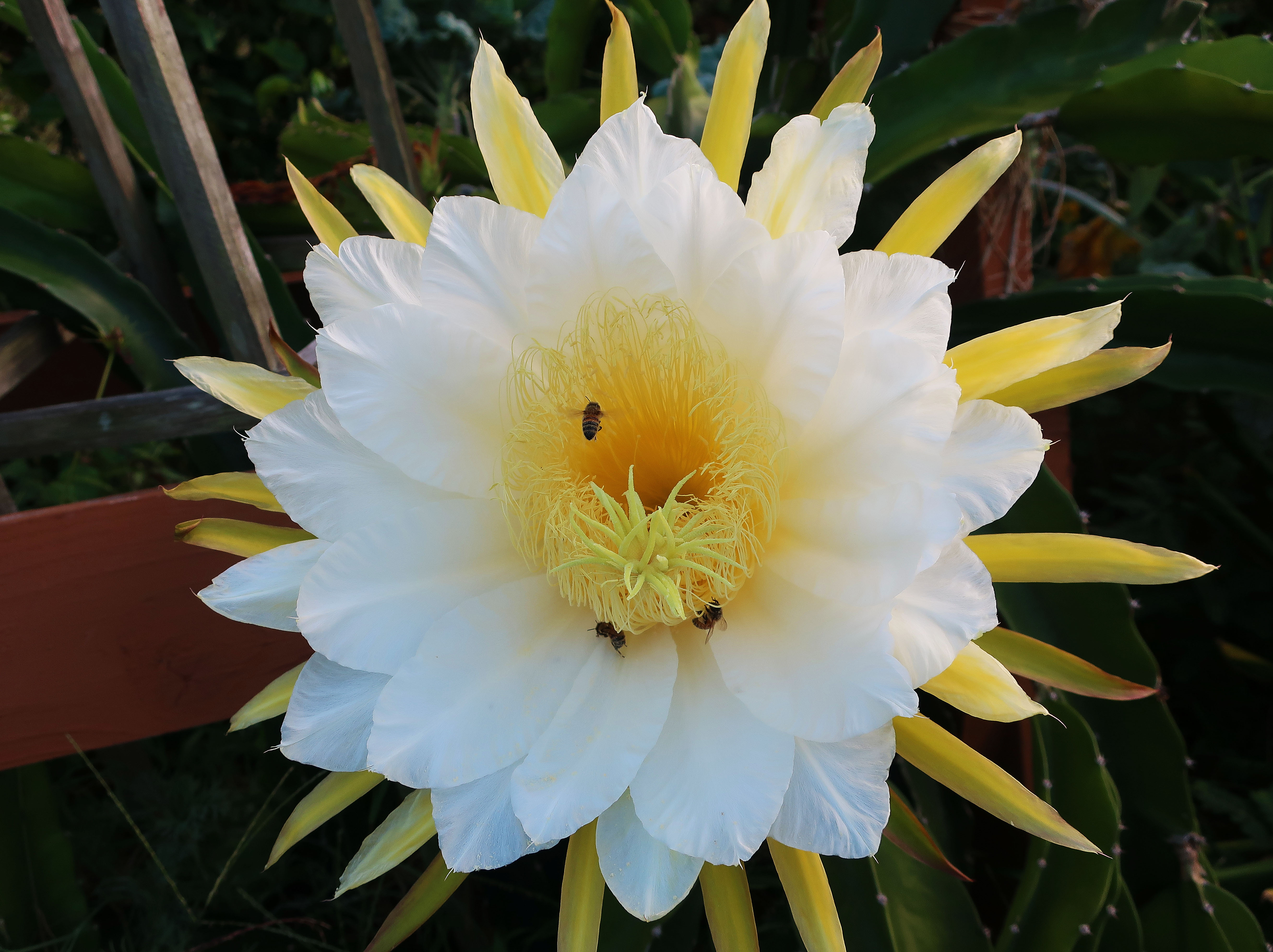
As lazy person, I mostly hunt down self-fertilizing varieties, which tend to have white flowers and fruit with pink or white insides.
However, I have a yellow variety that must be hand-pollinated, and a Bruni dragon fruit because its flowers are a purple/red color and they’re really pretty.
With nothing around for scale, it might be easy to imagine these flowers as something you might find in a bouquet at a florist. However, they’re actually between 12 and 18 inches in diameter, making them almost comical to stand next to.
The fruit was not common in stores when I was younger. Now that the world has become a more global place, you can find dragon fruit in most grocery stores. It tends to be the kind with the white flash since they contain more pectin and therefore ship with less bruising and crushing. As to which variety tastes best, every gardener I meet here has a different opinion.
The most interesting thing about gardening on an island is that a plant that will thrive by the ocean will die of powdery mildew up here in the mountains. And, a raspberry that loves it up here with me will wither and die at lower elevations.
Most volcanic islands like Hawaii have a tropical side and a desert side due to the way weather moves around mountains. We are right in the middle, so we tend to get the best of both worlds. It likes to rain every morning, and then clear up by noon. For those who aren’t a fan of bright light early in the morning, this is your paradise.
Although I utterly failed at growing a saguaro here, I have had luck with several other varieties of cactus. While cactus tend to drown up here, the leeward coast is full of various varieties of cactus imported here from deserts around the world.
The import laws are strict now. That’s a recent development meant to prevent invasive bugs from making it here. In the 70’s, you could import pretty much anything. Protea became very popular in Hawaii, though they hail from South Africa originally. They’ve been here long enough that I’ve heard locals call them Hawaiian volcano flowers when talking to tourists. I enjoy how anything that takes root here becomes Hawaiian, regardless of its origin. Just think of malasadas and ukeleles. Sure, they’re Hawaiian now, but 100 years ago they were Portuguese.
This really is an amazing place for plants -but no matter where you are- you can always find something neat to grow. Happy gardening!
We spent our first year after we bought our house just doing renovations. But, this year we had time to do more things. We took our ducks on a lot of great adventures, and we enjoyed the island as much as we could.
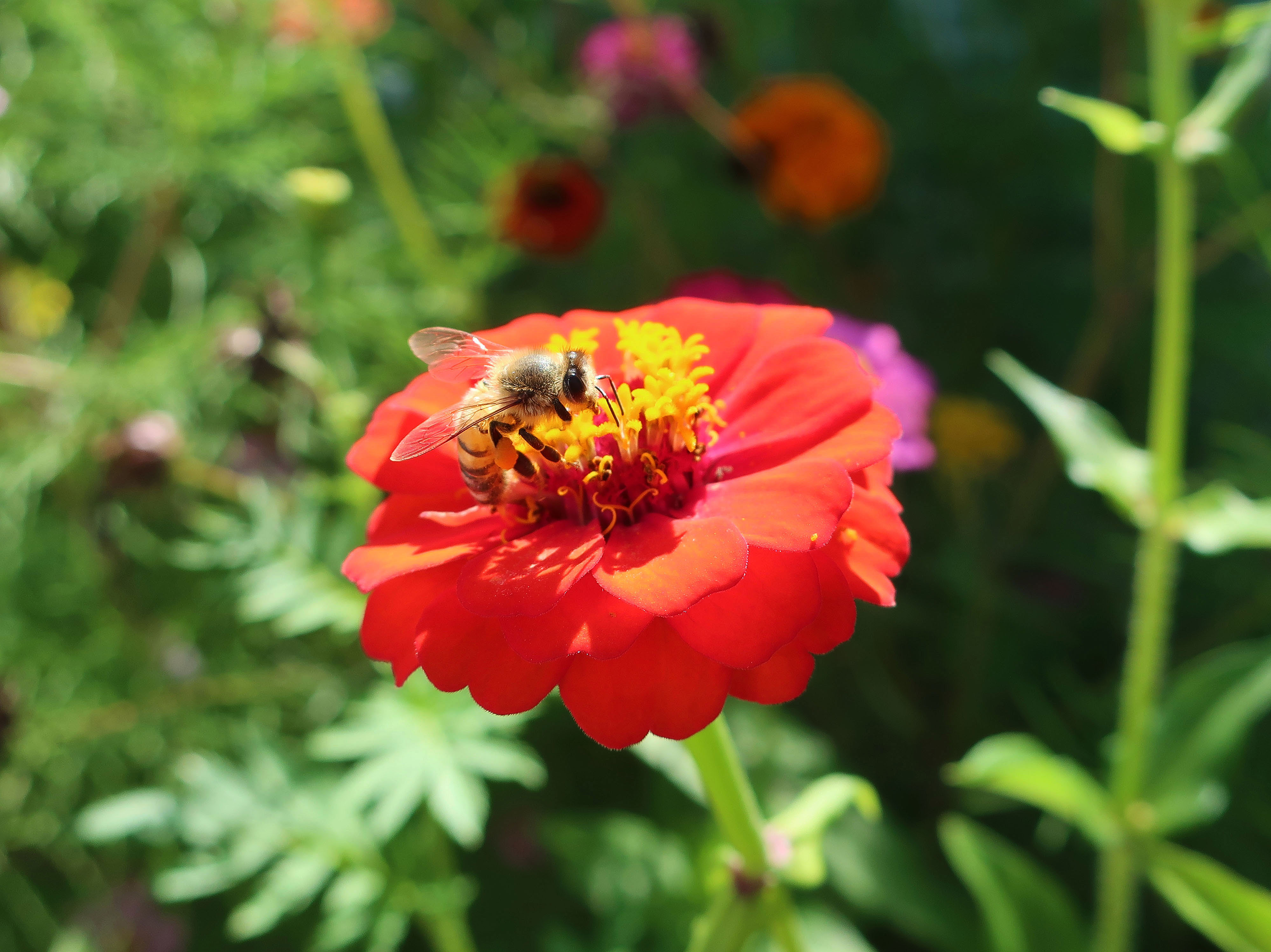
We planted a lot of flowers to help feed the bees. It was fun watching them collect their pollen and head off to make honey.
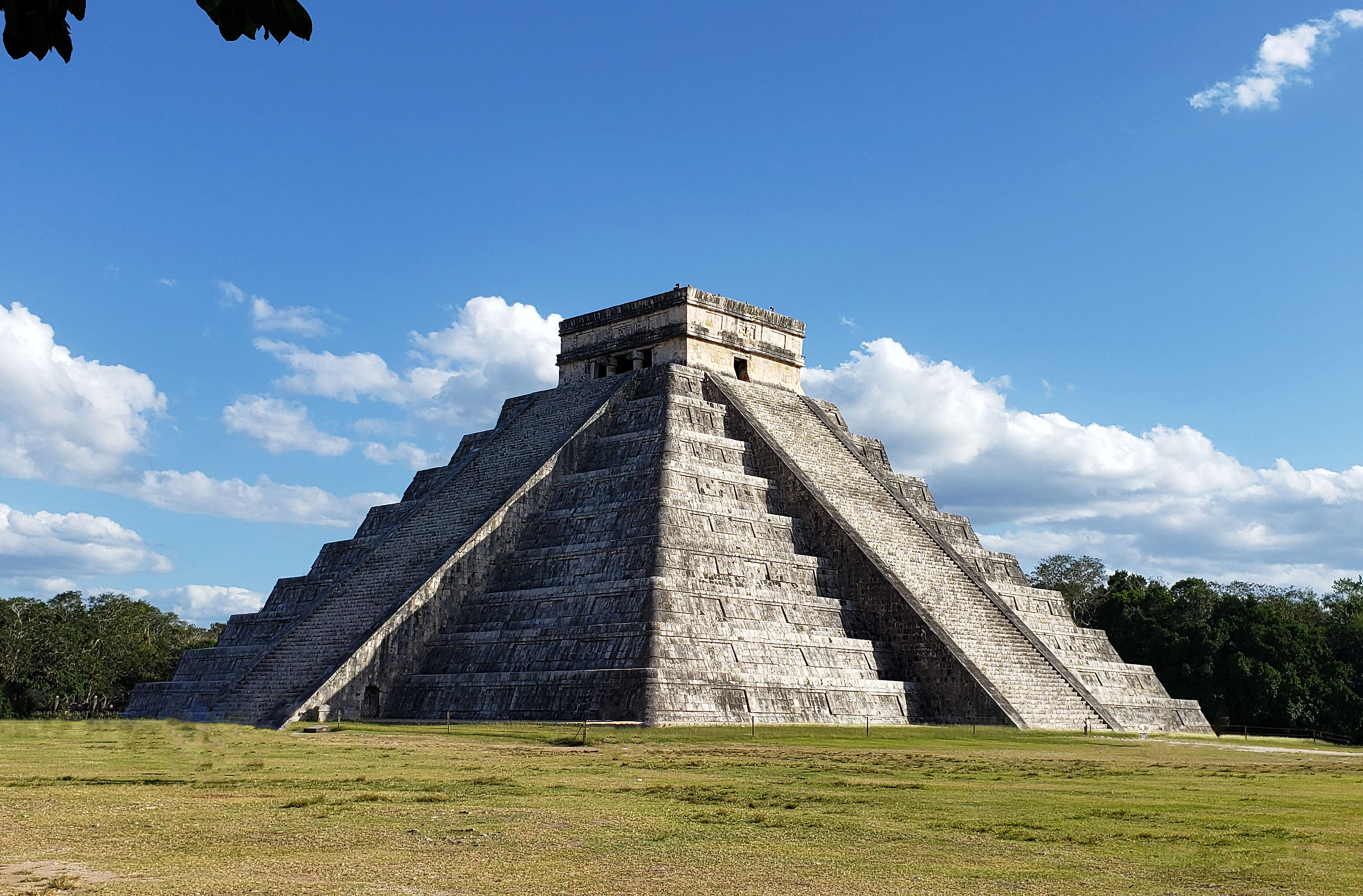
I went to Mexico for some dental work. While I was there, I got to see Chichén Itzá. I have always wanted to see it, so it was pretty cool.
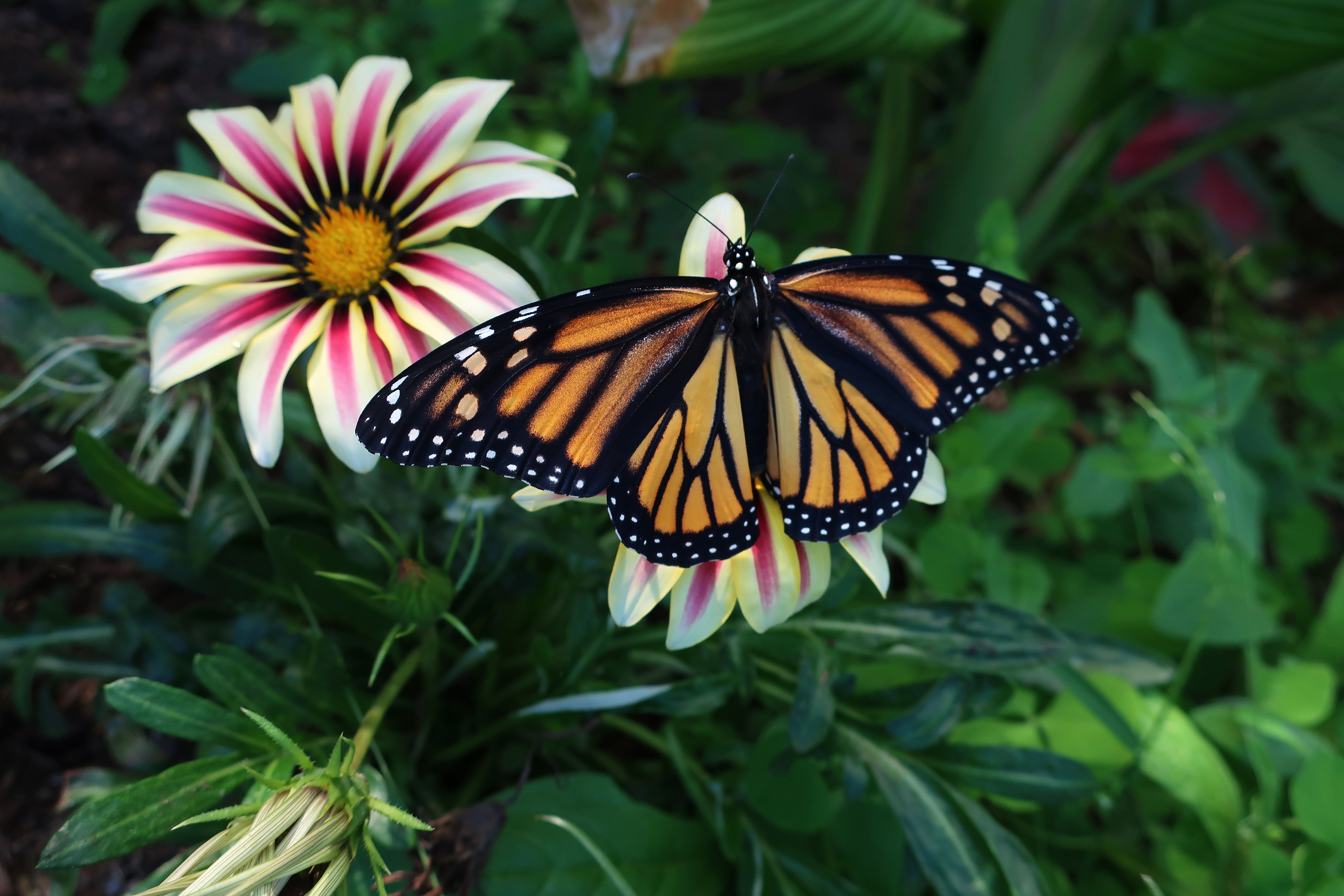
We also planted milkweed and raised Monarch caterpillars. Monarchs are endangered and nearing extinction. Planting milkweed and helping protect young caterpillars is a great thing you can do to help!
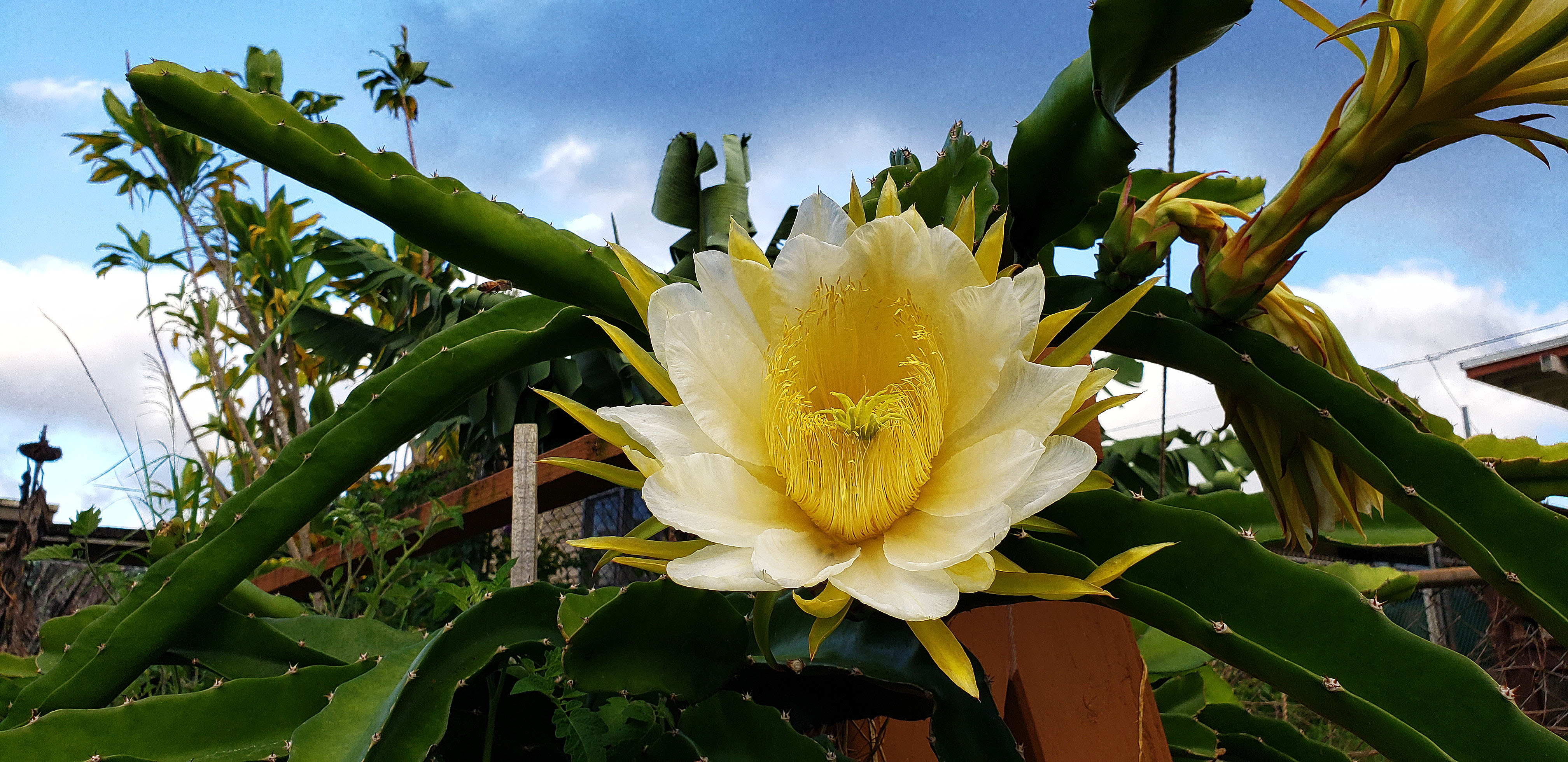
It was our garden’s second year, and our dragon fruit finally started making us some food. No fruit on the trees yet, but we are getting closer. Of course we also still have our vegetable beds, too.
We still snorkeled when we could. Rich can’t swim in the winter because he has warm-water hypothermia. But, we can snorkel in the summer, so we do.
We are so grateful to still be able to get out and do things. It’s not as easy as it used to be, but we do our best.
When I’m not working, I spend most of my time taking pictures of ducks. Our ducks have gotten kind of famous on Instagram, and so I try to make sure to take lots of pictures for their fans.
I hope all of you have a happy holiday season and a joyful new year! We think of you often and we are sending love.
There is a separate fee for parking and entrance, but if you buy the membership then parking is free.
On the Southeast Tip of Oahu in the shadow of Makapu’u Lighthouse, you will find SeaLife Marine Park. It’s nothing like SeaWorld or an aquarium in the mainland. It’s a very small park, but it’s very important to Hawaii!
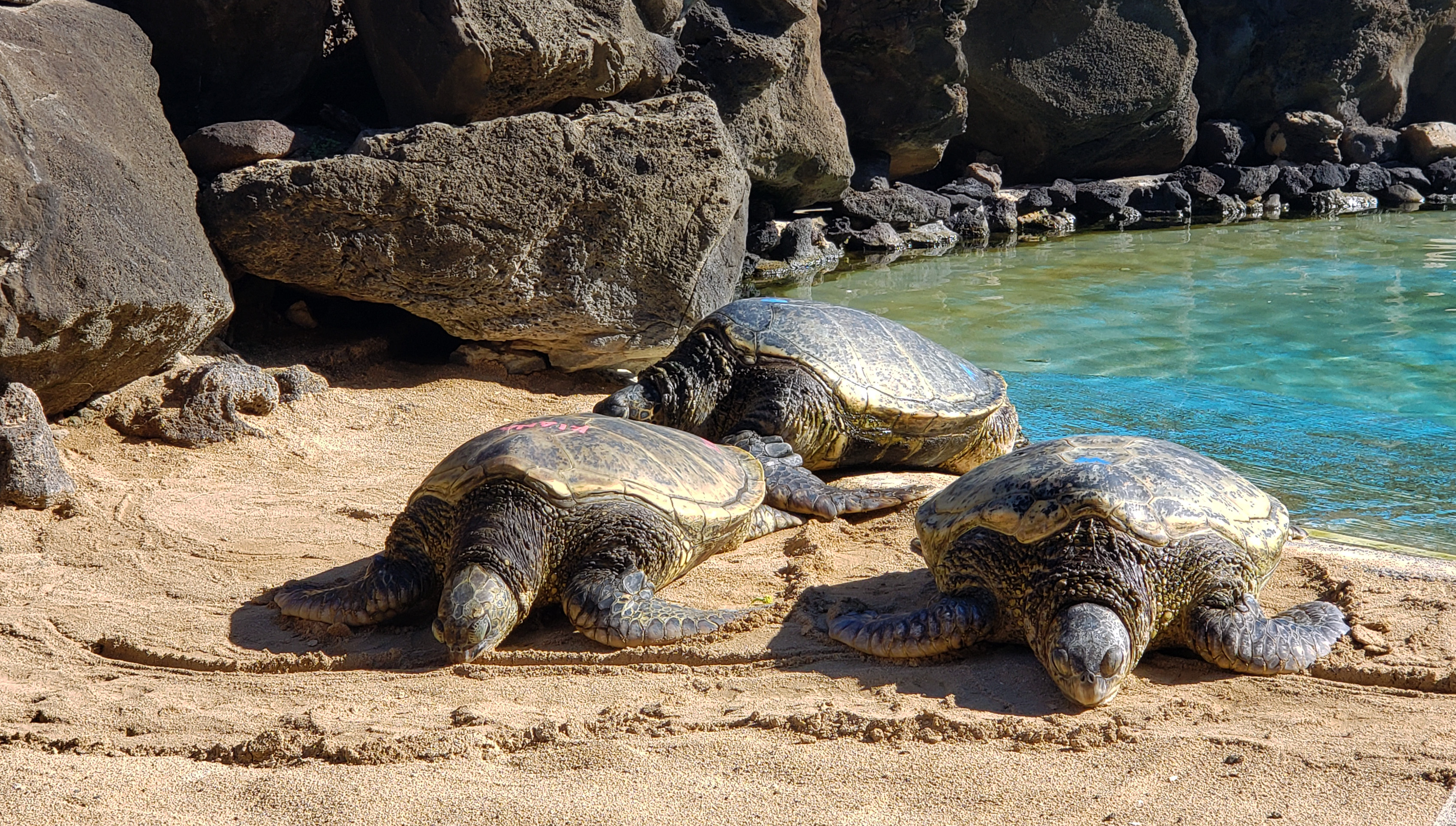
SeaLife Marine Park is the only place in the United States with a Sea Turtle breeding program. They breed endangered Hawaiian Green Sea Turtles, which are distinctly different than Green Sea Turtles in other parts of the world. Here in Hawaii, our turtles enjoy basking in the sand and coming out of the water to eat algae on land. This behavior has never been observed before in any other sea turtle. (Usually they only come on land to lay eggs.)
Turtles basking in the sand at SeaLife Marine Park. These are the adults that comprise the breeding program. All are rescues that have been at the park since the 1970’s.
In addition, the turtles here have been observed hunting fish, and eating different kinds of foods than Green Sea Turtles in other areas. That’s why right now, the folks at NOAA are fighting to get the Hawaiian Green Sea Turtle classified as its own subspecies.
The SeaLife Marine Park turtle breeding program is therefore very important, because without them, the population here in the islands would be in great danger. SeaLife hatches, grows, and releases hundreds of turtles every year. This supspecies was nearly extinct until the breeding program began. Now, there are an estimated 2,000 Hawaiian Green Sea Turtles! This isn’t as much as we would like to see, but it’s a lot.
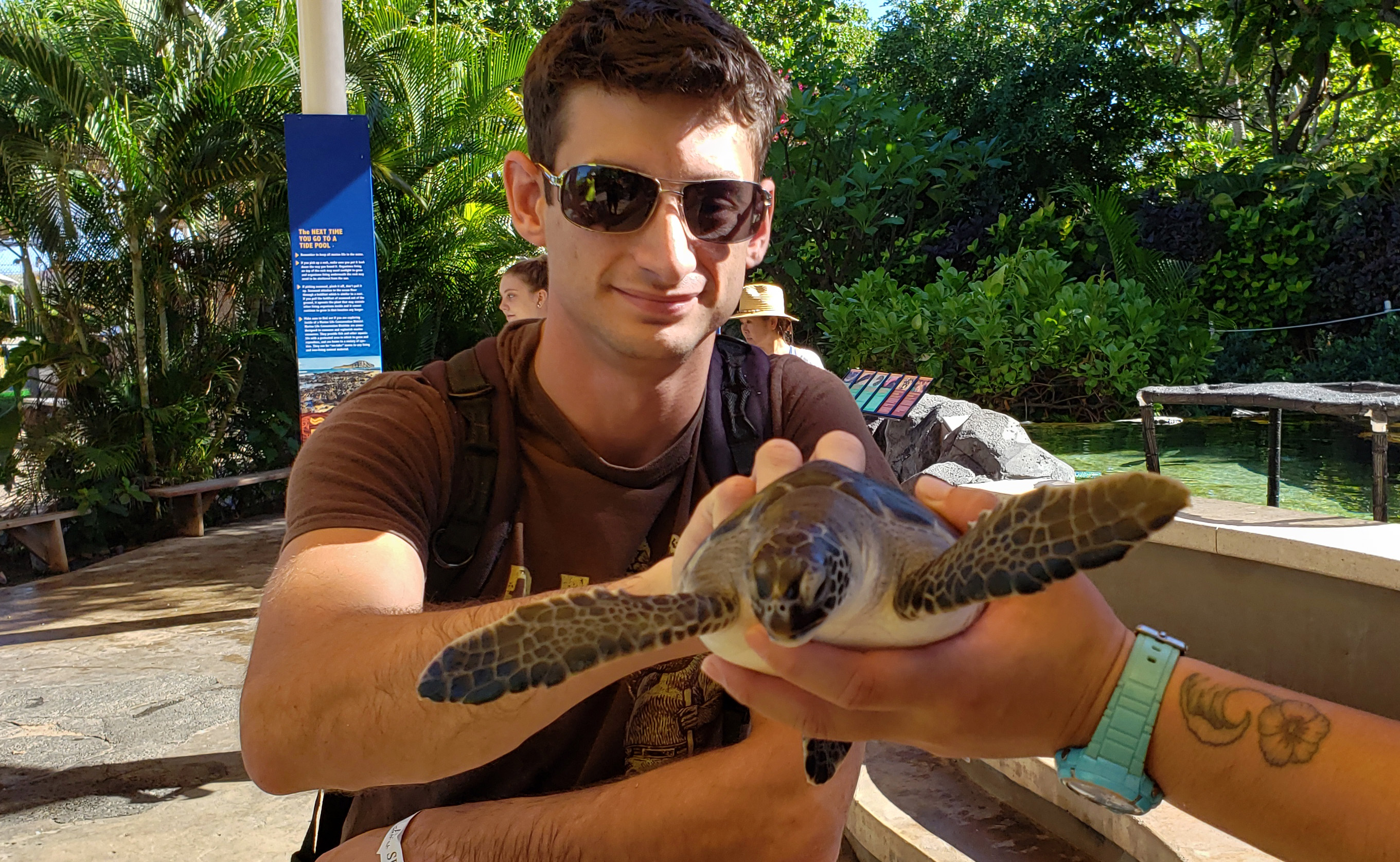
My husband Rich pets one of the baby sea turtles who is almost big enough to be released. Once they are released, they will be at the mercy of sharks and other animals who would eat them, but SeaLife gives them a good start so that they have a fighting chance.
I recommend that you visit the park or donate to them simple because of the importance of the turtle breeding program, but it’s not all that they do! They also rescue and rehab endangered sea birds. If you go, you might get to see a brown-footed boobie or a Hawaiian albatross! You never know what birds they’ll be tending to in their seabird rehab area.
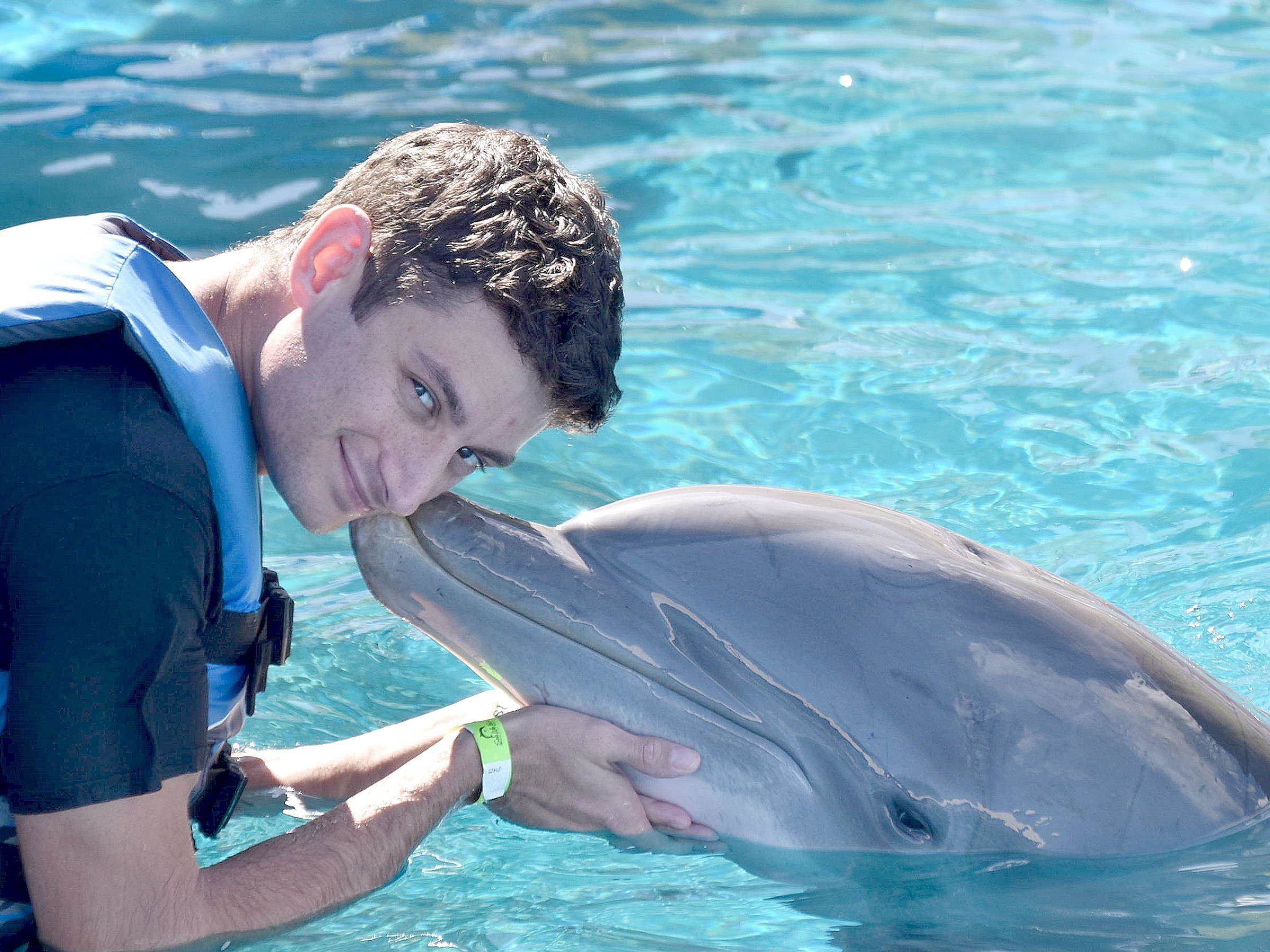
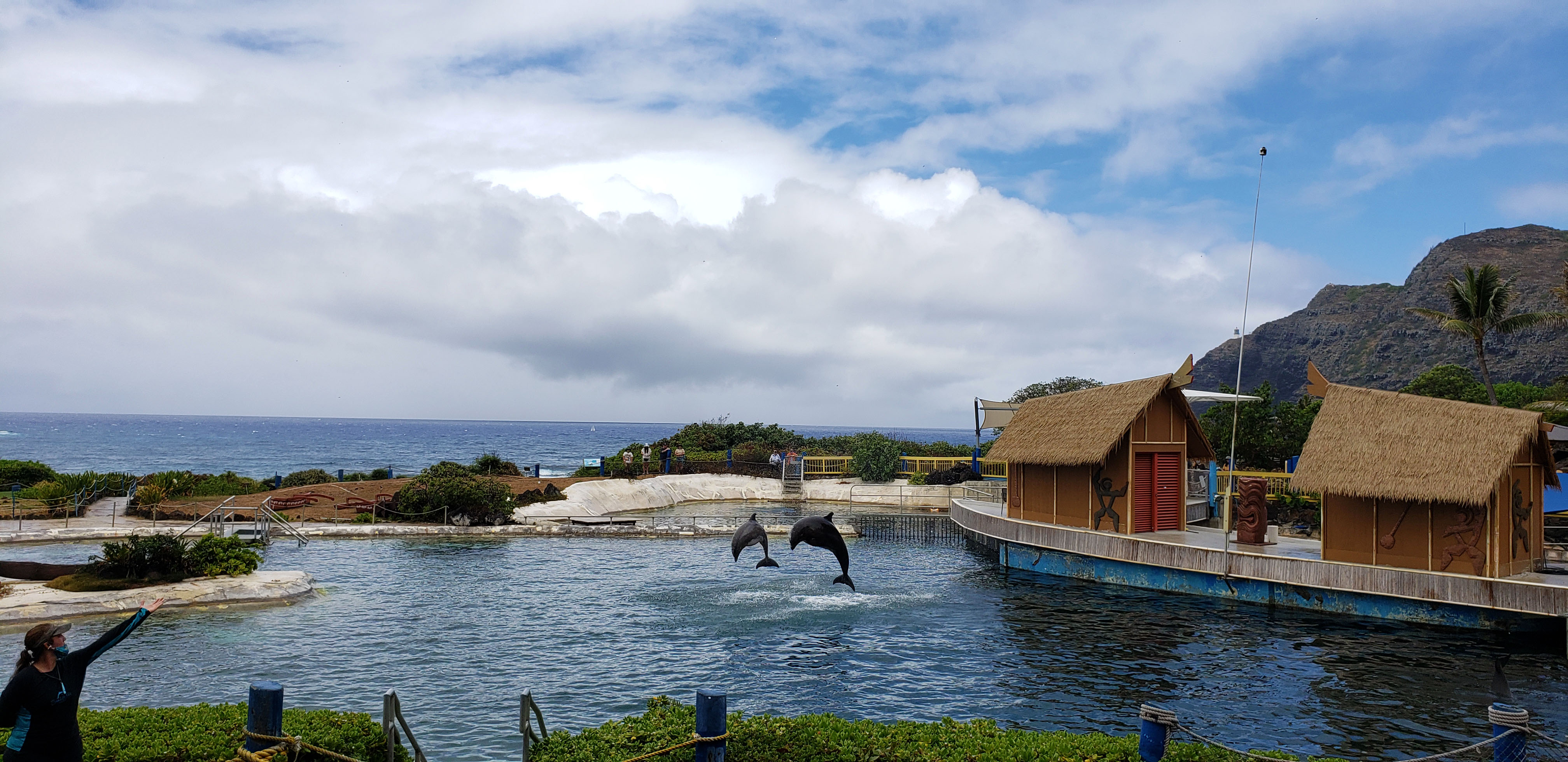
SeaLife also takes on dolphins who have retired from service with the United States Navy. What they did for the Navy is sometimes classified, but dolphins are used for all kinds of things like testing the affects of sonar on sea life and finding mines underwater. These dolphins now perform in the Aloha Dolphins show twice a day, and are available to swim with if you make a reservation and pay extra. My husband did the Royal Dolphin Swim Package and absolutely loved it.
My husband getting a kiss from a dolphin when he did the Royal Dolphin Swim. I highly recommend that you purchase the pictures when you buy the swim package. It’s very worth it.
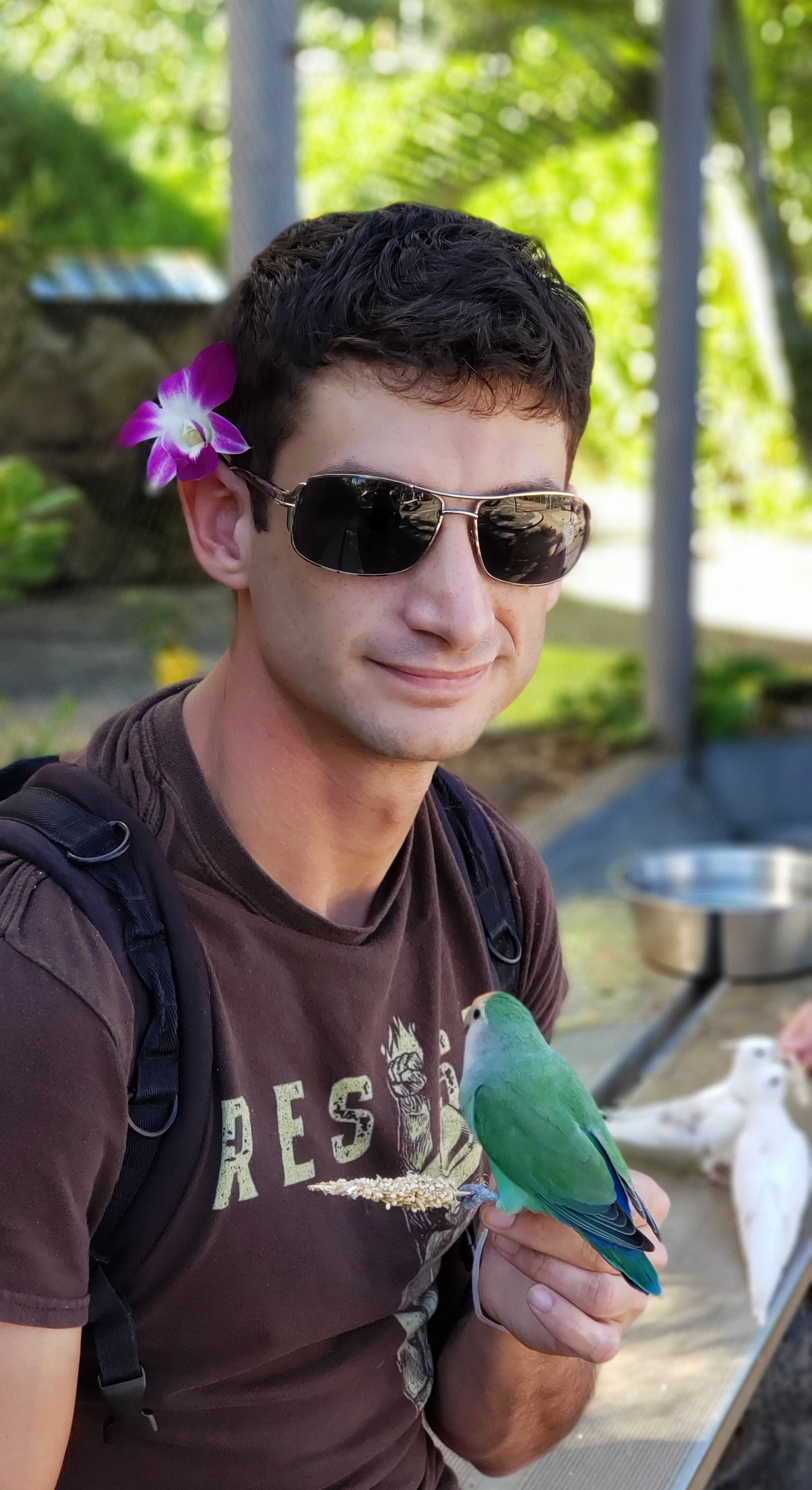
Another fun thing to do is go feed the love birds. I don’t know how this exhibit got started, but it’s fun to take pictures in the lovebirds enclosure because they are so colorful.
If you live in Hawaii, I recommend buying the yearly membership. It comes with perks like private parties for holidays, and discounts on all the merchandise, dolphin encounters, etc. It’s well worth the fee, and remember: You’re supporting a good cause.
My husband Rich in the bird enclosure. This is mostly lovebirds and a few others, and is different from the area with the rescued seabirds.
If you’re just visiting us here on Oahu, I still recommend you go. I know locals here in Hawaii appreciate when tourists take an interest in supporting our local land and animal conservation, and supporting SeaLife is a great way to do that.
It may not be a big, fancy park; but they do a lot of good and that’s what really matters!
The Aloha Dolphin Show, which is free when you pay to enter the park. Definitely don’t miss it!
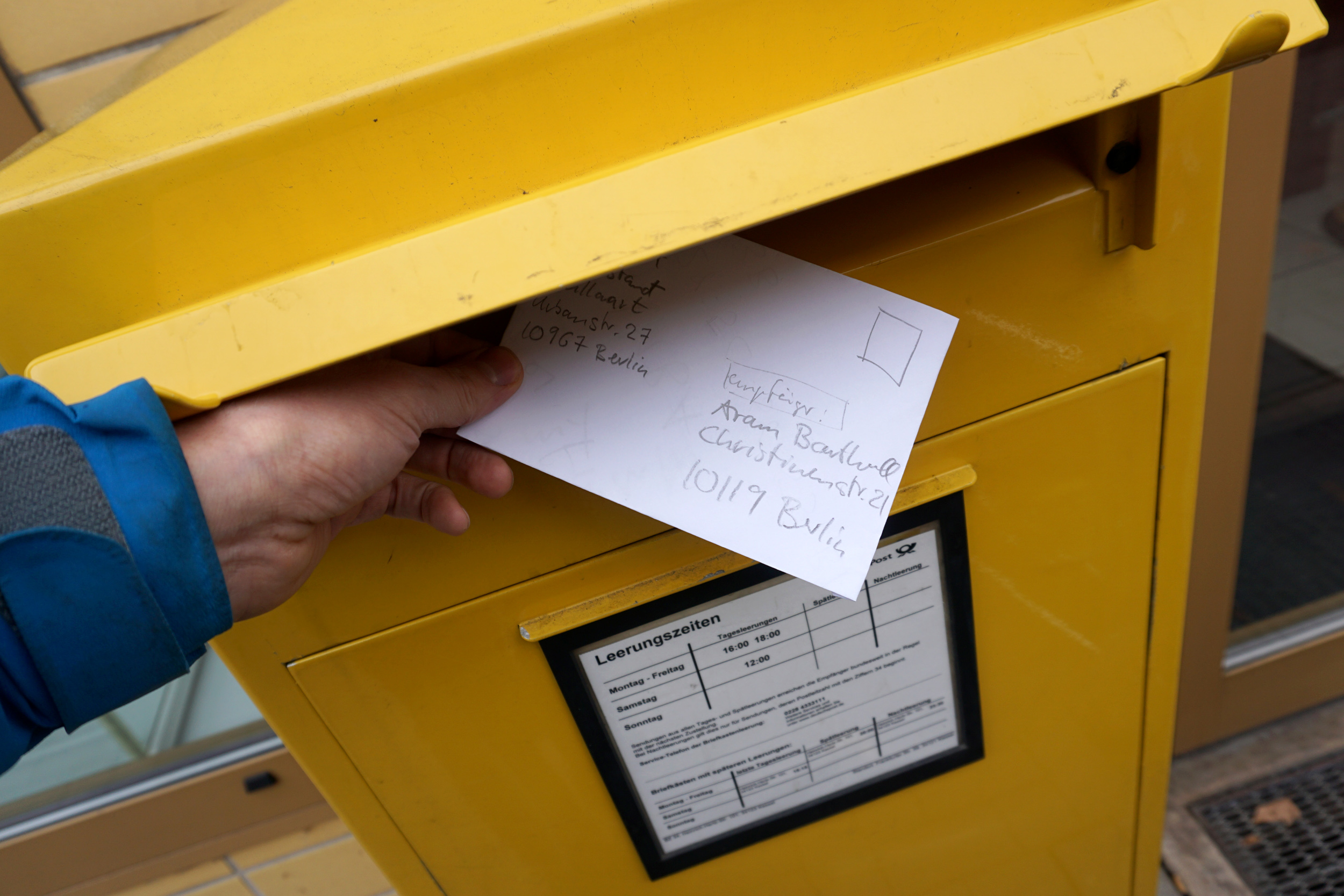
The house we are moving to doesn’t have mail delivery. People think every home in America has access to the USPS, but that’s not true. Reservations, rural areas, and any home in a city where “the driver would have to dismount” are ineligible for delivery of mail.
If you want to send me a letter or card, you will now have to use my P.O. box.
Jenifer DeLemont
P.O. Box 861631
Wahiawa HI 96786
As always, my e-mail address is still jenifer.delemont@gmail.com. I’m happy to get e-mails instead of snail mail, if you prefer.
The house I’ll be living in isn’t too far from the post office. Unfortunately, it’s set back from the street in a way where it isn’t eligible to be added to the USPS route (yes, this also means we can’t get package delivery.) It’s a small house, but it has a yard that the ducks will enjoy, so that’s nice.
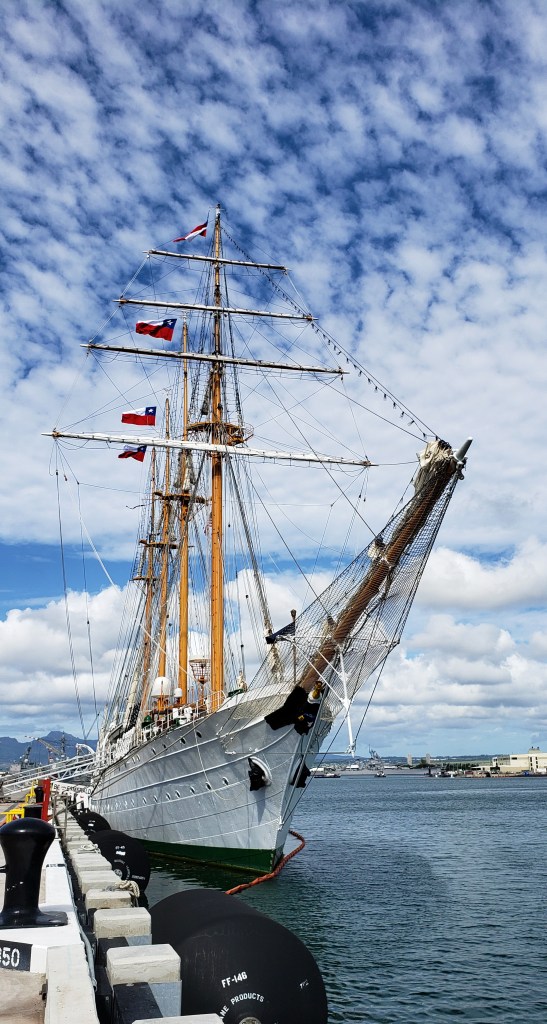
One morning not long ago, a sailing ship called The Esmeralda made it’s way into Pearl Harbor.
Most of the ships that come here are on very serious military missions, and as such, they’re not meant to be photographed or toured.
In general, you’re never meant to take photos in Pearl Harbor.
However, The Esmeralda was visiting from Chile.
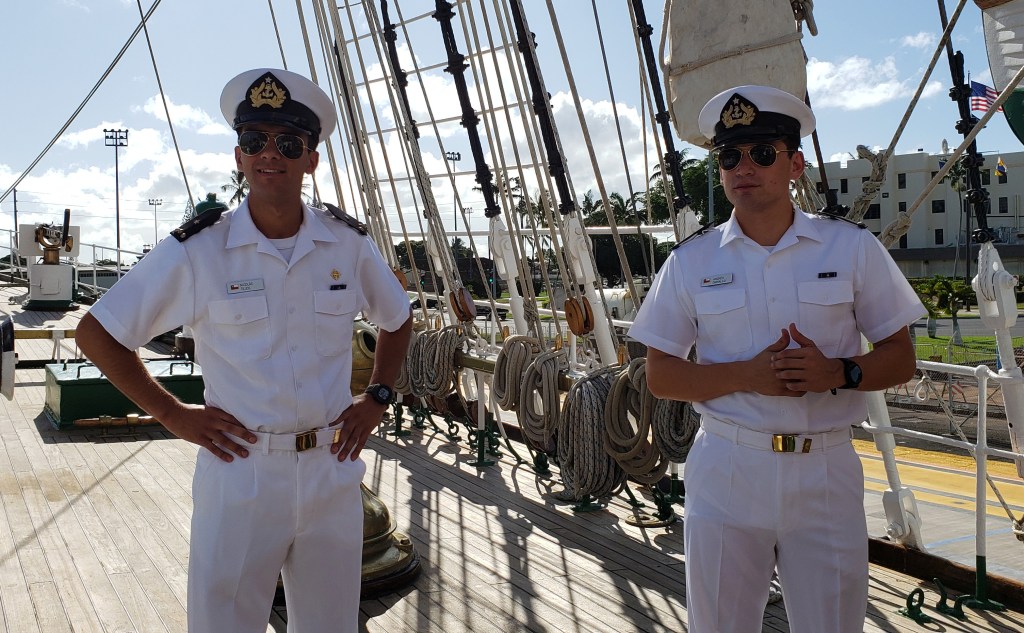
Their mission was to improve diplomatic relations with the people of the United States. And as such, several very patient sailors did their absolute best to give tours.
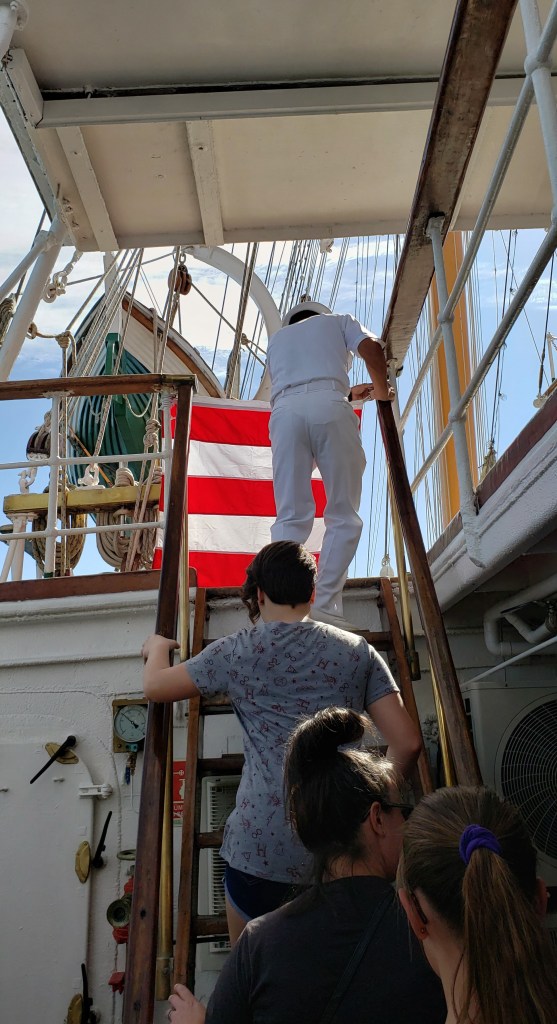
We met on the dock, and were given a walk through of all the unclassified parts of this tiny ship.
Most sailing ships are fairly old. However, The Esmeralda was actually not commissioned into the official Armada of Chile until 1954.
It is a more modern ship in that regard, and so it possesses engines that can be used when they are becalmed.
It also has more undated features for the crew, such as modern cooking equipment in the mess.
My tour guide did his very best to converse only in English (as he had been ordered to,) which meant that I wasn’t able to ask a lot of questions.
Thankfully, I was given a helpful brochure on the tour that told me everything I wanted to know.
The ship’s maximum speed with sails is 21 knots. It’s engines are much slower, and can only move it at 13 knots. That means that it takes a long time to get places.
On the specific tour they were on, they’d gone from Chile to New Zealand, then to Australia, then to Bali and Indonesia, then to Singapore, China, South Korea, and Tokyo.
We were their second to last stop here in Hawaii, on their way to French Polynesia and then home.
Unfortunately, boats can only come into the harbor being pulled by tugboats. Therefore no one here was lucky enough to see The Esmeralda under full sail.
My tour guide assures me that it’s just like flying to be up on one of the masts when the sails are down. He actually got pretty sentimental about it when I asked.
A few facts that I found truly charming:
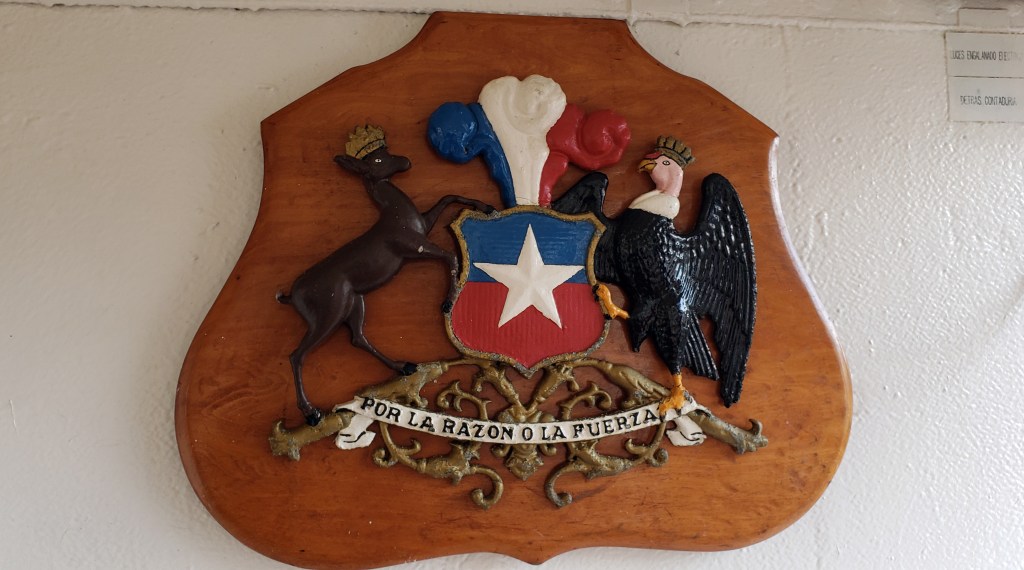
The National Bird of Chile is a chicken, and The Esmeralda has one on the bow of the ship.
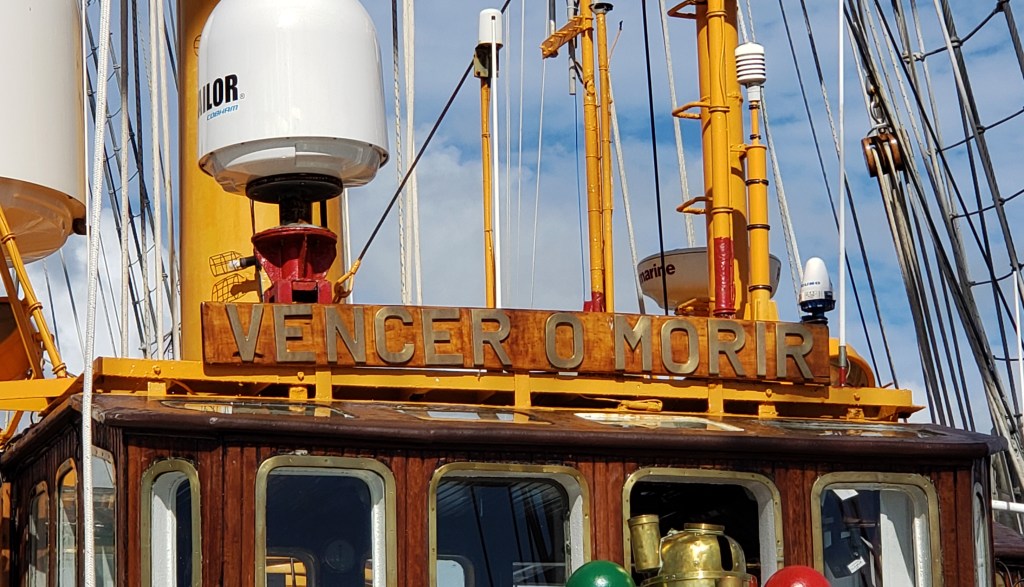
The motto of the Chilean Armada is “victory or death.”
Also, it’s a training ship, as as part of their training the left the new sailors in the middle of the ocean in life boats for a day and just sailed away.
And finally, the guns work, but they are antiquated and my tour guide assured me “they’ve never been used on anything living.”
It’s only open to the public on specific dates in the summer and the fall. However, it’s worth it to go out there when you can.
The parking area is dirt, and it’s pretty rough. I recommend taking a car or truck that won’t mind a less improved road.
After you park, you walk in and see a ticket booth. I paid $17 for access to all parts of the farm, which is the best deal.
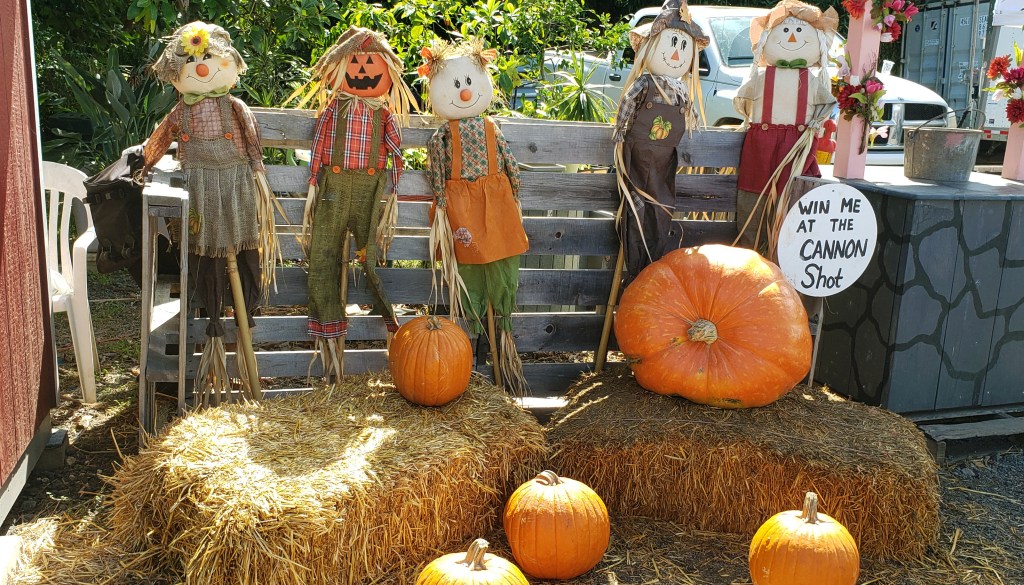
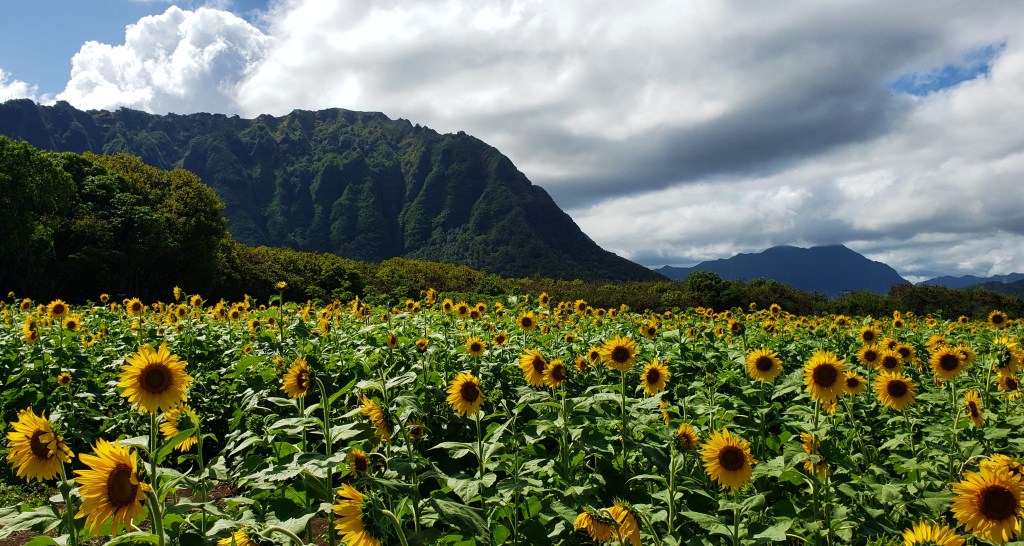
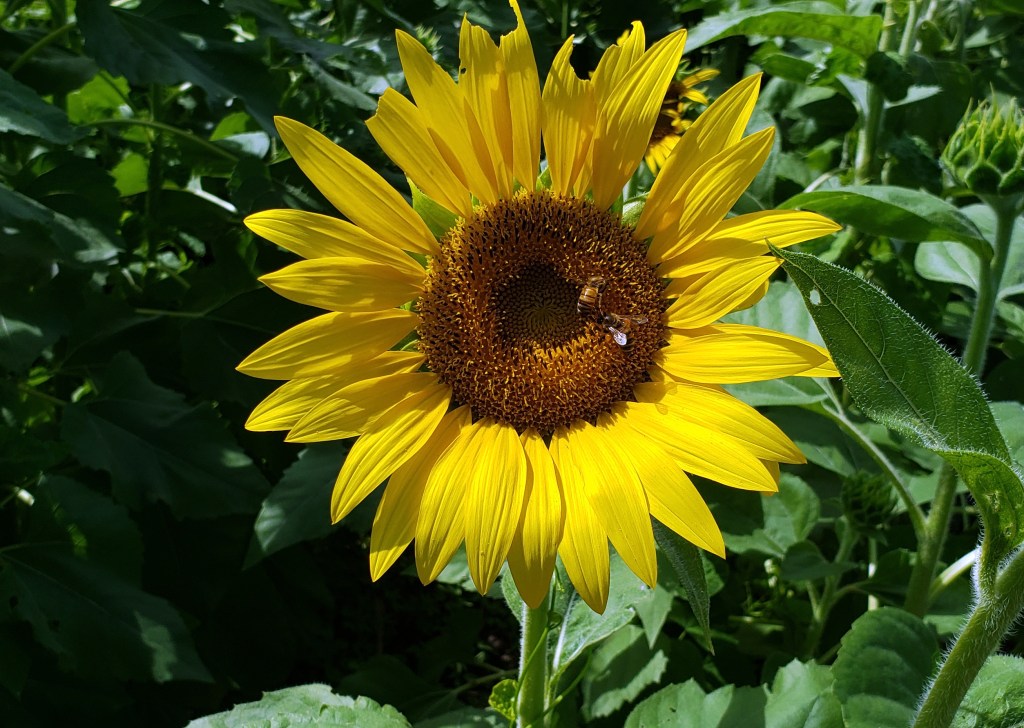
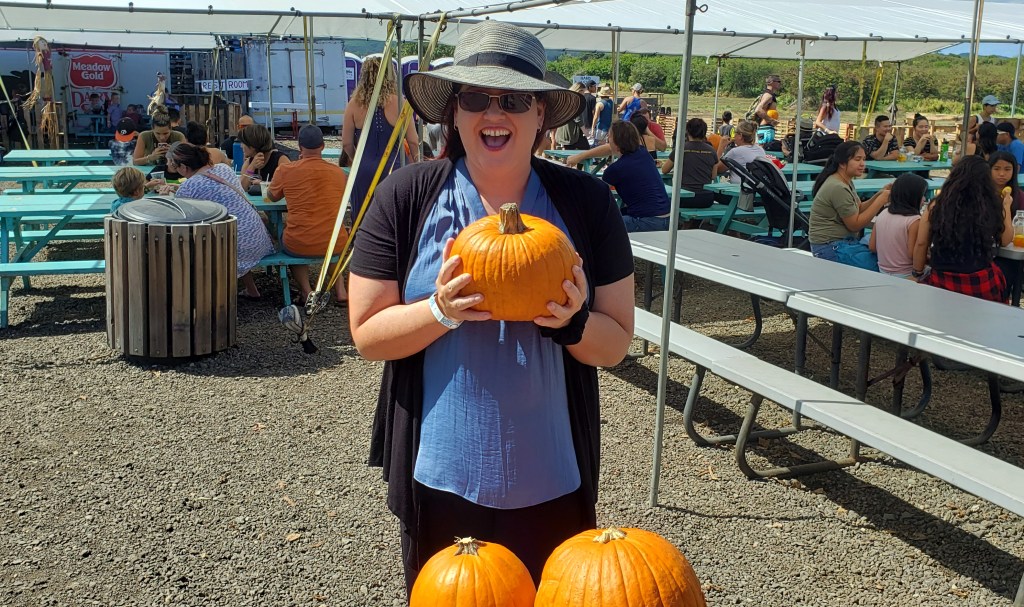
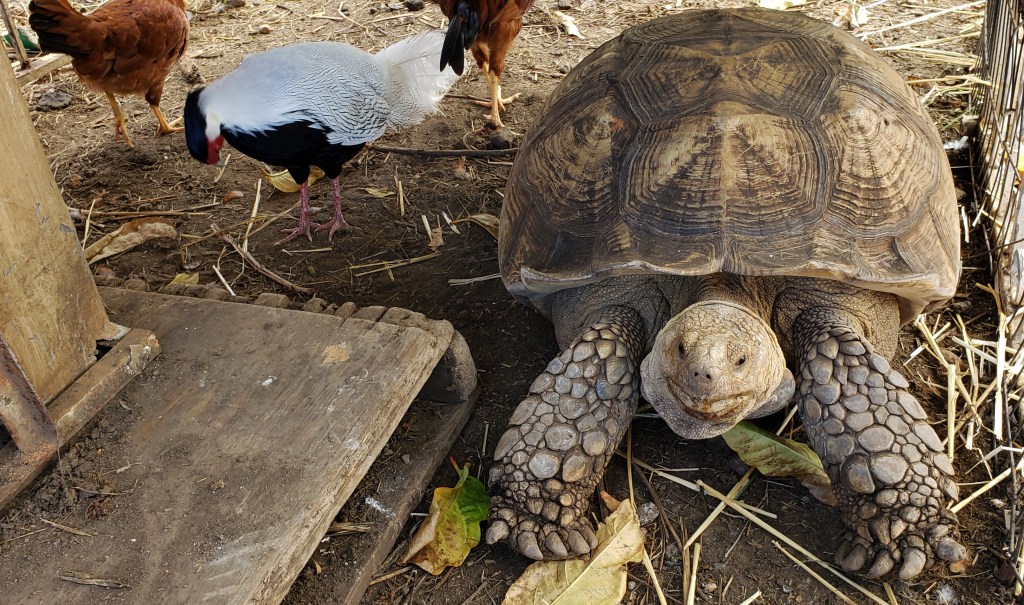
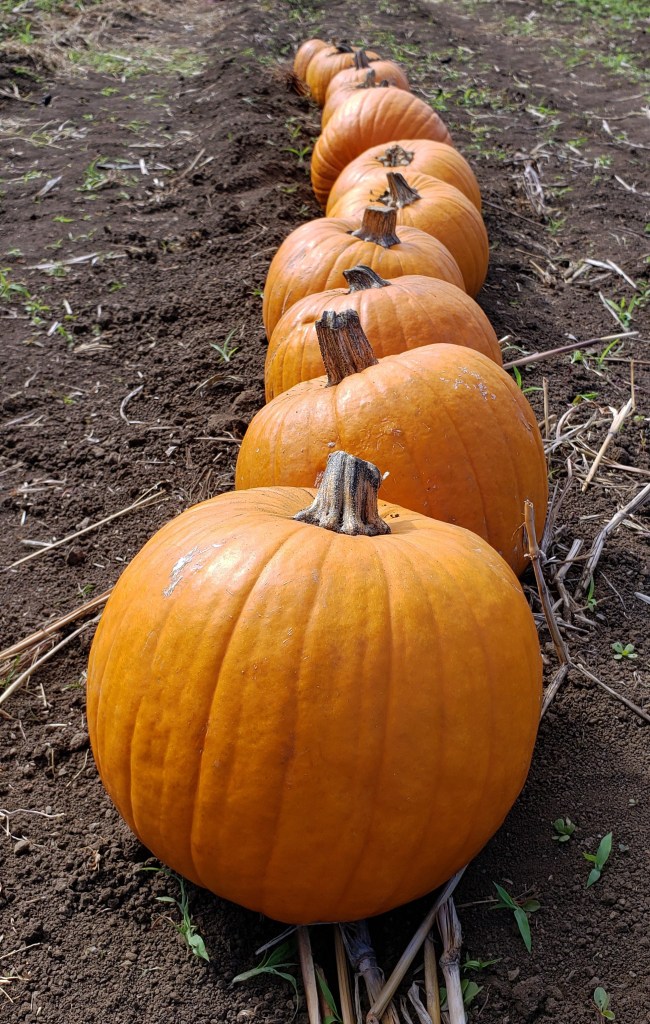
There is a hayride around the perimeter of the farm, a sunflower field, a pumpkin canon, a pumpkin patch, and a petting zoo. The petting zoo is actually quite good, and has a lot of animals. We saw ducklings, turtles, a cow, several types of goats, an alpaca, and a llama. You can buy food for a few dollars extra so all the animals will be very excited to see you.
If you’re allergic to bees, bring your epinephrine, because they are everywhere.
As for the rest of the farm, it’s definitely a photo opportunity. A lot of people do their wedding photos, Christmas cards, and other pictures there.
This is because the sunflower field is positively magical, and it’s set in front of some of the most striking mountains on Oahu; making for truly spectacular photos.
There isn’t much in the way of things to do other than take photos and pet animals. I would allow for one hour, or two at most if you have kids.
There is food and drinks available, but nothing spectacular.
The important thing to remember is that it’s hot in the Hawaiian sun, so wear a hat and put on plenty of sunscreen.
As we were walking up, I observed several people leaving with glowing red sunburns, and you don’t want that to be you.
They do sell pumpkins there, and they’re a little more expensive than what you’d get at Costco or Lowe’s.
However, I think it’s good to buy from local vendors, so I encourage you to pick out your pumpkins for Halloween here.
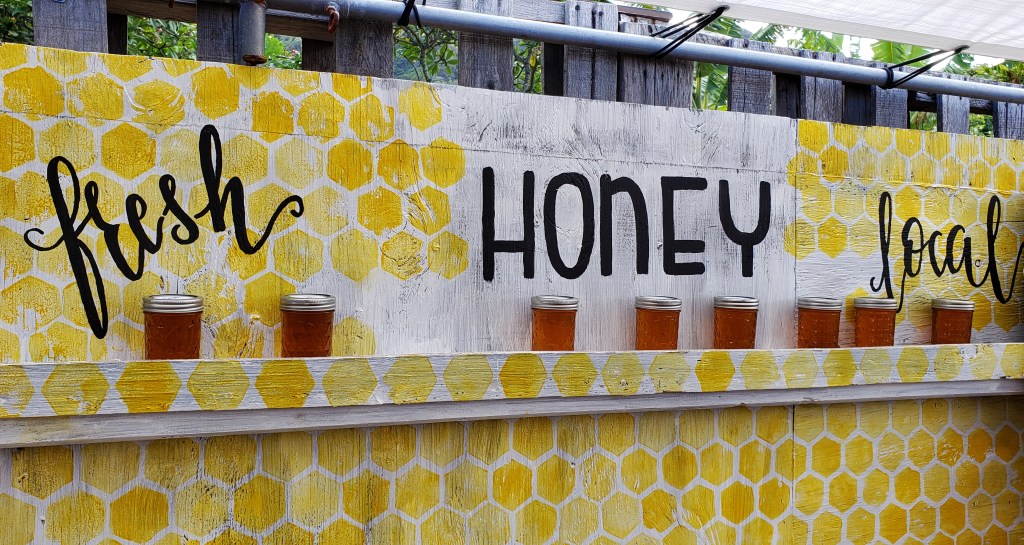
Also, they make and sell local honey products, and you’ll want to get some of those too.
For a family of hour, I’d plan to spend about $150 between admission, pumpkins, and local honey. It’s well worth the trip!
Makua Beach is on the Leeward Side very close to Ka’ena Point. Parking is only available on the side of the road, but there is a fair amount to be had. We went snorkeling there because we’d heard that people often saw dolphins. Unfortunately, there were a lot of spear fishers when we were there, and they scare all the wildlife away.
The leeward side actually has a lot of spear fishmen. This can be very dangerous, so make sure you keep an eye out for them. They tend to swim with their spears in front of them, and they don’t always look where they are going. I have nearly been impaled, so I’m warning you because I have personal experience with the very real danger.
Another thing to remember is that sometimes there are incidents in Hawaii where a shark bites a human. This is most common for surfers (who look like seals from below) and spear fishers (who have bleeding fish on their belts.) Since sharks can make mistakes, it’s best to stay away from, the things that they like to bite.
One thing we found neat about swimming at Makua was the holes that occur naturally in the sea floor. They fill with rocks (which are thrown around during hurricanes) and then the rocks are worn into round balls by the waves.
In spite of the lack of sea life, it really is a very pretty beach. If you were going to just sit and listen to the waves somewhere, this might be a nice place to do it.












 JD's Blog