First, I am back home in Guam. We will be here until around August or September. Then we move to Oahu.
Now then:
I recently went on an Australian adventure. I will do a few detailed posts about the things I saw and did, but here is an overview of where I went.
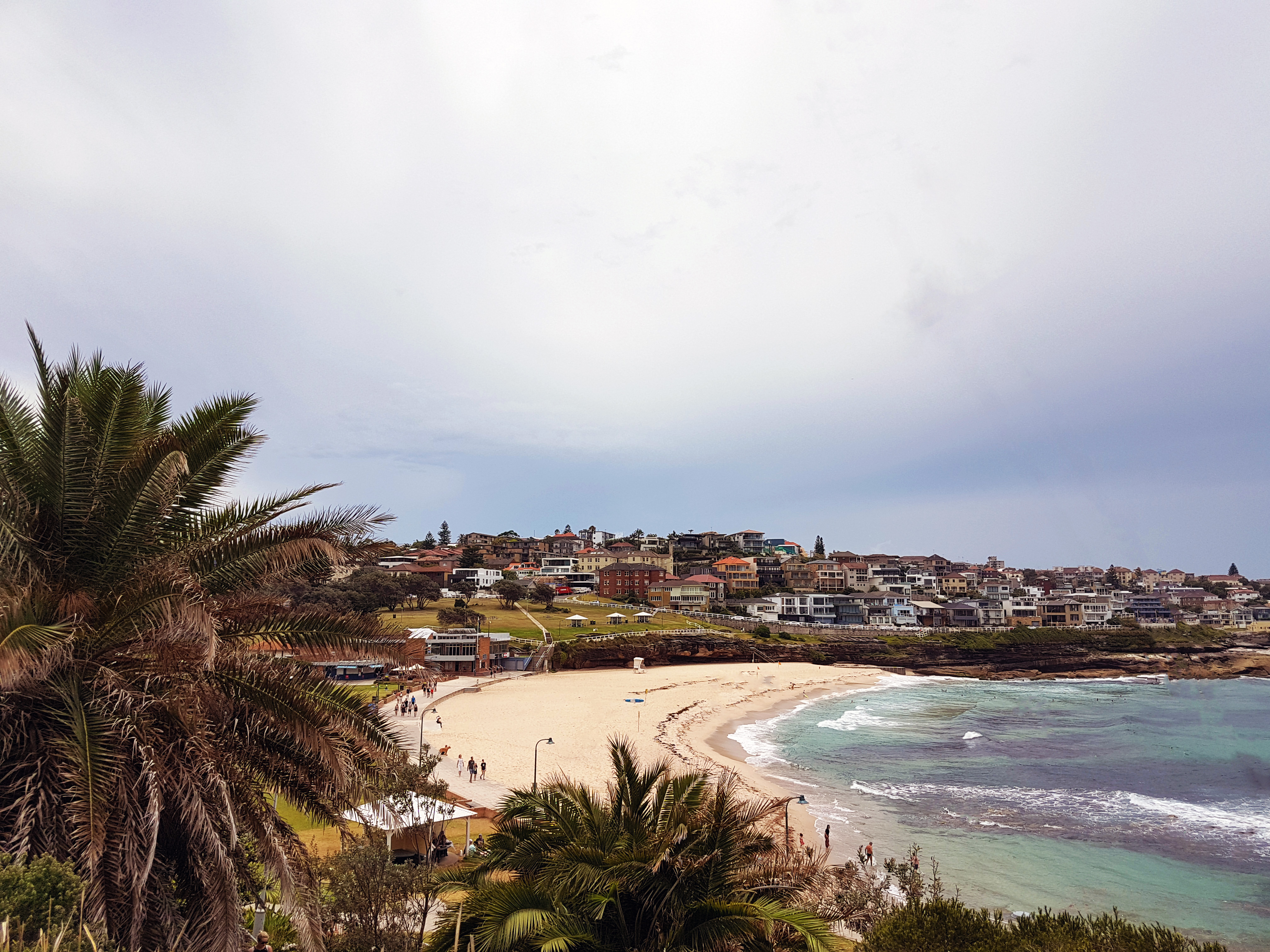
First, I went to Bondi Beach and stayed in a hostel there. I did the coastal walk and snorkeled in Clovelly Bay with a woman from my Snorkel Travel Friends group. I explored the shops and sat and talked with people, and I had a great time.
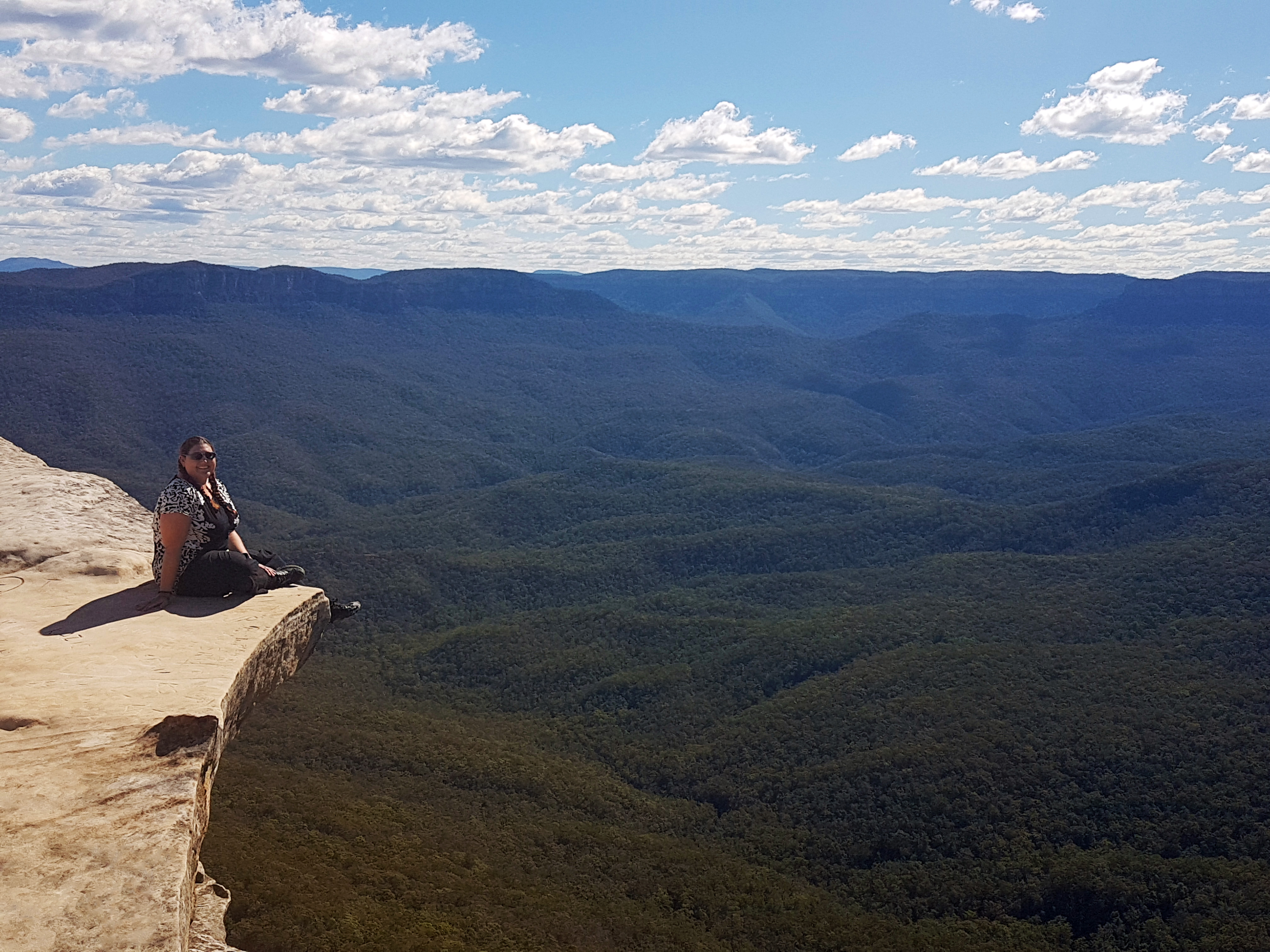
Later, I moved to a hostel near central station in Sydney. I took the Big Bus Tour and got off to see all the major attractions like the Opera House and some of the old Cathedrals. Then I went on a Blue Mountains tour and met up with my friend Shari from Melbourne.
Finally, I met my friend Melissa and took a flight to Cairns. We went out to the Great Barrier Reef and snorkeled at several spots while living abroad a ship called The Kangaroo Explorer. After that, we went up to the town of Kurunda to see the rain forest.
My very last day was spent in Sydney watching the fireworks for Australia Day. Finally, I flew to Hawaii and then home to Guam.
Right now I am catching up on my sleep and sorting through photos, but soon I will share some of the better shots of the reef, and of my other adventures.
I started a YouTube channel so I had somewhere to put all the videos that I take.
Above, you can see the view from my patio. I know I am going to miss this view so much when we leave in September! It’s so beautiful.
Most of my videos are from my underwater adventures. However, I try to just put everything I see up.
This is the sunrise as seen from my balcony one morning. They are not usually this good, but it’s never a bad day when you watch the sun rise over the ocean.
Like I said, most of the videos are from being underwater.
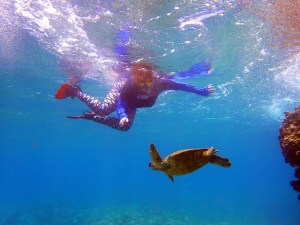
For example, this is a video of swimming with a sea turtle. It’s the most relaxing five minutes on the internet.
None of the videos are very long because most interactions with sea creatures happen in the span of a minute or two.
For example, this silly animal is called a Parrot Fish, and it’s hilarious to watch them swim, but they are fast so they usually swim away pretty quickly.
Anyway, you should check out my YouTube Channel and maybe subscribe. It would mean a lot to me to have some subscribers, and besides, you could see some of the amazing things I see!
Thanks for reading, and watching, and just being one of the people that follows my life.
Tangussion: Snorkeling in Shallow water; no diving. Access: Everyone.
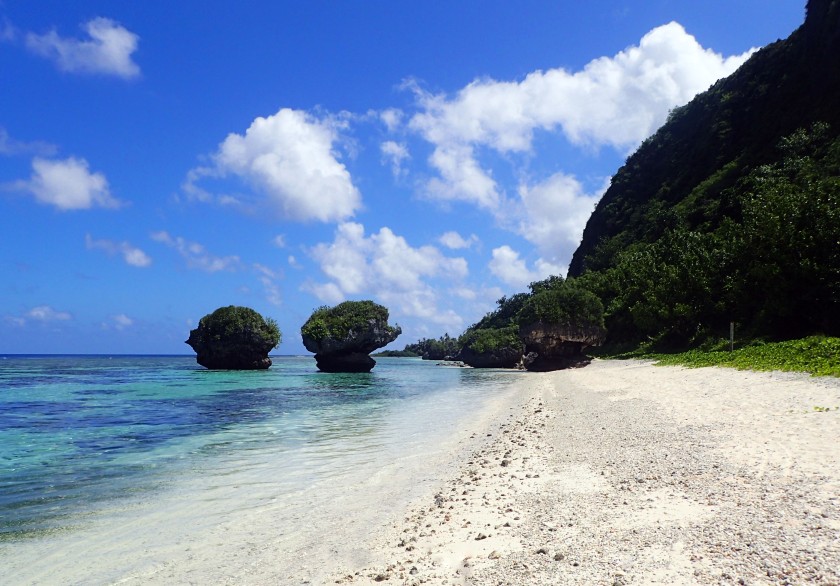
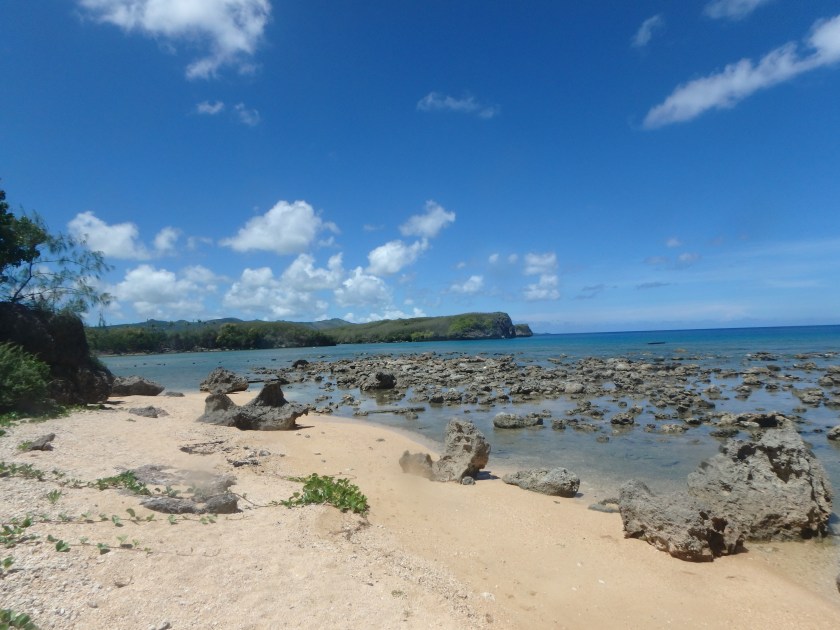
Out past Two Lover’s Point down a thoroughly sketchy road, you will find Tanguisson Beach. It is the site of an old power plant. Now that the plant is shut down, you can go swimming in the area where the hot water used to come out. You can even see some fish there. However, people mostly go to Tanguisson to sit on the beach. The sand is white, the water is blue, and everything is beautiful.
If you look to the right side, you will see a path hidden at the edge of a cove. Following this path takes you to the second part of Tanguisson. This has some iconic rocks that people usually take really stunning pictures with.
Second Beach at Tanguisson
The water is shallow at Tanguisson, but you can swim there. Once upon a time in 2016, it used to be a place where you could see hundreds of sea urchins. However, an explosion in the puffer fish population happened in the spring of 2017, and the puffer fish ate all the sea urchins.
Much of the coral bleached in the big bleaching events in the summer of 2015 and 2017. However, there are still some fish and corals living there. The key thing to remember is to not go past the reef. This is an area that is known for dangerous tides, sharp rocks, and no lifeguards. If you go on a weekday, you will likely be the only one there. If you are swept out to sea, no one will know.
Given that, I recommend that you go swim in the shallows. Look at the fish, take pictures with the rocks, and lounge on the empty beach. Collect sea glass, which is often found there. Have a picnic. But don’t go beyond the reef.
Tanguisson Under Water
Gab Gab: Snorkeling or Diving in Deep Water.
Access: Restricted.
If you are looking for some deeper water, Gab Gab Beach is one of the best places to go. It has easy water access because of the stairs, and it even has showers. This is a very popular place for both snorkeling and scuba diving.
However, Gab Gab is on the Navy Base. That means that if you don’t have a military ID, you need to find someone who does in order to go there. This is kind of a bummer if you are a tourist, or a local with no military ID.
On the upside, if you can go there, you will find it less crowded than other places because access is restricted.
Gab Gab Entry Point
I like to go to Gab Gab because it is easy to get into the water. There is no long wade or swim to get out to the reef. And, the water is calm because it is inside of a harbor and is therefore protected from currents and tides that might otherwise prove problematic.
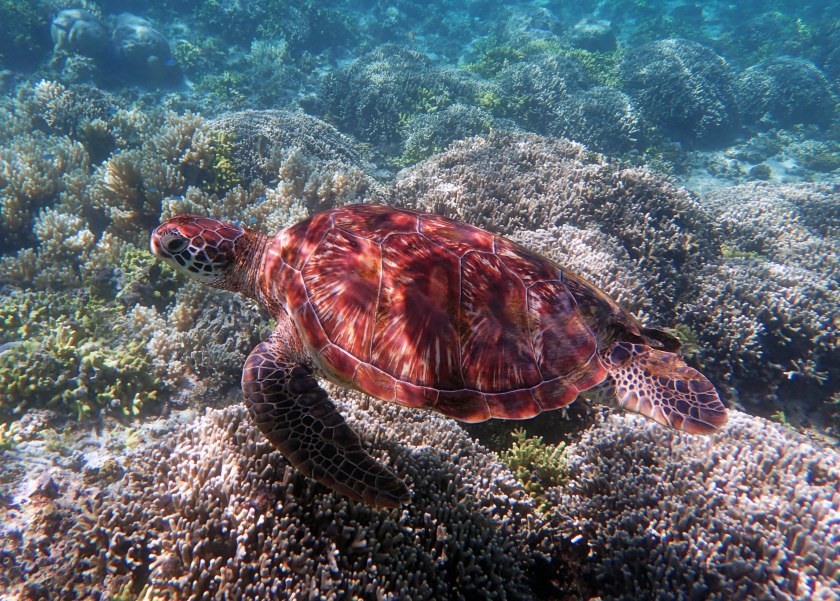
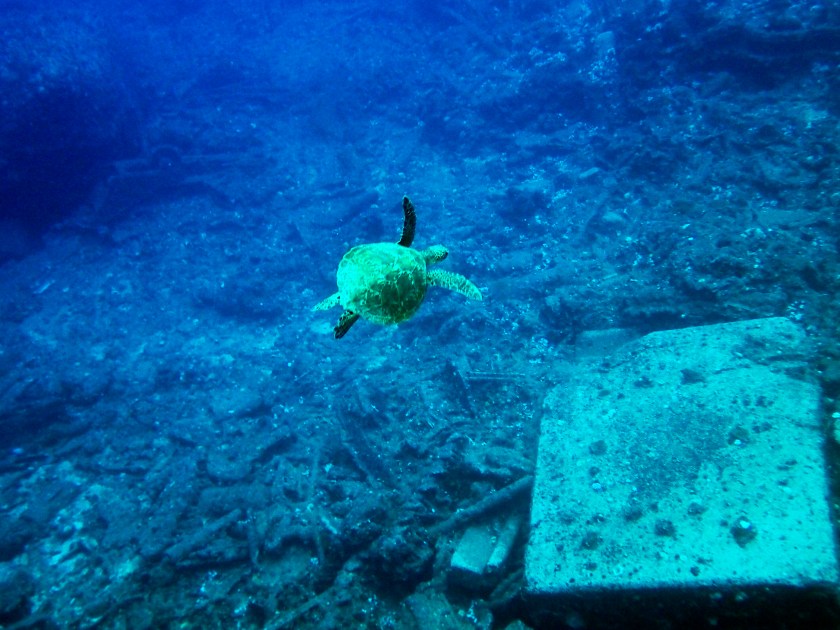
I also like to go to Gab Gab because it is a brilliant place to see turtles. They tend to enjoy spending time in some of the more shallow areas where they can bask in the sun. They also swim over to the boats at the port, and eat algae off the sides. Any day that I go snorkel or dive and see a turtle is a good day in my book. They really are magical.
Gab Gab was effected by the bleaching event in the summer of 2017, and some of the corals in the more shallow areas died. However, the deeper reef is still intact and as beautiful as ever.
Gab Gab Under Water
Gun Beach: Snorkeling or diving in deep water. Access: Everyone.
Another fabulous place to snorkel or dive is Gun Beach. A quick word of warning: About every six months, someone dies at Gun Beach. Therefore, I need you to listen up to the warning I am about to give you:
This is a reef that is not enclosed in any way. There are waves, currents, and tides. If you see white caps when you look out, do not get in the water. Just hop back in your car and go to a different spot for the day.
The people who die at Gun Beach are usually scuba divers who go out too far, and then get caught in a current and pulled out to sea. They only find the bodies about half the time. Please don’t leave the safety of the reef, and do not go out when the water is choppy.
Gun Beach
Most of the time, the water is smooth as glass and it is perfectly safe to snorkel or dive at Gun Beach. You park out by the Beach Bar, and then walk out to the water. Look for the pipes, and follow them out to the reef.
The water is colder than anywhere else on the island. If you are used to Hawaii water temperatures or colder, you will be fine. However, if you are used to the tropics, I recommend wearing a rash guard and pants.
The reef is beautiful. There are so many kinds of corals and fish! A lot of times you see bigger things too, like giant porcupine puffers, octopus, and huge schools of trigger fish. This is easily one of my favorite places to snorkel, and the swim out really isn’t that bad. I would note that the swim out is much easier at high tide, so keep that in mind. However, you can really make it out at any time of day.
As long as you do it on a calm day, Gun Beach is amazing. I highly recommend it.
Gun Beach Under Water
The Spanish Steps: Snorkel in Shallow Water; no Diving. Access: Restricted.
The Spanish Steps is another one of the beaches with restricted access. Like Gab Gab, it is on Navel Base Guam. Unlike Gab Gab, there is no easy access to this snorkel spot. You will have to hike in, and the trail is steep and dangerous.
If you go, I recommend hiking boots, long pants, and climbing gloves for the parts so steep that you have to use the ropes provided. It’s not a long high, but it is a very intense high. I wouldn’t bring small children or anyone with any major physical limitations.
However, if you can make the hike, this tiny pocket of life is really very pretty. Obviously you can’t dive there, but the snorkeling is awesome!
Spanish Steps Beach
The Spanish Steps are at the very end of Orote Point. You can’t go out into the open water because the waves and currents are crazy. However, inside the shelter of the rocks, you can see all kinds of fish and larger marine animals.
I have seen some of the best anemones, eels, and schools of fish that I have ever seen on Guam at the Spanish Steps.
Go at High Tide. It is the only time you will be able to swim over the coral. If you go at low tide, you can’t do anything except float in a little pool of water. At high tide, you can glide over coral gardens and see lots of cool fish.
Spanish Steps Under Water
Fish Eye Marine Park: Snorkeling or diving in deep water. Access: Everyone.
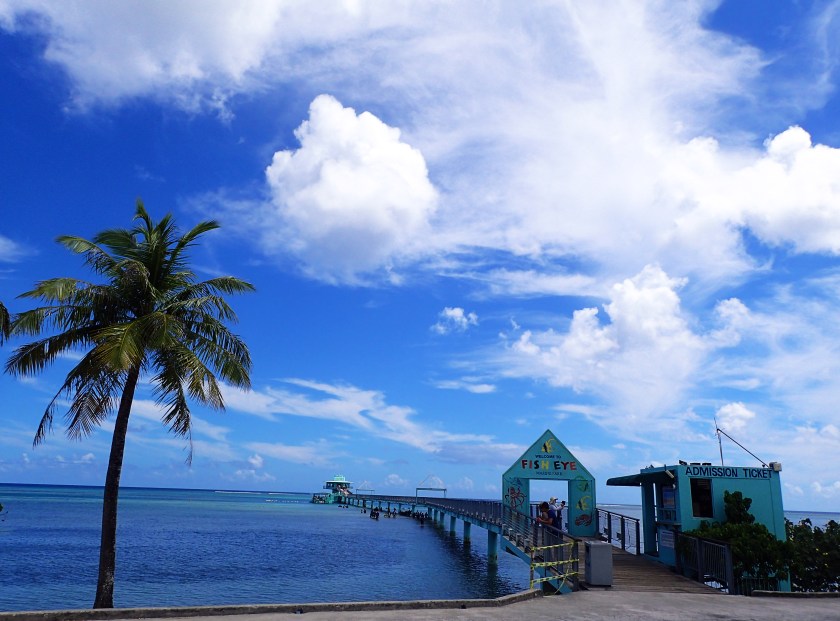
Fish Eye Marine Park is my favorite place on Guam. There is no easy access. At high tide, it is a long swim out. At low tide, it is a slippery and dangerous walk. However, once you get past the long, shallow coral shelf, you will see the most amazing things!
There are a lot of advantages to going to Fish Eye. First, it’s easy to see where to get in. You just head out under the walkway for the observatory. The parking lot is right there. Once you get into deep water, you have so many options!
Fish Eye has a double reef, which means that you can swim along and follow the reef to the left or right. However, you can also go straight out through the deep water. I know that sounds scary. The first time I did it, I was nervous. However, you soon come to a second reef spanning hundreds of meters out to the wave break and full of corals and life.
Fish Eye Marine Park
Another great thing to do at Fish Eye is to swim out to the left. Once you get past the rows of sea grass, you can swim to the left in a HUGE area called the Piti Bomb Hole Preserve. There are so many deep areas where bombs made holes in WWII, and the edges are ringed with exciting corals.
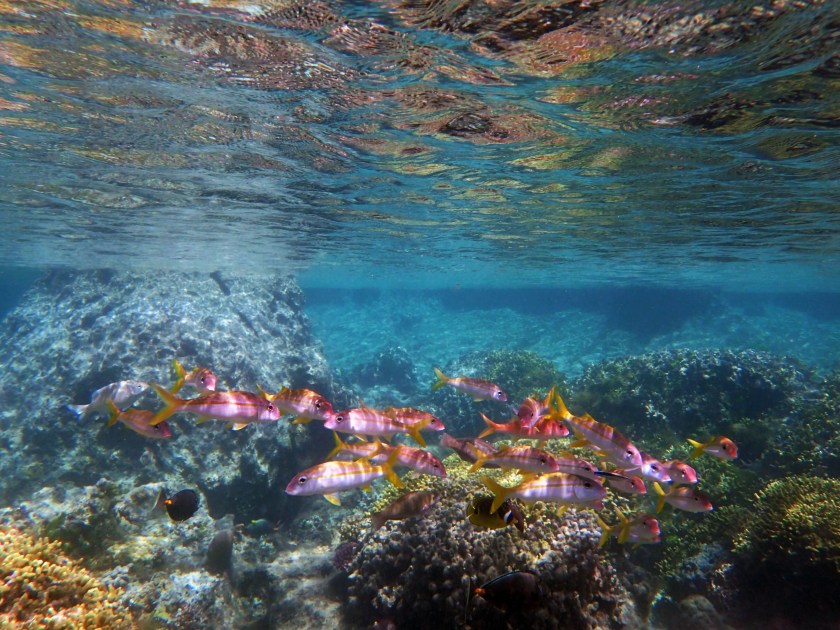
I have seen turtles, sharks, huge schools of all kinds of fish, a barracuda, and so much more! It is the only place around Guam that I have ever seen cowrie shells. There are angelfish and spiny toad fish and all kinds of wonderful things. It is definitely worth checking out.
If you bring scuba gear, I recommend swimming once around the base of the Fish Eye Observatory. It looks like a giant tin can under water, but a huge variety of fish live there because the Fish Eye people regularly throw chum in the water. Then head to the left towards the Piti Bomb Holes, where you will find plenty of deep places to explore.
Fish Eye is often a little crowded. However, there is still nowhere else I love as much. Just be sure to wear a long-sleeve rash guard and long pants. Maybe even a bandanna over your hair and gloves. Jelly fish are often sighted there, and they cant sting you through clothes. It’s better safe than sorry since you want to make sure you have a good time.
If you don’t have clothes to wear in the water, there is a dive shop right across the street from the Marine Park, and they have all kinds of cool options.
Fish Eye Under Water
Old Wives Beach: Shallow and Deep Water Snorkeling. Diving only by boat. Access: Restricted.
Old Wives Beach is one of the most dangerous beaches I have ever been to. If you feel the need to go, do it at high tide and make sure there are no storms in the area. It is a long slog to get out to the deeper water. The rocks are sharp, and often the waves can be forceful.
Once you get out to where you can easily swim, you have options. To your left you will see a little island, and on the other side of that is Dadi Beach. There are often spinner dolphins sighted there.
To the right is Tarzan Cave and Orote Point.
Old Wives Beach
The sea floor is littered with trash. The military dumped a lot of things there during the war. Make sure you don’t touch anything if you are diving. The military believes that there could be un-exploded munitions down there.
There are lots of turtles and other large animals who like to hide among the trash. If you dive there, it will have to be on a boat out of the Agat Marina, because you would never get out to the deep water with gear on.
That said, I have seen some schools of fish, a dolphin, and several turtles. So, if you are willing to brave the waves, tides, and sharp rocks, you might see some cool stuff.
Old Wives Underwater
Tumon Bay: Shallow Snorkeling; No Diving. Access: Everyone
Tumon Bay is the area where all the resorts are. If you stay at any of the major hotels, this is what you will see from your window and this is the place you can walk to the water.
The water in Tumon Bay is very shallow, even at high tide. There are not many places that you won’t be able to stand up. As long as you stay inside the bay, it is a perfectly safe place to be. However, some people like to go out to the edge of the bay and jump into the deep water. I actually watched someone do this, and they were swept out to sea. The recue crews had a very fast response time, and they were there within minutes. However, they never found the guy’s body.
It’s fine to do a drift dive out there past the reef with one of the tour companies. When a boat is monitoring you and you have dive gear and a safety sausage (required for all boat dives on Guam) then you are safer. But as a swimmer with just a snorkel mask, you chances are not so good.
Tumon Bay
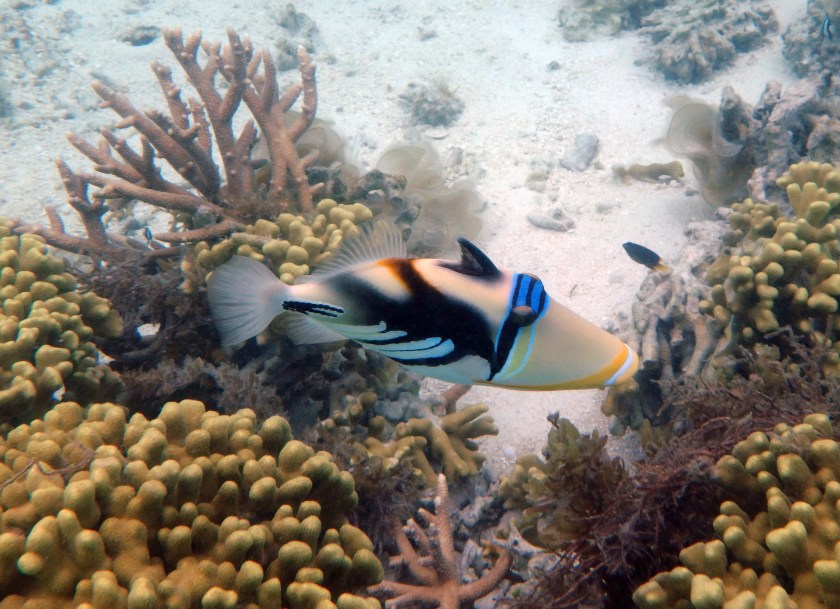
So what can you see in Tumon Bay? Well, count on lots and lots of trigger fish. The most common kind that you will see are called Picasso Trigger Fish here, but in Hawaii I noted that they are called Black Bar Trigger Fish. Either way, we have a lot of them in Tumon Bay. We also have ells, schools of various baby fish, and all kinds of other stuff.
Wear coral shoes even though it seems like the sand is safe. Lots of things live in that sand, and from long-horned cowfish to eels, you don’t want to step on them.
There is a very strong current when there are storms. This can make it a real challenge without fins. Don’t go in the water when the current is really strong because it will suck you over to Gun Beach and out to sea.
Tumon Bay Underwater
Boat Dives
Most dives on Guam are done from a boat, because shore access is limited. There are several options for companies to take you diving, but go with MDA. They are the best, and have access to the most places.
You will need a safety sausage to do a boat dive on Guam. Most boat dives are drift dives because of the currents, and you need to have a way to signal the boat to come pick you up. You can rent all the gear you need except for the safety sausage, so bring one or be prepared to buy one.
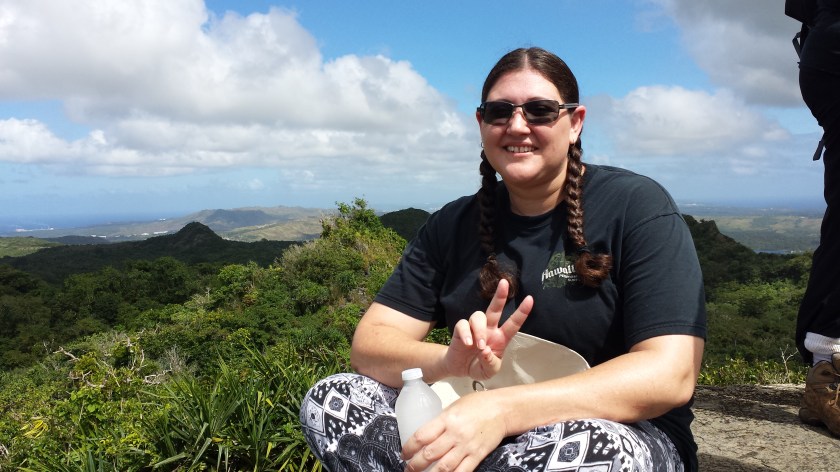
This is me at the top of Mt. Lam Lam. There are not a lot of mountains to climb, so I just climb the same one over and over. Island life, huh?
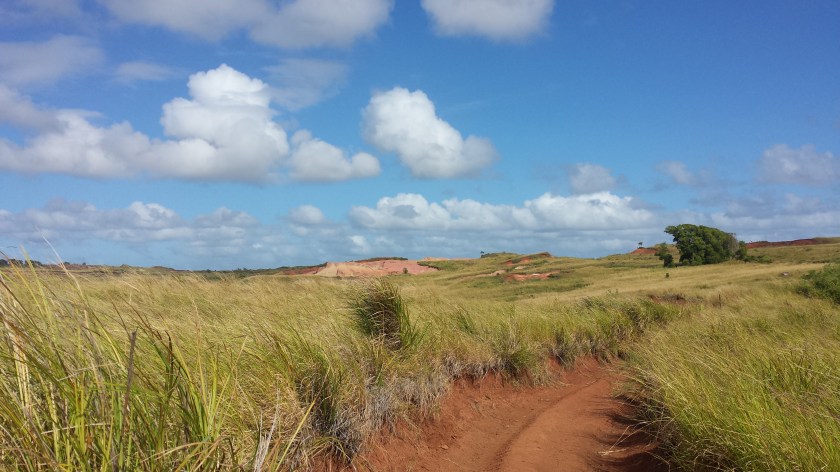
This is the “desert” side of the island down South. There are a lot of trails to valleys with waterfalls and pools to swim in. I like the tall grass and the red dirt. They contrast well with the blue sky and the fluffy clouds.
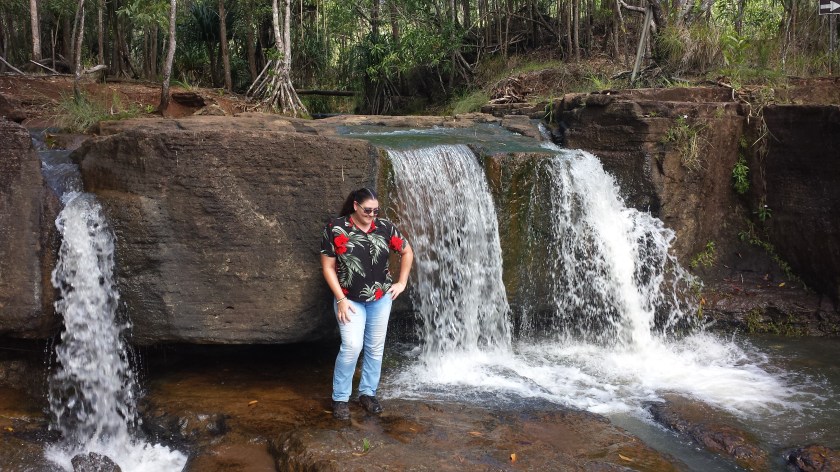
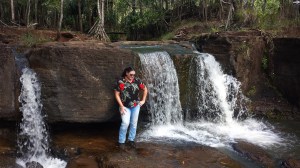
This is me with the first waterfalls that you come to on the Tarzan Falls hike. They are smaller than the main waterfall, but still pretty.
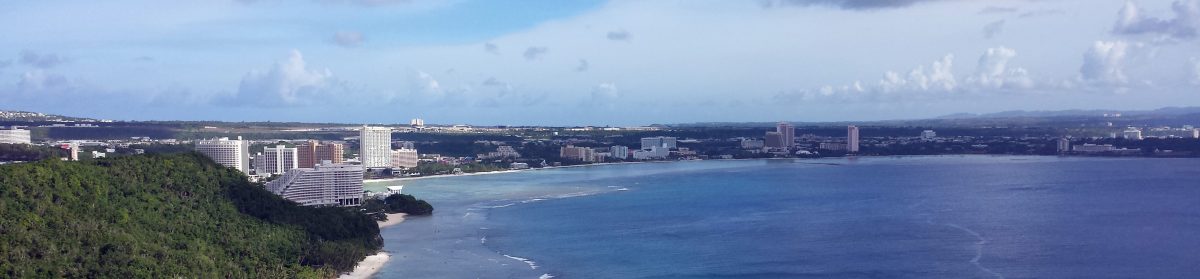
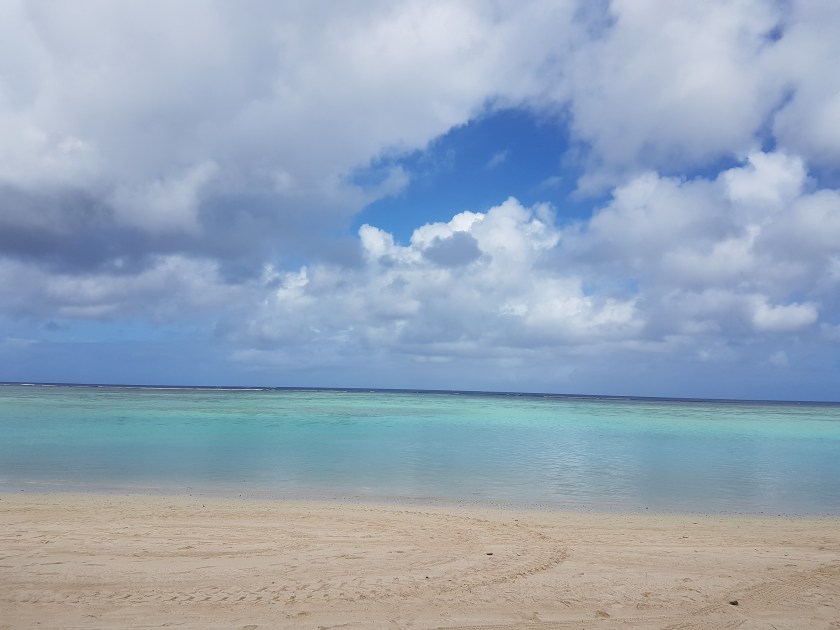
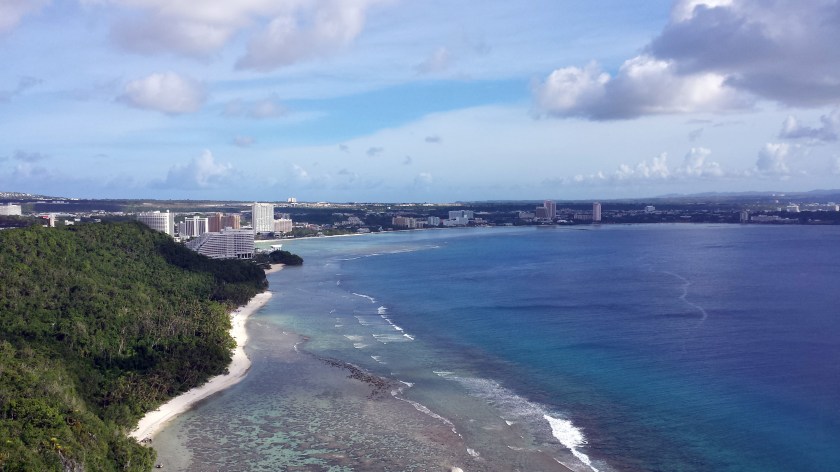
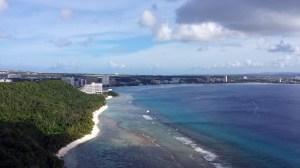
This is Tumon Bay, where we live. It is the most beautiful view I have ever had, and I know we’ll never have such a beautiful view out of our windows again.
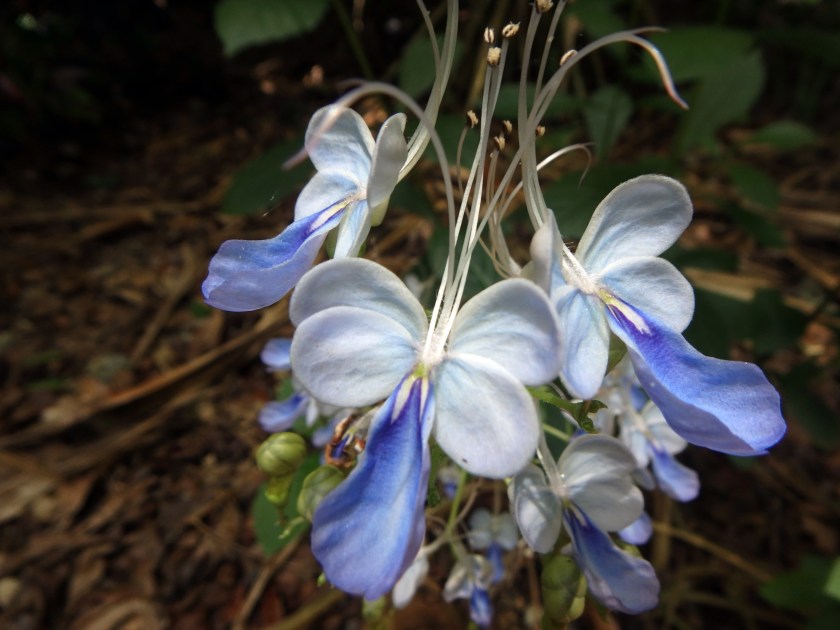
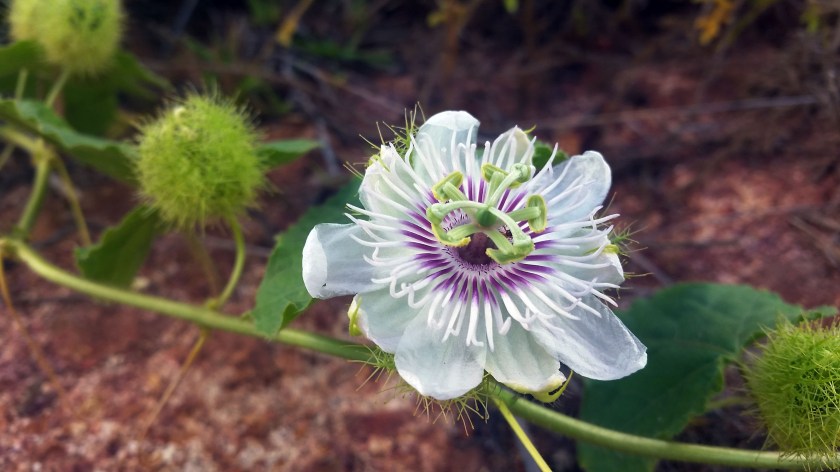
These are wildflowers out on the trail. Usually you just see types of ground orchids, but these pretty lacy flowers are new to me.
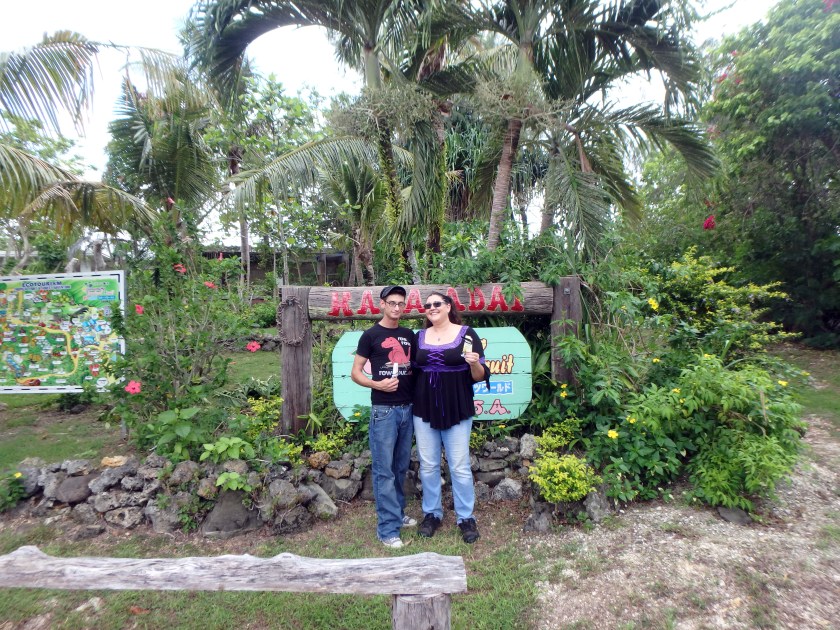
Rich and I at Hamamoto Fruit World. It is basically just a really big orchard for tropical fruit trees, but I really liked it because I love plants.
This is the view from Two Lover’s Point. You are looking down at Tumon Bay, and one of the short little buildings in the middle is our condo building.
This is my favorite flower. It is called a Passion Flower. They come in different colors. When I was a little girl, my aunt had some that were orange and purple. I loved them. The ones here are mostly white, but they are still pretty.
As I get ready to leave Guam this year in August, I am feeling nostalgic about places I have lived and visited.
I have been so lucky so have had such cool adventures. I thought I would tell you about some of my favorites.
I grew up in Arizona. People think that it’s all desert, and some of it is. However, a lot of Arizona is also forest. It’s a very diverse state.
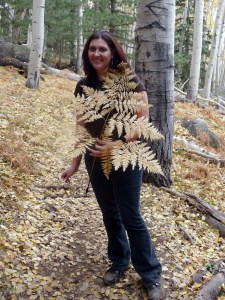
Me with Oak Creek Canyon Behind MeOn My Way to GraduationIn Flagstaff with a fernAt Havasu Falls inside The Grand Canyon
Then, there was South Korea. I loved it there so much! I got to experience seasons for the first time. I also got to teach cute kids and make lots of friends that I still keep in touch with.
I also learned to read and write Hangul, which is the Korean written language. My spoken Korean is not as good as my Spanish, but I did my best.
South Korea is an amazing country. If anyone is thinking of visiting: I recommend it!
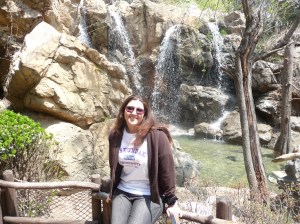
In Busan in front of the AquariumAt EverLand, and Amusement Park in South KoreaAt the Folk Village in Suwon, South KoreaAt the Cherry Blossom Festival in Seoul
I also went to Japan and spent some time there. I really liked the Shinto cemeteries, which have clapping sticks to keep the dead company.
I went to a Cherry Blossom Festival, enjoyed the night life, had tea at a traditional tea house, and in general just enjoyed Tokyo. It was a beautiful place to visit, and I hope to go back some day.
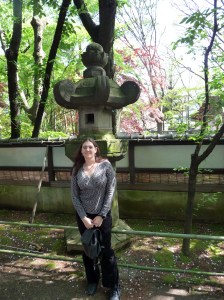
Uneo Park in TokyoIn front of a Pagoda in JapanIn front of a stone lanternA Shinto Cemetery I visted
France was amazing as well. The food was so good! I know it’s a cliche to say that the food was the best part, but it really was impressive.
I went for Christmas, so I got to see Paris all decked out for the holiday. It was cold, but thankfully there was no snow. I get cold so easily since I am from the desert…
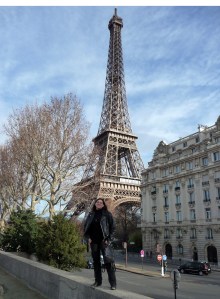
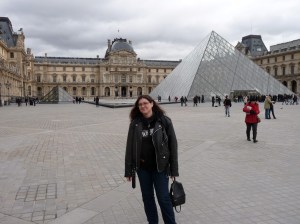
Standing in front of the Eiffel TowerIn front of Notre DameAmazing Cheesecake in ParisIn front of the Louvre
I also went to England to visit my cousin Stacy. It was really lovely.
Being an American, I guess I think of the U.K. as where most of our culture came from. It certainly has a certain amount of familiarity to it.
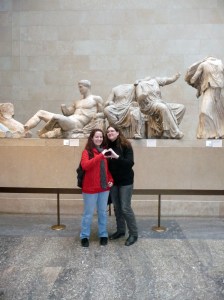
The British Museum was a lot of fun, and I tried my first fish and chips after! I also saw all the London Landmarks.
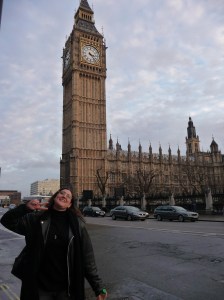
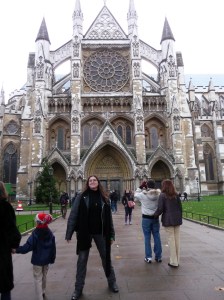
Big Ben and the London EyeAt the British Museum with my cousin StacyMe with Big BenIn front of Westminster Abbey
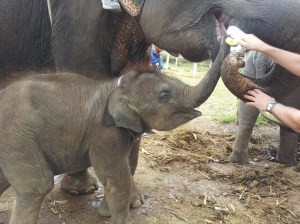
As for Thailand, I always wanted to go there, because I worked at a Thai restaurant in High School and they made it sound so amazing. I have to say, after 20 years of wanting to see it, I was not disappointed! I got to meet elephants, swim in the ocean, and check out several temples.
I only spent a month backpacking around in Thailand, and it left barely long enough. Definitely plan a long trip if you go!
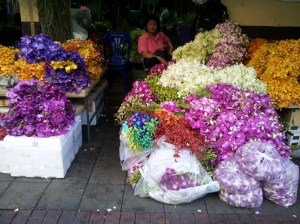
On a waterfall hike outside Chang MaiAn orchid stall at the flower market in Bangkok.On the island of Koh Samui.Meeting elephants!
Australia is fabulous! I really fell in love with the land and the people.
I went to visit my friends Melissa and Shari, but I had always wanted to see the country as well. I felt drawn to it because most of Australia is as dry as Arizona. They could also easily rival each other in terms of dangerous animals.
I highly recommend visiting Australia.
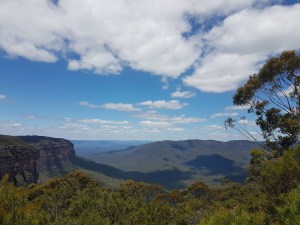
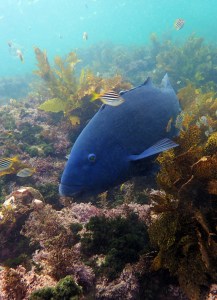
The Blue MountainsHiking in the Blue MountainsA blue grouper in the ocean in Sydney.Watson’s Bay in SydneyThe opera houseIn the rain forest in KurandaOn the Great Barrier Reef
I lived in Oregon after South Korea and before Guam.
It is where my family still lives. My mom is in Gresham, which is right outside Portland. And, my aunt is in Hood River. We have our family reunions in Seaside.
I love the Pacific Northwest. Even though I didn’t grow up there, having my family live there makes it feel like home.
At the Shakespeare Garden in PortlandAt the Japanese Gardens in PortlandAt the lava flats in OregonAt the Oregon Coast Aquarium
Guam has been fabulous.
At first it was a little hard to move to an island. Islands are so small, and it’s a challenge to find anything on island (food and clothes, for example.) Sometimes all the stores are just out of everything. And no one delivers to Guam!
However, I really came to love the reefs here and the whole underwater world. It’s been so much fun, and Rich has liked his job here on the USS Emory S. Land.
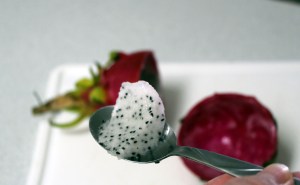
Rich and I at Umatac BayJust me scuba divingHiking to waterfalls in the jungleA bite of dragon fruit, which grows here on GuamTumon Bay where I live
And now we are off to Oahu. I have visited several times, since we need to go through Oahu to get anywhere from Guam. So far, I have really enjoyed it. I am terrified about buying a house there and finding a job. But, I know I’ll be able to do it.
In my last post, I talked about the fact that coral around the world is bleaching. Today, I want to talk about why this is happening.
First I need to explain something from Geology.
It’s called the Milankovitch Warming Cycle, and it has been used as a dog whistle in oil company propaganda, as evidence that the current global climate change is “natural.”
Let’s look at the cycle in terms of atmospheric CO2.
So, what exactly is the Milankovitch Warming Cycle?
Well, it describes the natural oscillation of the global climate since the formation of Earth. The global environment has varied in temperature in a natural cycle over hundreds of millions of years.
The key thing to know is that it happens very slowly.
When I say very slowly, you are probably thinking in human terms. I don’t mean in humans terms. I mean; it moves incredibly slowly in geologic time.
According to the natural cycle of our planet, it should take thousands of years for the temperature to change a fraction of a degree.
So why does it matter how fast the Earth warms up? Won’t it just cool down as part of a natural cycle and then all the plants and animals will go back to normal?
In a word, no.
To understand why, we have to talk about how organisms evolve. You see, evolution happens when a gene mutates and causes a new trait to appear in a species. If that trait is beneficial, it will help the offspring who have it to outperform their counterparts without it. This helps that trait survive.
It’s easiest to see when we look at specific examples, so let’s have a look at polar bears. There were not always polar bears. But that species came into existence when, during an ice age, a bears’ genes mutated and caused the offspring to be white. The white bear did better than the others because it could hide in the snow, and so it was able to pass on its genes year after year.
Over time, that single genetic mutation became a new species. But again, the key to all of this is that it happens slowly over time.
Now that we understand how slowly the climate is supposed to change and how evolution works, you should be able to see how those two processes have worked together in tandem since the Earth was formed.
In the past, the climate changed slowly, and animals and plants adapted slowly.
Unfortunately, the climate is changing too fast now for any life forms to evolve with it. So when the zooxanthellae inside the coral die, and then the polyps die, that is it for coral.
Some species are hardier than other and so they will die in future bleaching events. However, we do know that all of them will die. The temperature is simply heating up too fast.
The oil companies try to tell you is that the Holocene extinction is perfectly natural and couldn’t be helped. This is 100% untrue. Man-made climate change is currently happening because of our use of fossil fuels, and the death of the coral reefs worldwide is absolutely our fault. The body of evidence is overwhelming. Science has no doubt on the matter.
And so, the answer to the question of “Why is the coral dying?” is really very simple.
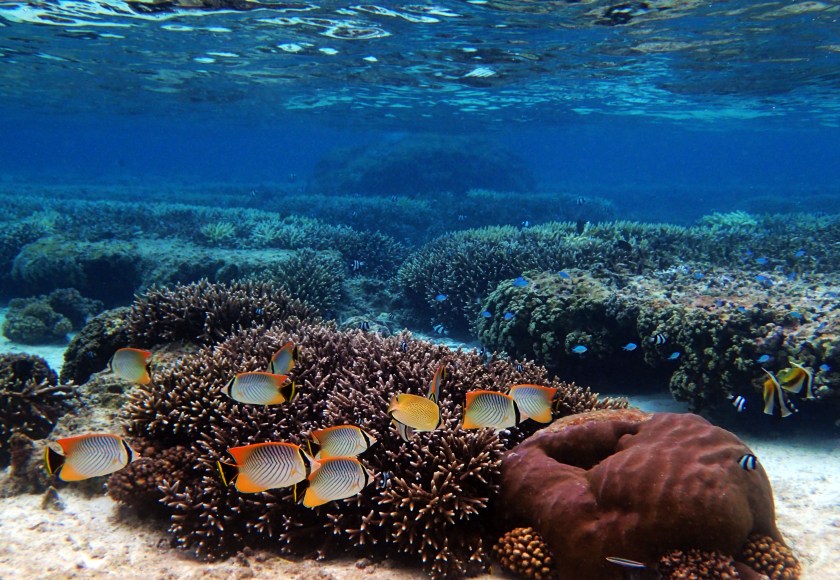
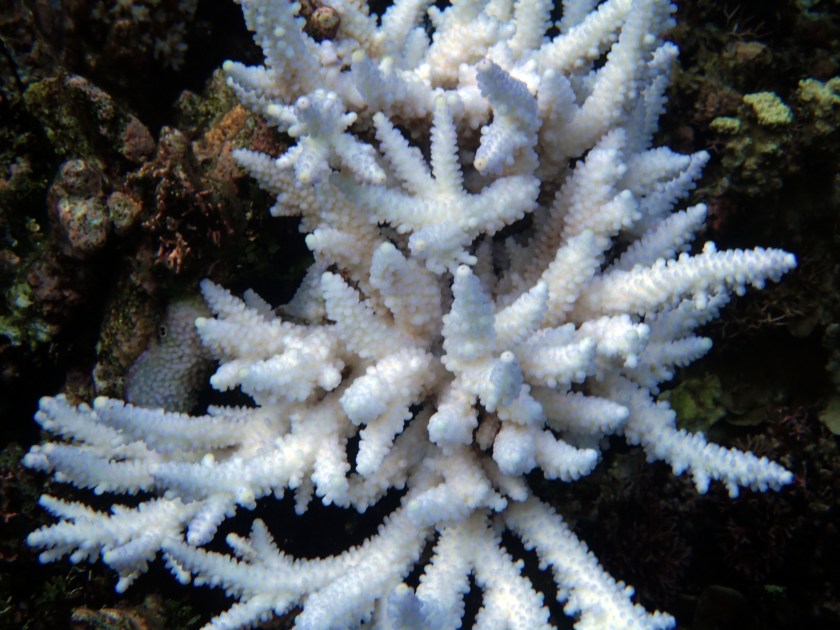
Above you can see a picture of healthy coral that has not been bleached. This picture was taken at Gab Gab Beach on Big Navy Base Guam, on April 21st, 2017.
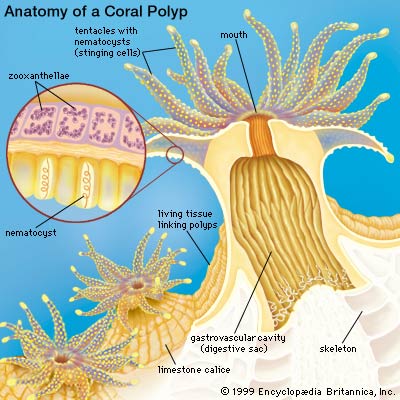
Now then, last time I posted I talked about how coral is a living organism comprised of smaller organisms. These smaller organisms are called Polyps, and they are tiny animals. This is why you should never touch or stand on coral, because it crushes the tiny animals that it is made of.
First, remember that a coral is like an apartment complex. The building is made of calcium secreted by the coral, and the people who live inside are called polyps.
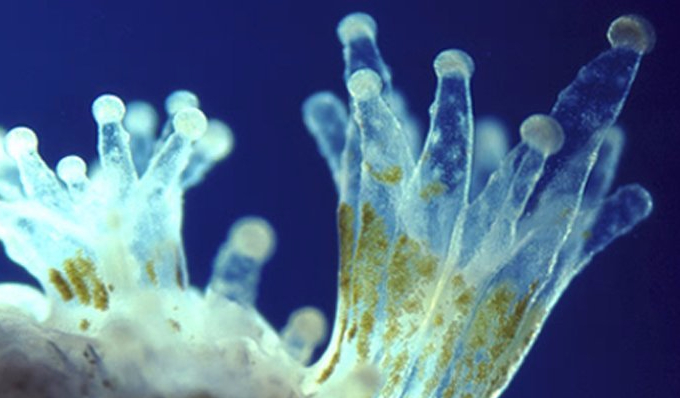
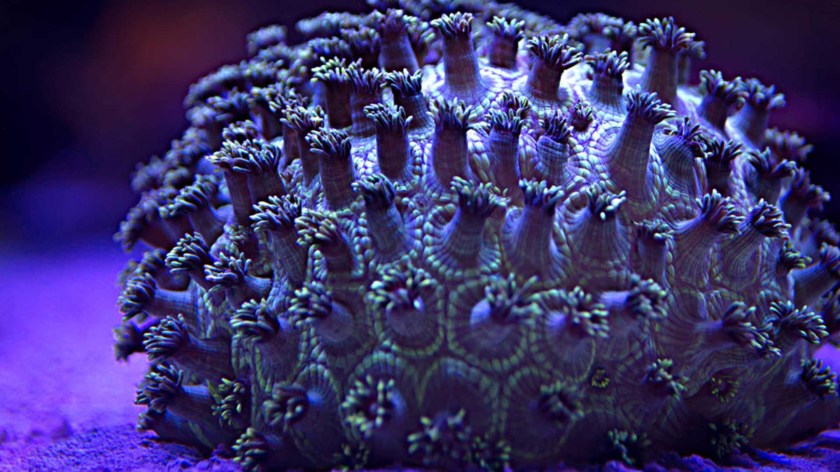
This is what a polyp looks like.
As we discussed last time, a coral polyp can eat food from the water that it catches with its tentacles.
However, it is like a Venus Fly Trap: Even though a Venus Fly Trap eats flies, it still needs to absorb sunlight so that it’s chloroplasts can metabolize that light into food for the plant. Without sunlight, it would die.
The specialized chloroplast cells inside of a coral polyp are called zooxanthellae. Even though the coral is perfectly capable of catching food from the water with its tentacles, each polyp still needs its zooxanthellae to metabolize sunlight and produce a reliable food source for the polyp.
The zooxanthellae are actually all different colors, and they are what gives coral its color. The polyps themselves are clear.
The problem is that the zooxanthellae are sensitive to temperature. If it gets too hot, the zooxanthellae will die. When they die, the polyp expels them into the water, and thus, it loses its color.
This is why coral that is bleached is not yet considered “dead.” The polyp is still alive, but it has lost its zooxanthellae.
Rare cases have been reported where a coral bleached, but then the polyps were able to catch new algae cells and survive. However, the unfortunate truth is that once a coral bleaches, the polyps are very likely to starve to death and die.
Once the polyps die, the calcium skeleton is all that is left. This skeleton then becomes host to parasitic lifeforms that eventually break it down.
I moved to Guam is August of 2015. In the time that I have been here, I have seen the coral in Tumon Bay bleach and die, as well as the coral inside the reef at Tanguissen Beach.
However, those are shallow reefs. I understand how they got too hot and their coral began to bleach.
On the other hand, Gab Gab Reef on the Big Navy Base is much deeper. Most of the coral sits at around 20 feet deep, depending on the tide.
And rather than being in an enclosed reef the way the coral in Tumon Bay and Tanguissen is, the coral at Gab Gab is in a very deep harbor.
I never imagined that the coral at Gab Gab would bleach.
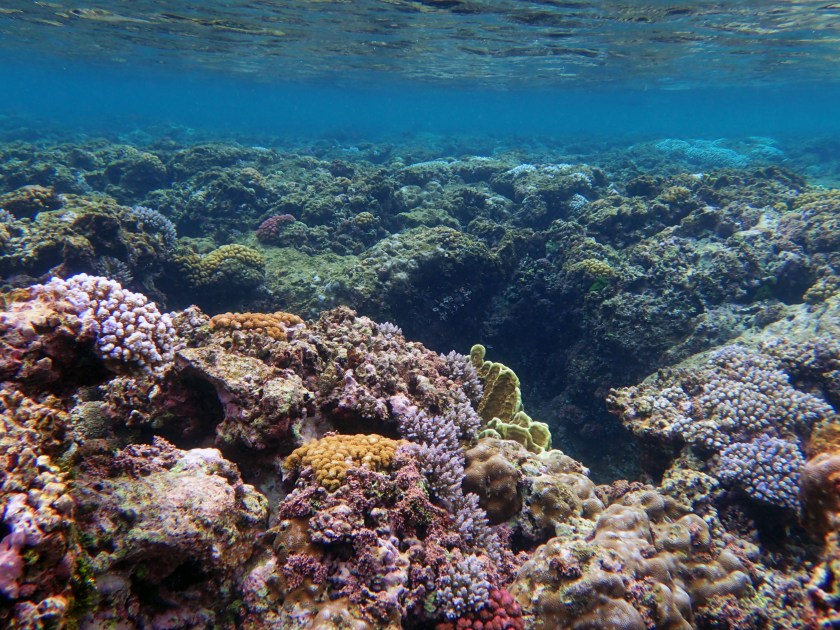
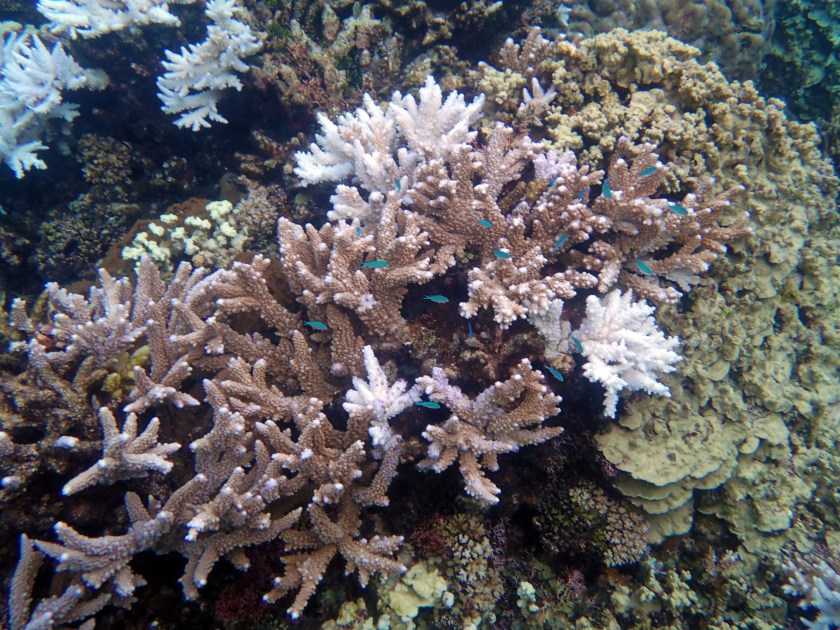
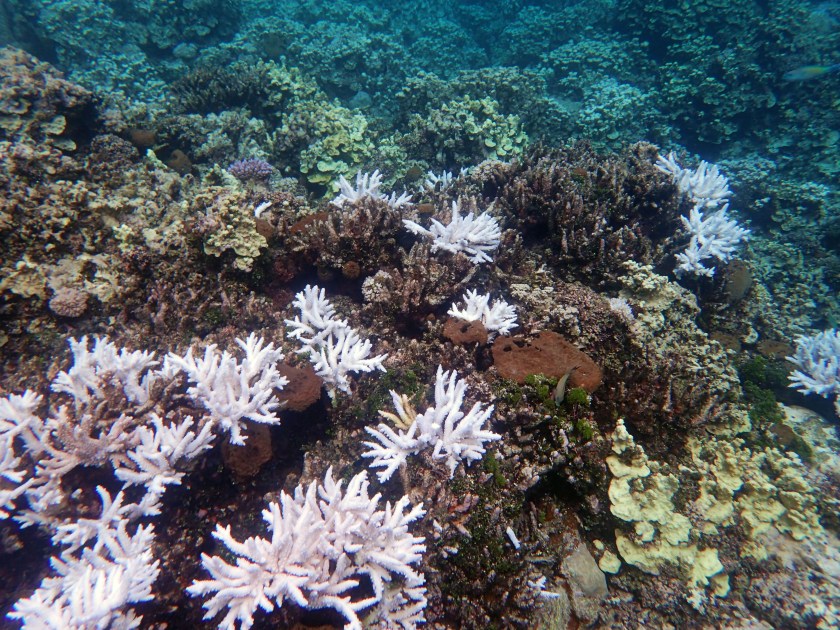
At least, not before I left here in September of 2018. And yet, the images that you are seeing now are from Gab Gab, and they were taken just a few months after the picture of healthy coral at the top of this post.
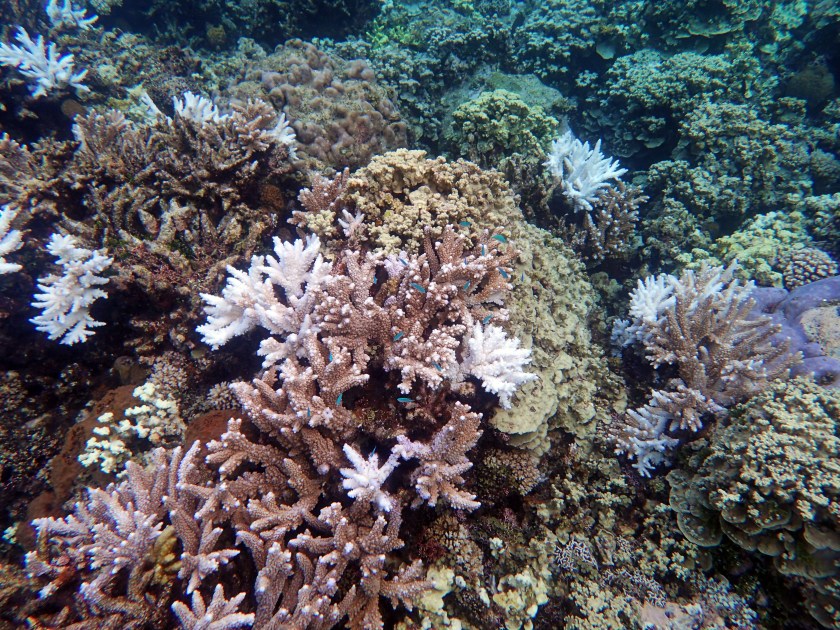
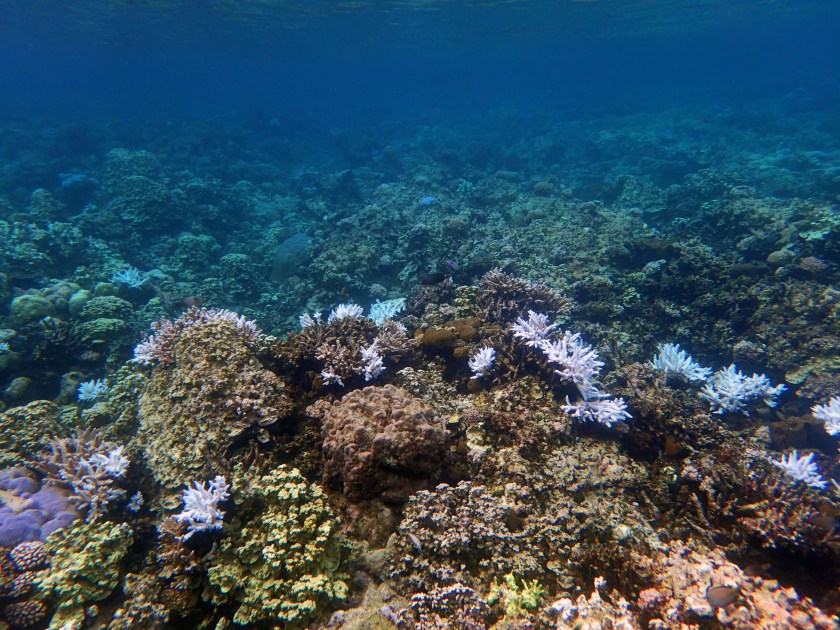
This is what bleached coral looks like. This is what a reef looks like when it is dying.
The reef at Gab Gab was truly amazing. It was filled with an incredible diversity of life, and a wide variety of corals. And now, before my eyes, it is dying.
I can’t really tell you the emotional toll of watching corals die.
I know that these are structures that took generations of polyps to build. Many are hundreds of years old. Gab Gab has so many huge, ancient corals that are each home to hundreds of fish.
It is an environment that took nature so many lifetimes to create. And yet, it is dying in the span of one Navy Man’s tour of duty on Guam. (My husband Rich.)
By the time the military sends my husband to a new port, I will have witnessed the loss of a huge percentage of the coral reefs on Guam. Just four years… and yet, I am seeing so much death.
There is no eulogy solemn enough or beautiful enough to pay tribute to the coral reefs of Guam. They were some of the most amazing things that I have ever seen, and I wish that I could express to you what a huge loss this is to every single one of us.
I am actually having trouble typing this because of the tears. And, if you were watching our oceans dry each day in real time, I have no doubt that you would feel the same.
There is no data yet on how big the 2017 world bleaching event will be. However, I would like to submit these photos to the world and to NOAA as evidence of the death in my small corner of the ocean.
I don’t usually use this blog to educate people about science, but I am afraid that I feel it is necessary. So let’s take a moment to learn about coral, and what it is made out of.
Coral comprised of thousands of tiny animals called polyps.
Polyps are too small to see with the naked eye, but under a microscope you can see that a piece of coral is not a single entity. Rather; it is like an apartment complex.
A cooperative colony of polyps that all live together comprises what we think of as “a coral.”
Inside the coral polyps are something called zooxanthellae.
Zooxanthellae are specialized chloroplasts that are able to take sunlight and metabolize it into food for the coral, the same way a chloroplast in vegetation absorbs sunlight and metabolizes it into food for its its plant host.
Some corals also have tentacles that they stick out in order to try to catch bits of food that go by. However, all coral are dependent on their zooxanthellae for long-term survival.
You can think of a carnivorous plant like a Venus fly trap: it eats flies, but it will still die without the nutrients its chloroplasts make from sunlight.
This is why you must never touch coral. When you touch it or step on it, you are smashing hundreds of tiny polyps, and this does permanent damage to a coral. In fact, certain kinds of sunscreen are poisonous to coral, so you may even kill the entire colony just by being clumsy.
The lesson? Coral is a living organism made of many smaller living organism, and it’s not okay to touch it.
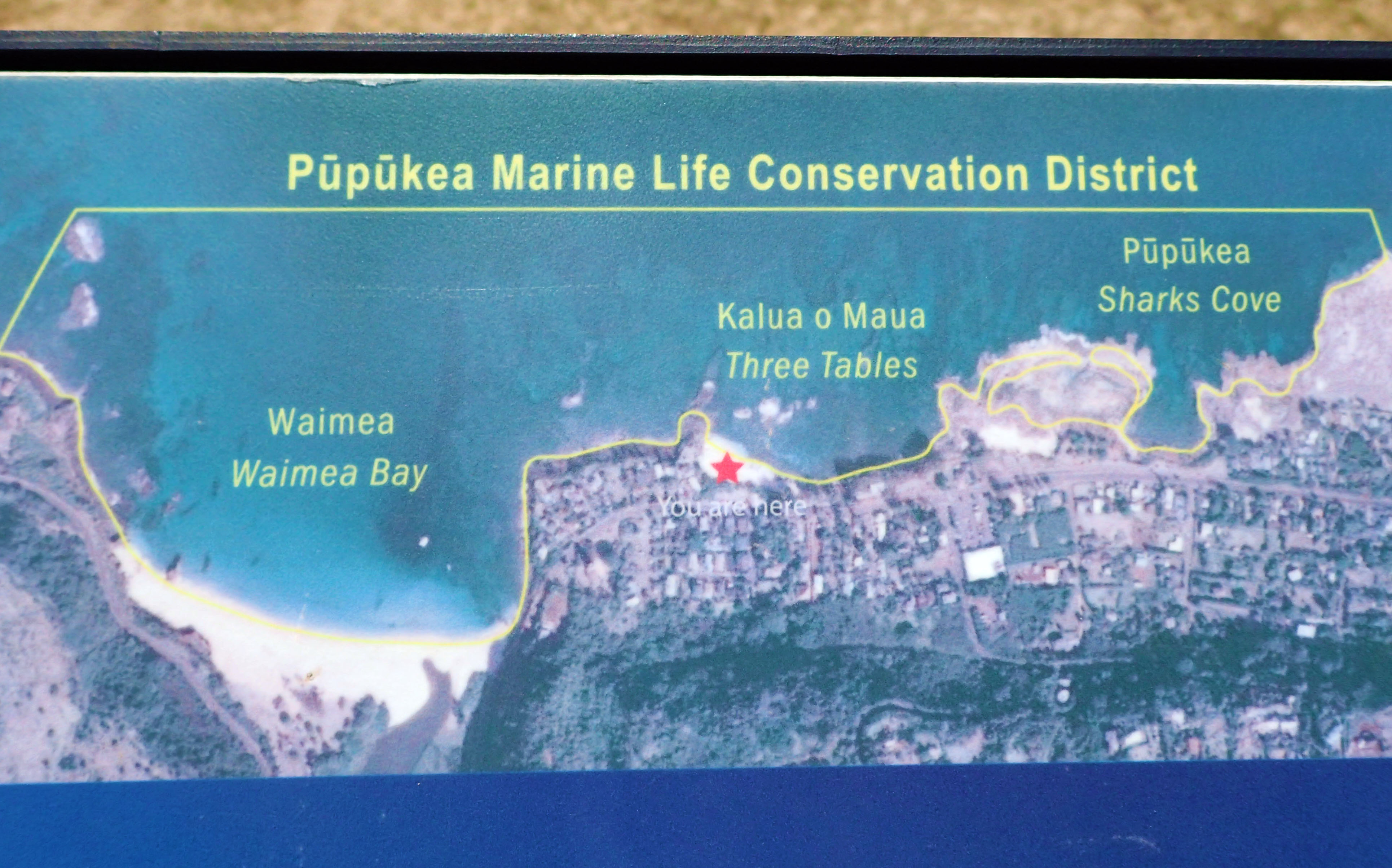
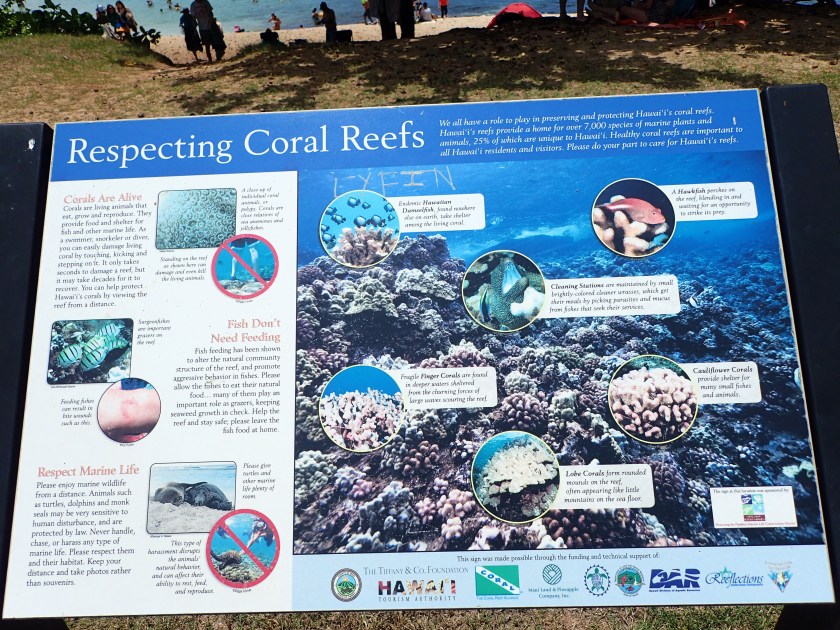
On the beaches in Oahu, I couldn’t help but notice that they had these lovely signs to tell you where you were, what you might see, and what the rules were.
It occurs to me that this would be extremely useful on Guam.
I mean, I have seen tourists stand on coral. I have seen people toss trash off the side of boats. I have been in a heated argument with a woman “looking for sea turtle eggs” because she wanted to eat them. And, I have asked people not to pet or feed the endangered species more times than I can count.
I am getting really tired of tapping people on the shoulder and trying to educate them, because most people are really not open to suggestions from some random white girl.
So I think we need signs.
I want signs in several languages telling people what our endangered species in this area are, and why it is wrong to cook them in soup or BBQ them. I also want signs explaining that coral is alive and not to stand on it, and signs warning people that there will be a fine for littering.
I know it wouldn’t solve the problems. I get that. But it would help. We would need English for the locals, and Japanese and Korean for the tourists. I don’t think it would cost that much. The ones in Oahu didn’t look expensive.
So get on it, Guam. Let’s try to do something about all the abuse of our oceans that I see every day.































 JD's Blog